More Allergy, Asthma & Infectious Disease Articles
Is ‘Cannibal Rash’ a Real Medical Diagnosis?
By Your Health Magazine Health Information Team
You may have heard a disturbing story online: Someone kisses a new date, receives a massage with a mysterious lotion, or spends the night with a stranger—then develops an unusual rash. According to the story, a doctor recognizes it as a “cannibal rash” and alerts the police because the other person must have handled or eaten human flesh.
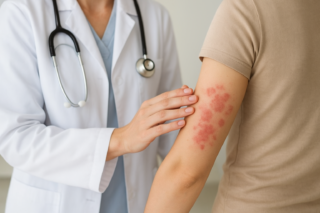
It makes memorable social media content, but it is not sound medicine. Cannibal rash is not a recognized medical diagnosis, and there is no distinctive rash that proves someone has practiced cannibalism. A real rash following close contact may still deserve attention, but its cause is far more likely to be an ordinary irritant, allergy, infection, or existing skin condition.
What Is the Cannibal Rash Story?
Several versions of this urban legend circulate online. In one, a person develops irritation around the mouth after kissing someone who supposedly ate human flesh. In another, a suspicious lotion causes a rash because it allegedly contains chemicals intended to tenderize the person’s skin. Other versions claim that laboratory testing finds bacteria carried only by cannibals or people who have touched a corpse.
These claims do not match how clinicians diagnose skin conditions. No known rash pattern, bacterium, chemical reaction, or routine medical test can identify a person as a cannibal. Doctors also cannot reliably determine the cause of most rashes from appearance alone. They consider where the rash began, how quickly it appeared, possible exposures, accompanying symptoms, medical history, and, when necessary, test results.
Why the Myth May Sound Believable
The story includes a small element of truth: Something encountered during a date or other close interaction can cause a skin reaction. Skin may respond to a product, material, body fluid, microorganism, or environmental exposure. The timing can make the other person seem responsible even when the actual trigger is unclear.
Contact dermatitis is one common explanation. Irritant contact dermatitis occurs when a substance directly damages or inflames the skin. Allergic contact dermatitis develops when the immune system reacts to a particular substance. Depending on the cause, symptoms can include redness or discoloration, itching, burning, tenderness, swelling, bumps, blisters, dryness, or cracked skin.
Potential triggers encountered during social or intimate contact include:
- Fragrances, cosmetics, aftershave, or skin-care products
- Massage oils, lotions, preservatives, or essential oils
- Soaps, detergents, and fabric softeners on clothing or bedding
- Latex, adhesives, jewelry metals, or clothing dyes
- Sweat, saliva, friction, heat, or prolonged moisture
- A product that becomes irritating when combined with sunlight
A chemical capable of irritating skin could produce a genuine rash. However, that reaction would indicate chemical exposure—not why the chemical was used or whether another person intended harm. If an unknown substance causes burning, blistering, severe pain, or rapid skin changes, rinse away visible residue with water and seek prompt professional guidance rather than trying to identify it through an internet story.
Could Close Contact Cause an Infection?
Some infections can spread through skin-to-skin contact, kissing, shared personal items, or contact with an active skin lesion. Examples include oral herpes, impetigo, ringworm, and certain viral illnesses. These conditions may produce sores, blisters, crusting, scaling, or other changes that people casually describe as a rash.
None of these infections is unique to cannibalism. A sore near the mouth does not reveal what another person has eaten, and a culture showing common skin bacteria cannot establish that someone handled a corpse. Bacteria such as Staphylococcus and Streptococcus commonly live on human skin or circulate in everyday environments.
A clinician may use a swab, culture, skin scraping, patch test, blood test, or biopsy when the history and examination do not provide a clear answer. Testing is selected to investigate realistic medical possibilities, not to screen for a “rash from cannibal” contact.
What About Kuru and Other Prion Diseases?
Cannibalism has a genuine historical association with kuru, a rare and fatal prion disease documented among the Fore people of Papua New Guinea. Transmission was linked to past mortuary practices involving consumption of human tissue, particularly nervous-system tissue.
Kuru is a progressive brain disease, not a skin disorder. Its recognized features are neurological, including problems with balance and coordination, tremors, difficulty walking, and worsening loss of physical function. A characteristic cannibal rash is not part of the condition.
Prion diseases also are not spread through ordinary social contact, touching, kissing, coughing, or sharing a room. Therefore, developing a rash after meeting or kissing someone would not be evidence of kuru or another prion disease.
How to Respond to an Unexplained Rash
Instead of focusing on a frightening label, consider the details that can help a healthcare professional identify the cause:
- When did the rash begin, and how has it changed?
- Is it itchy, painful, warm, blistered, crusted, or draining?
- Did you use a new lotion, cosmetic, detergent, medication, or fragrance?
- Was the skin exposed to plants, insects, chemicals, animals, or another person’s active sores?
- Do you also have fever, fatigue, breathing difficulty, facial swelling, or other symptoms?
- Has a similar rash happened before?
Take clear photographs as the rash develops and make a list of recent products, activities, medications, and close-contact exposures. Avoid scrubbing the area or applying multiple unfamiliar remedies, which can worsen irritation and make diagnosis more difficult. Gentle cleansing, lukewarm water, and avoiding suspected triggers may be reasonable while arranging care.
Rash location also offers useful clues. For example, irritation on the trunk may have different common causes than changes around the mouth, hands, or genitals. Readers dealing with symptoms in a specific area may find this overview of possible causes of a rash on the lower back helpful.
When to Seek Care
Contact a primary care professional or dermatologist if a rash persists, repeatedly returns, spreads, interferes with sleep or daily activities, or cannot be linked to an obvious minor trigger. Evaluation is also appropriate for significant pain, open sores, blisters, fever, pus, warmth, red streaking, unusual odor, or yellow or golden crusting.
Seek emergency care for trouble breathing or swallowing, swelling of the lips, tongue, face, or throat, faintness, or a sudden rash that spreads rapidly. Prompt evaluation is also important when a rash affects the eyes, mouth, or genitals or develops after exposure to an unknown chemical.
For reliable general information about rashes, allergies, infections, and other conditions, consult the MedlinePlus health topics library.
The Bottom Line
Cannibal rash is an urban-legend term, not a legitimate diagnosis. There is no rash or laboratory finding that can prove someone ate human flesh, and the real disease historically associated with cannibalism—kuru—causes progressive neurological symptoms rather than a telltale skin eruption.
A rash that appears after close contact can still be real and medically important. The likely explanations include contact dermatitis, an allergic reaction, friction, heat, or a common skin infection. Focus on the symptoms and recent exposures, and let a qualified healthcare professional determine whether testing or treatment is appropriate.
Other Articles You May Find of Interest...
- How to Keep Pollen Out of Your Home: Choosing an Air Purifier for Pollen
- When Should Your Child See a Pediatric Allergist? A Three-Trigger Test
- Candida sp. rRNA Results: What Molecular Testing Detects
- Ant Bites or Poison Ivy? How the Rashes Differ
- Can Stress Cause Cold Sores on the Lips?
- Gram-Positive Rods in a Blood Culture: Contamination or Infection?
- Can Head Lice Get Into Your Ears?