Your Health Magazine Contributor
4201 Northview Drive
Suite 102
Bowie, MD 20716
More Home Care & Wellness Products Articles
What Does “Non-Toxic” Laundry Detergent Actually Mean?
Laundry detergent touches almost everything you wear and sleep in, and a little of it can stay in the fabric after the rinse. That’s why so many people now look for non-toxic laundry detergent.
The trouble is that “non-toxic” isn’t a standard a detergent has to meet, so the word alone can’t tell you much. What tells you more is evidence: which ingredients are added, what the finished product was tested for, and how low the test went. This guide shows you how to check each one.
Quick Answer: 6 Questions to Ask Before You Buy
Whether you’re comparing non-toxic laundry detergents online or in a store, these six questions do most of the work:
- Does the company list its ingredients and say plainly whether fragrance or dye is added?
- If it’s scented, does the company say what the fragrance is free of and list known allergens?
- Has the finished product been tested by a named, independent lab?
- Does each safety claim match a specific test, with a detection limit?
- Can you read the full lab report yourself?
- Does it clean well at the recommended dose in your washer and water?
That last question matters more than it seems. A detergent that doesn’t clean means using more of it, rewashing loads, or reaching for extra stain products, which adds back the exposure you were trying to cut. The sections below explain the other five.
Why “Non-Toxic” on a Label Isn’t Enough
No government agency approves the word “non-toxic” before it goes on a laundry detergent bottle. The Federal Trade Commission publishes the Green Guides, which explain how consumers are likely to interpret environmental marketing claims and how marketers can substantiate them. But a guide for marketers is not a test of the product in your laundry room.
The word also leaves out two questions that matter:
- Non-toxic to whom, and how? A product can be gentle on most people’s skin and still be harmful if a child swallows it. It can be mild to use and still raise questions once it goes down the drain.
- Non-toxic by what measure? Toxicity depends on the substance, the amount, and how you’re exposed to it. A claim with no numbers behind it can’t tell you any of that.
So treat “non-toxic,” “clean,” and “plant-based” as the start of your research, not the end of it. The same goes for an ingredient list, a certification logo, or a rating from a shopping app. Whether a product’s ingredients are safe depends on the ingredients themselves, how they’re sourced, and how much of each is used in the finished formula.
What the Ingredient List Can’t Tell You
An ingredient list tells you what a manufacturer put in, not what may have come along with those ingredients.
1,4-dioxane is the clearest example. It’s a cancer-linked chemical that the FDA says forms as a byproduct during the manufacturing process of certain cosmetic ingredients, and it can turn up in household cleaning products too. Because no one adds it on purpose, New York’s Department of Environmental Conservation notes that it’s not listed as an ingredient in products. New York now limits it to 1 part per million in household cleansing products, including detergents, a limit that took effect on December 31, 2023.
At the federal level, the EPA determined in its final risk evaluation that 1,4-dioxane presents an unreasonable risk to human health. The concern it identified is drinking water. 1,4-dioxane in products like dish soap and laundry detergent is washed down the drain and can reach the water supply. The EPA did not count risks to consumers from using these products toward that finding, which is worth knowing before anyone tells you your detergent is dangerous to touch.
The same gap applies to other things a label won’t show:
- Residues from growing. A plant-derived ingredient comes from a crop, and crops can be sprayed with pesticides and herbicides. “Plant-based” describes where an ingredient came from, not what came with it.
- Heavy metals, such as lead or arsenic, which can be present at trace levels in raw materials.
- PFAS, the group of persistent chemicals often called “forever chemicals.” The CDC’s Agency for Toxic Substances and Disease Registry lists stain-resistant fabrics and water-repellent clothing among the products they’ve been used in.
Reading a label can’t answer any of these. Only testing the finished product can.
How to Read a Lab Result
A lab result is only useful if you can see who tested what, what they tested for, and how low the test went. More brands now say their products are “lab tested.” When a brand publishes a result, check these five things:
- Who did the testing? Look for an independent lab named in the report. Some labs are accredited to ISO/IEC 17025, the international standard for the competence of testing and calibration laboratories, and say so on the report.
- What was tested? A finished product tells you more than a single raw ingredient. Check which product, scent, or formula the report covers.
- What was it tested for? A heavy metals test says nothing about 1,4-dioxane, and a 1,4-dioxane test says nothing about pesticides. Match each claim to the test behind it.
- How low did the test go? Every test has a limit below which it can’t reliably detect or measure a substance. “None detected, tested down to 1 ppm” means that if any is there, it’s below 1 part per million. The lower the limit, the more the result tells you.
- Can you read the full report? A summary line on a product page is a claim. The full report, with the lab’s name, method, and limits, is evidence you can check yourself.
Be wary of wording that goes further than any test can. A lab can’t prove that a product contains zero of something. It can only report that none was detected down to a certain level. So “none detected,” with a detection limit, is a more honest answer than “100% free of.”
Some brands now publish their third-party lab reports in full. If a brand makes a safety claim but doesn’t show you the test behind it, ask for it.
What’s Inside a Laundry Detergent, and What You Can Skip
Surfactants do most of the cleaning. Brighteners, fragrance, and dyes change how clothes look and smell, not how clean they are. Most detergents are built from the same few groups of ingredients:
- Surfactants loosen soil and oils from fabric and hold them in the water so they rinse away.
- Builders and water softeners help surfactants work in hard water.
- Enzymes break down specific stains, such as protein from food or grass.
- Preservatives keep liquid formulas from spoiling in the bottle.
- Optical brighteners make fabric look whiter and brighter by absorbing ultraviolet light and giving it off as visible blue light.
- Fragrance and dyes change how the product and your clothes smell and look.
If you or someone in your home has sensitive skin, the last two groups are the easiest place to start simplifying.
Fragrance, Dyes, and Sensitive Skin
If anyone in your home has eczema or reactive skin, look at fragrance and dye first. For children with eczema, the American Academy of Dermatology recommends using only detergent that is fragrance-free and dye-free.
Adults with eczema are also advised to avoid known triggers, such as certain fabrics and harsh soaps. Laundry detergent is a common suspect when skin reacts, but it isn’t the only one. It helps to know the difference between irritant and allergic contact dermatitis, and to keep track of what can trigger an eczema flare in your own home.
If you prefer a scented detergent, “fragrance” on a label can cover many separate components, and companies often keep the full blend private to protect their formulas. You can still ask useful questions:
- Is the fragrance made from essential oils, fragrance oils, or both?
- Is it phthalate-free?
- Are known fragrance allergens, such as linalool, listed on the label?
How you wash matters too:
- Measure the dose instead of free-pouring. More detergent doesn’t mean cleaner clothes, and extra detergent is harder to rinse out.
- Don’t overload the machine, and run an extra rinse if you suspect residue.
- Change one product at a time, so that if your skin improves, or gets worse, you know why.
- See a dermatologist if a rash keeps coming back, and bring a list of your laundry products.
“Non-Toxic” Doesn’t Mean Safe to Swallow
However a detergent is labeled, store it like any other cleaning product, out of children’s sight and reach. This matters most with single-load laundry packets, which are small, squishy, and brightly colored. The U.S. Consumer Product Safety Commission advises: “Store laundry packets in their original containers and out of a child’s sight and reach.” It also warns: “Do not let children handle laundry detergent packets.”
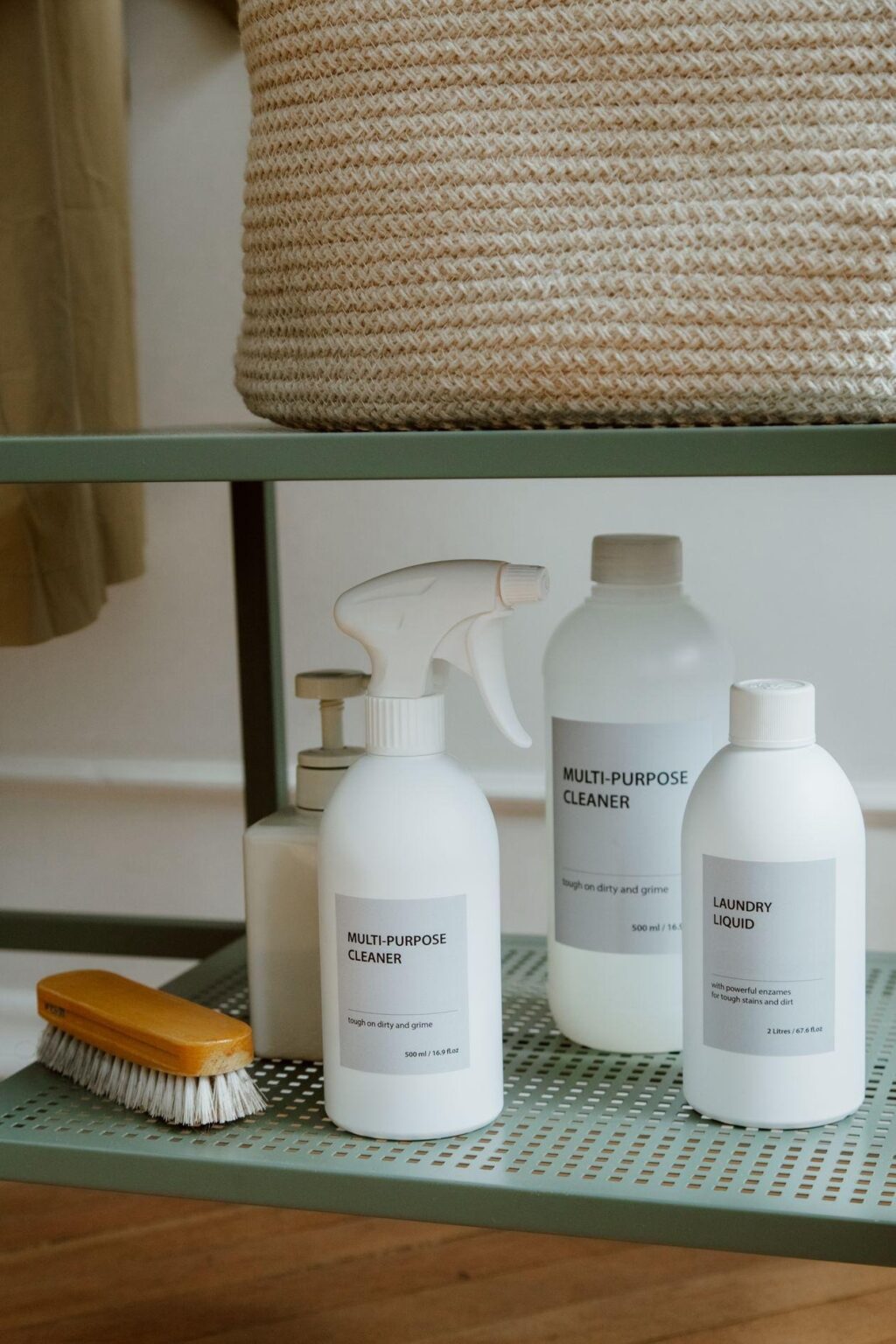
Keep liquid and powder detergents in their original, labeled containers too, and close them after each use. If someone swallows detergent or gets it in their eyes, call Poison Help at 1-800-222-1222. If they have trouble breathing or collapse, call 911.
Non-Toxic Laundry Detergent FAQs
Is “non-toxic” a regulated term on laundry detergent?
No agency approves the word before it’s printed on a detergent label. Marketing claims are expected to be truthful and backed by evidence, but the word alone doesn’t tell you what was tested or what the results were. Look for the specific evidence behind it.
Is plant-based laundry detergent automatically non-toxic?
No. “Plant-based” describes where ingredients come from. Plants can be grown with pesticides, and plant-derived ingredients still go through manufacturing, where byproducts such as 1,4-dioxane can form. Testing of the finished product is what tells you what’s actually in the bottle.
What does “none detected” mean on a lab report?
It means the lab didn’t find the substance at or above the lowest level its test can detect or measure. Always check that level. “None detected, tested down to 0.01 ppm” tells you more than a result with no limit given.
How can I tell if my laundry detergent is irritating my skin?
Look for patterns. Did itching start after you switched detergent or added a fabric softener or scent booster? Is it worse where clothing sits close to your skin? Pillowcases and towels touch your face, so watch for signs of contact dermatitis on the face as well. Go back to a simple routine with one fragrance-free, dye-free detergent, and talk to a dermatologist if irritation continues.
The One Question to Keep Asking
Whatever detergent you choose, keep asking: what’s actually in this, and how do you know? “Non-toxic” is a promise, and you’re entitled to see what’s behind it. Read the ingredient list, but remember what it can’t show. Look for independent lab results on the finished product, with the lab named and the detection limits stated. Then pick a detergent that cleans well at the right dose, store it safely, and change one product at a time.
Other Articles You May Find of Interest...
- What Does “Non-Toxic” Laundry Detergent Actually Mean?
- Beyond Kitchen Design: Why Stainless Steel and Proper Ventilation Matter for a Healthier Home
- Caregiver Burnout: Signs, Causes & Prevention Tips
- Red Light Therapy Mats for Home Use: Understanding the Benefits, Safety, and Seven Available Options
- Winter Indoor Air in Stilwell, Oklahoma: A Simple Guide for Families
- How to Choose a Topical Balm: Ingredients, Safety, and What to Look For
- What Services Can You Access Through Australia’s Support at Home Program?