More Beauty Skin Care & Gorgeous Smiles Articles
Contact Dermatitis on the Face: Symptoms and Treatment
By Your Health Magazine Health Information Team
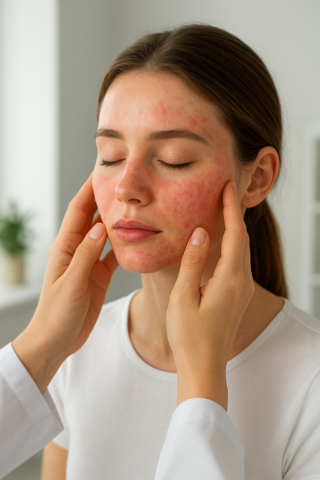
Contact eczema on the face, also called facial contact dermatitis, is an itchy, irritated rash caused by something that touches the skin. Cosmetics, skin-care products, fragrances, hair products, sunscreen, jewelry, eyeglasses and even substances transferred from the hands are common triggers. Treatment begins with identifying and avoiding the cause, followed by gentle skin care and, when appropriate, medication recommended by a healthcare professional.
What Does Contact Dermatitis on the Face Look and Feel Like?
Symptoms usually appear where the triggering substance contacted the skin, although the pattern is not always obvious. A hair product, for example, may affect the hairline, forehead, ears or sides of the face. Nail products can cause eyelid dermatitis when a person touches or rubs the eyes.
Possible symptoms include:
- Itching, burning or stinging
- Dry, rough, flaky or scaly skin
- Redness or other changes in skin color
- Swelling, especially around the eyelids
- Small bumps or fluid-filled blisters
- Cracking, tenderness, oozing or crusting
- Thickened skin when irritation continues for a long time
The National Library of Medicine provides additional information about the broader group of conditions commonly called eczema or dermatitis. Contact dermatitis is different from atopic dermatitis, a chronic form of eczema that often begins in childhood, although a person can have both conditions.
Irritant Versus Allergic Contact Dermatitis
Facial contact dermatitis can develop through direct irritation or an allergic skin reaction. The two types may look similar, but their timing and triggers can provide useful clues.
| Type | How It Develops | Typical Clues |
|---|---|---|
| Irritant contact dermatitis | A substance directly damages or disrupts the skin barrier. | Burning, stinging, dryness and soreness may begin quickly or after repeated exposure. |
| Allergic contact dermatitis | The immune system reacts to a particular ingredient or material. | Intense itching, swelling or blistering may appear hours or days after exposure. |
An allergy can develop even after years of using the same product without a problem. A delayed reaction also makes the cause difficult to recognize because the rash may not appear until 24 to 48 hours after exposure.
Common Facial Triggers
Think about everything that has touched the affected area, including products that rinse over the face or are transferred from the fingers. The American Academy of Dermatology’s guidance on itchy contact dermatitis describes how the rash’s location can help identify possible triggers.
Common causes include:
- Skin-care products: Cleansers, moisturizers, anti-aging products, acne treatments, essential oils and facial masks
- Cosmetics: Foundation, eye makeup, makeup removers, false-eyelash adhesives and applicators
- Fragrances and preservatives: Ingredients found in perfume, soap, cosmetics and personal-care products
- Hair products: Shampoo, conditioner, styling products, hair dye and permanent-wave solutions
- Lip products: Lipstick, balm, gloss, toothpaste and mouthwash
- Sunscreen: Active or inactive ingredients, sometimes combined with sunlight exposure
- Metals: Nickel or other metals in eyeglass frames, jewelry, eyelash curlers, tweezers and phones
- Nail products: Nail polish, gel nails and artificial-nail adhesives transferred to the eyelids or face
- Topical medicines: Antibiotic ointments, medicated creams or ingredients used to preserve them
“Unscented” does not always mean fragrance-free; fragrance may have been added to cover another odor. People sensitive to fragrance should look specifically for products labeled fragrance-free.
What to Do When a Facial Rash Appears
- Stop the likely trigger. Discontinue newly introduced or nonessential cosmetics, skin-care products and hair products that may be contacting the area. Do not stop a prescribed medication without contacting the prescriber.
- Rinse away a recent exposure. If the reaction began after direct contact with a suspected irritant, gently rinse the skin with lukewarm water. Avoid hot water, scrubbing and exfoliating tools.
- Simplify skin care. Use a mild, fragrance-free cleanser if one is needed. Avoid toners, scrubs, acids, retinoids, essential oils and heavily fragranced products while the skin heals.
- Protect the skin barrier. Apply a simple fragrance-free moisturizer that does not sting. Stop using it if irritation increases.
- Use a cool compress. A clean, cool, damp cloth may temporarily reduce itching and discomfort. Avoid applying ice directly to the skin.
- Do not scratch or pick. Scratching can further injure the skin and increase the risk of infection.
Pain relievers such as ibuprofen are not standard treatments for the itch or underlying inflammation of contact dermatitis. For additional context, read about whether Advil or ibuprofen can relieve itching.
Medication and Professional Treatment
Topical corticosteroids can reduce inflammation, but the face requires special care because facial and eyelid skin is thin. The appropriate product and strength depend on the location, severity, age of the patient and possible diagnosis. Using a steroid that is too strong, applying it for too long or getting it into the eyes can cause complications.
Some over-the-counter hydrocortisone products are labeled for temporary relief of minor irritation related to eczema or cosmetics. However, consumers should follow the specific package directions and warnings. A current DailyMed hydrocortisone label, for example, warns users to avoid contact with the eyes. Ask a doctor or pharmacist before putting hydrocortisone on the eyelids, around the eyes or on a rash whose cause is uncertain.
A clinician may prescribe a carefully selected topical corticosteroid for short-term use. Nonsteroid prescription creams may be considered for sensitive facial areas or recurring symptoms. Severe or widespread reactions occasionally require treatment that works throughout the body, but this should be managed by a healthcare professional.
If the trigger is unclear or the rash repeatedly returns, a dermatologist may recommend patch testing. Small amounts of possible allergens are applied under patches and checked over several visits for delayed reactions. Patch testing is different from skin-prick testing used for immediate allergies. The American Academy of Dermatology explains how clinicians approach contact dermatitis diagnosis, patch testing and treatment.
When to Seek Care
Arrange an evaluation with a primary care clinician or dermatologist if the rash is severe, keeps returning, involves the eyelids or lips, interferes with sleep, or does not improve after the suspected trigger is removed. Medical assessment is also important because rosacea, atopic dermatitis, seborrheic dermatitis, perioral dermatitis, infections and other conditions can resemble contact eczema on the face.
Seek prompt medical attention for increasing pain, warmth, pus, spreading redness, fever, extensive blistering or rapidly worsening swelling. Call 911 for trouble breathing, faintness, or sudden swelling of the tongue, mouth or throat. Eye pain, vision changes or severe swelling around an eye also requires urgent evaluation.
Other Articles You May Find of Interest...
- Contact Dermatitis on the Face: Symptoms and Treatment
- What Are the Best Science-Backed Skincare Ingredients?
- How to Compare At-Home Red Light Therapy Devices
- Vitamin C Face Serum: Benefits and Daily Routine for Indian Skin
- Why Your Face Changes Shape With Age and What Modern Aesthetic Treatments Can Address
- How to Address Common Skin Concerns Through Daily Care and Professional Treatments
- Laser Hair Removal: What to Know Before Your First Session