Your Health Magazine Contributor
4201 Northview Drive
Suite 102
Bowie, MD 20716
More Public Health Articles
Mold in Cannabis and Other Hidden Contaminants: What They Mean for Your Health
Cannabis is now legal for adults in Canada and in many US states, and more people than ever are buying it or growing it at home. Most of the talk is about THC and CBD. Far less is said about what else can end up in the flower. Like any crop, cannabis can carry mold, pesticide residue and heavy metals. Mold in cannabis is the most common of these problems, and all three are hard to see with the naked eye.
These contaminants matter more for cannabis than for many foods. Cannabis is usually smoked or vaporized, so anything on the flower goes straight into the lungs. It skips the stomach, which normally helps protect the body from germs in food. This article explains the main health risks, who is most at risk and the simple steps that lower exposure. It is general information, not a replacement for advice from your own doctor or pharmacist.
Why Mold in Cannabis Is a Health Concern
Cannabis flowers are dense and sticky, and they are often dried and stored for weeks. That makes them a good home for mold if humidity runs high at any point. The most common types include bud rot (a gray mold called botrytis), powdery mildew, and molds from the Aspergillus and Penicillium families.
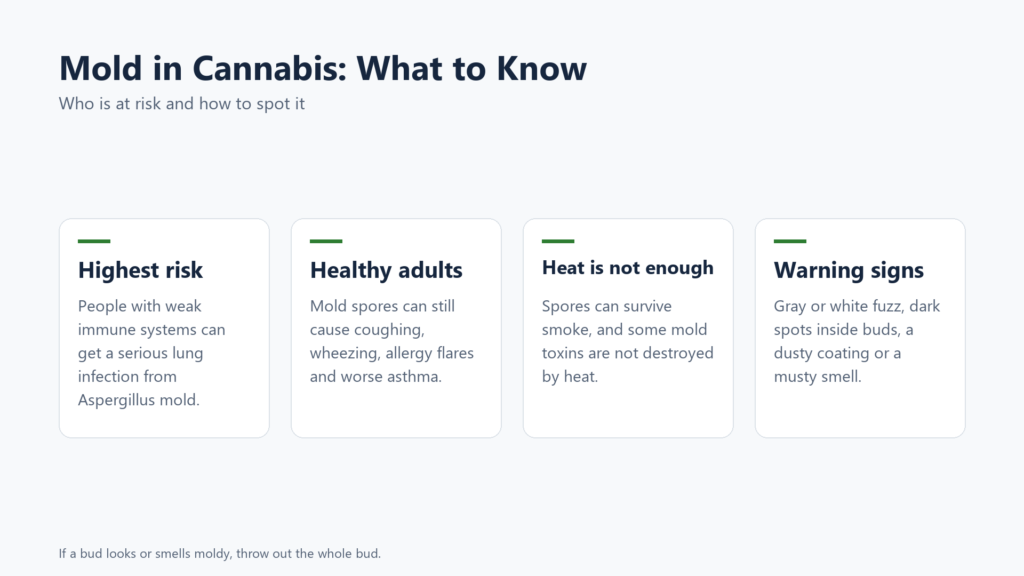
People with weak immune systems face the highest risk. Aspergillus spores are everywhere in the environment, and healthy lungs clear them with no trouble. In people whose immune systems are weakened, such as those receiving chemotherapy, organ transplant recipients and people with advanced HIV, the same spores can cause a serious lung infection called aspergillosis. Published case reports have linked this infection to smoking moldy cannabis in these groups. A 2017 study from the University of California, Davis tested cannabis samples from Northern California dispensaries and found bacteria and fungi on many of them, including types that can cause dangerous infections in people with weak immune systems.
Healthy people can react too. For most adults, a little mold will not cause an infection. Mold spores can still trigger allergic reactions, coughing, wheezing and a stuffy nose. They can make asthma worse, and people with mold allergies may react strongly.
Heat does not make moldy cannabis safe. Many people assume a lighter or vaporizer kills mold. Research going back to the 1980s found that mold spores can survive and pass through cannabis smoke. Some molds also make toxins, called mycotoxins, that are not destroyed by heat. Aflatoxin, made by certain Aspergillus molds, is one example. Scientists still know little about the effects of inhaling these toxins, which is a good reason to avoid them.
How to spot moldy cannabis:
- Gray, white or fuzzy patches, often deep inside a dense bud
- Dark brown or black spots inside the flower
- A white, dusty coating on the leaves, which is a sign of powdery mildew
- A musty, damp or “wet basement” smell instead of a fresh plant smell
Healthy cannabis is often covered in shiny, crystal-like resin glands called trichomes. These sparkle and look like tiny mushrooms under a magnifier, while mold looks dull and web-like. If a bud is moldy, throw out the whole bud. Cutting off the visible part does not remove the spores spread through it.
Pesticides and Heavy Metals: The Other Hidden Risks
Pesticide residue. Plants sprayed while they are flowering keep some of that spray on the buds. Burning changes many chemicals into new compounds, and some become more harmful than the original product. A well-known example is myclobutanil, a fungicide that can give off hydrogen cyanide when heated. It is not approved for use on cannabis in Canada, and in 2017 several legal Canadian producers recalled products after testing found unapproved pesticides, including myclobutanil. Many garden sprays are made for flowers you look at or vegetables you wash, not for a plant that is dried and inhaled.
Heavy metals. The cannabis plant is very good at pulling metals out of the ground. It is so good that hemp has been tested as a way to clean up polluted soil, including at sites near Chernobyl. That ability is a problem when the plant is grown for people to use. Cadmium, lead and arsenic in soil, water or low-quality fertilizer can build up in the leaves and flowers. Over time, exposure to these metals is linked to kidney damage, harm to the nervous system and a higher risk of some cancers. Common sources include old garden soil near houses with lead paint, land near busy roads or factories, and cheap fertilizers that have not been tested.
Concentrates need extra care. Vape oils, waxes and other concentrates are made by pulling the active compounds out of a large amount of plant material. If that starting material carried pesticide residue, the extraction process can concentrate it as well. In 2019, a wave of serious lung injuries in the United States was traced mainly to illegal THC vape products that contained vitamin E acetate, an additive used to thin the oil. Unregulated vape products carry the most uncertainty of all.
In legal markets, testing helps. In Canada, cannabis sold by legal producers must be tested for microbes, pesticides and heavy metals before sale. In the United States, the rules vary a lot from state to state. Cannabis from the illegal market and plants grown at home are not lab tested at all.
How to Lower Your Exposure
If you buy cannabis:
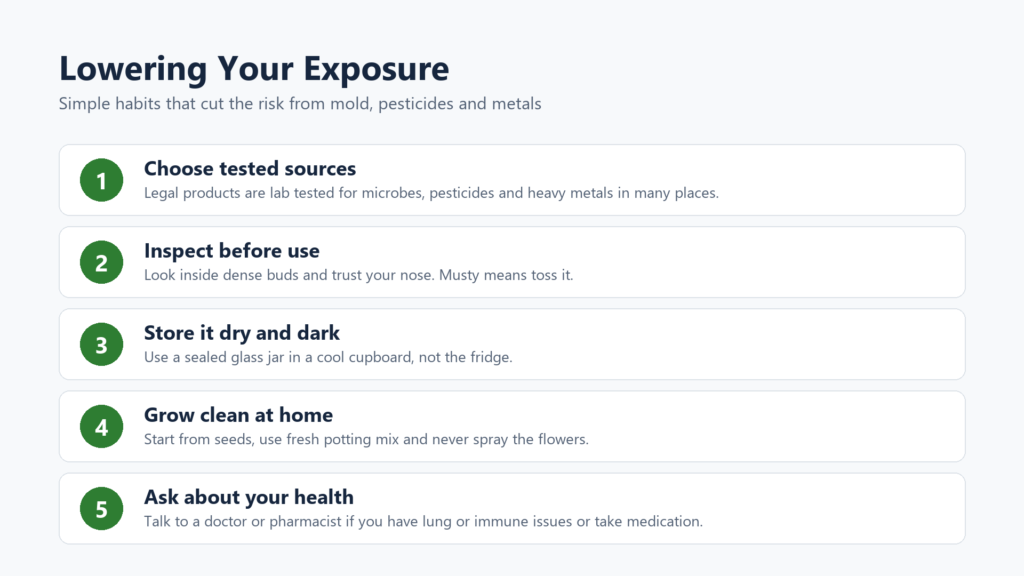
- Buy from legal, tested sources, and check for a lab test result or certificate where your state or province provides one.
- Look at the package date. Older products have had more time for moisture problems in storage.
- Inspect your flower before you use it, and trust your nose.
- Store cannabis in a sealed glass jar in a cool, dark cupboard. Avoid the fridge, where moisture can build up, and keep it away from children and pets.
If you grow your own where it is allowed: Home growers decide what touches their plants, which is a real health advantage if it is used well. Clean genetics are the first step. Clones taken from other growers can carry powdery mildew, pests and plant viruses, while seeds rarely do. For people who grow cannabis where legally permitted, contamination prevention begins with understanding the risks associated with plant materials, soil, moisture, and storage conditions. Even products grown from feminized cannabis seeds can develop mold or accumulate contaminants if environmental conditions are unsuitable. Homegrown cannabis is generally not subject to the same independent laboratory testing requirements as products sold through regulated retailers, making awareness of contamination risks especially important.
Who should take extra care. Talk to a doctor before using cannabis if you have a weakened immune system, a lung condition such as asthma or COPD, or a mold allergy. Cannabis can also interact with some medications, including certain blood thinners and seizure medications, so ask your pharmacist about anything you take. Health Canada and US health agencies advise against cannabis use during pregnancy and breastfeeding. If you notice coughing, wheezing, fever or shortness of breath after using cannabis, stop and get checked by a doctor.
Contaminants are one of the least discussed parts of cannabis safety, but they are among the easiest to manage. Knowing what to look for, choosing tested products and keeping a home grow clean go a long way toward protecting your lungs and your overall health.
Additional information about cannabis genetics and seed varieties is available from resources such as Pure Seed Genetics.
Other Articles You May Find of Interest...
- Mold in Cannabis and Other Hidden Contaminants: What They Mean for Your Health
- How Does Living Near Natural Habitats Increase Your Risk Of Wildlife Intrusions?
- Ants in the Kitchen Again? What Their Return Means for Food Safety
- How Education and Professional Development Are Shaping the Future of Public Health Leadership
- What to Know About Healthcare Access When Moving to Chicago
- Why Medical Monitoring Matters After a Major Disaster
- What Public Health Work Actually Involves: Beyond the Headlines