




Your Health Magazine Contributor
4201 Northview Drive
Suite 102
Bowie, MD 20716
More Pain Management & Rehabilitation Articles
Tech Neck: Why Phones and Desks Strain Your Neck and What Helps
Tech neck is the name people use for neck and upper back strain that builds up from looking down at phones, tablets and laptops for hours. It usually shows up as stiffness, a dull ache at the base of the skull or tight shoulders by the end of the day. It is very common, and in most cases it gets better with changes to how you sit, stand and hold your devices.
This article explains why screen posture loads the neck, which signs are normal and which are not, and what you can do at home to feel more comfortable.
What Is Tech Neck?
Tech neck is not a medical diagnosis. It is a simple way to describe what happens when the head sits forward of the shoulders for long periods. Doctors and physical therapists often call this forward head posture.
Your head weighs about 10 to 12 pounds. When it sits right over your shoulders, the neck can hold it up without much effort. When it tips forward to look at a screen, the muscles at the back of the neck have to work much harder to stop it from dropping. In 2014, spine surgeon Kenneth Hansraj published a modeling study on this. He estimated that the load on the neck rises to about 27 pounds when the head bends forward 15 degrees. At 60 degrees, it is about 60 pounds.
Real necks are not machines, so these numbers are estimates. But they help explain why a few hours of scrolling can leave you sore.
Common Causes of Tech Neck
Looking down at a phone
Most people hold their phone at chest or waist height and bend their head to see it. Done now and then, that is fine. Done for hours a day, it keeps the same muscles working with no break.
Laptops and low screens
A laptop screen sits well below eye level. To read it, you either drop your chin or slide your whole upper body forward. Both put extra load on the neck and upper back.
Long periods without moving
Even a good position becomes tiring if you hold it too long. Muscles that stay in one position get stiff, and that stiffness often peaks late in the afternoon.
Stress and shallow breathing
Stress makes many people lift their shoulders and tense their neck without noticing. Shallow breathing from the chest adds to this, because the small muscles in the neck start helping with each breath.
Sleep position
A pillow that is too high or too flat can keep the neck bent all night. Sleeping on your stomach turns the head to one side for hours, which often leads to morning stiffness.
How Do I Fix Forward Head Posture From Working at a Computer?
You fix forward head posture by changing the setup that causes it, then adding short exercises and regular breaks. The screen should be at eye level, the chair should support your back, and you should get up and move every 30 to 45 minutes.
Start with the screen. Raise your monitor or laptop so the top of the screen is at or just below eye level, about an arm’s length away. If you use a laptop for long periods, put it on a stand and use a separate keyboard and mouse. Hold your phone higher, closer to eye level, and use a computer for long messages when you can.
Then add a few simple exercises. A chin tuck is a good place to start. Sit tall and gently slide your chin straight back, as if making a double chin. Hold it for 3 to 5 seconds and relax. Ten of these, a few times a day, help wake up the deep muscles that hold the head in a balanced position. Squeezing your shoulder blades together and opening your chest also counters the rounded position that comes with typing.
Breaks matter just as much. Stand up, roll your shoulders and look at something far away. It only takes a minute, and it gives the neck a rest from holding one position.
What Can Help at Home
For everyday stiffness, warmth is often the most comfortable choice. A warm shower, a heat pack or a heating pad for 15 to 20 minutes can help tight muscles relax. Keep the heat warm rather than hot, and never fall asleep with a heating pad switched on. People with diabetes, poor circulation or reduced feeling in the skin should ask a doctor before using heat, since they may not notice if the skin is getting too warm.
Lying down with the head supported also gives the neck a real break. Some people use a contoured neck pillow for this at the end of the day. Pillows of this kind support the curve of the neck while you rest on your back, and some add gentle stretching, heat or vibration.
One example is the Callixe Thera Pillow, which combines neck support with adjustable traction, heat, and vibration features. While these features may provide temporary comfort for some users, evidence supporting this particular device’s effectiveness is limited. People with existing neck conditions or implanted medical devices should consult a healthcare professional before using traction-based devices.
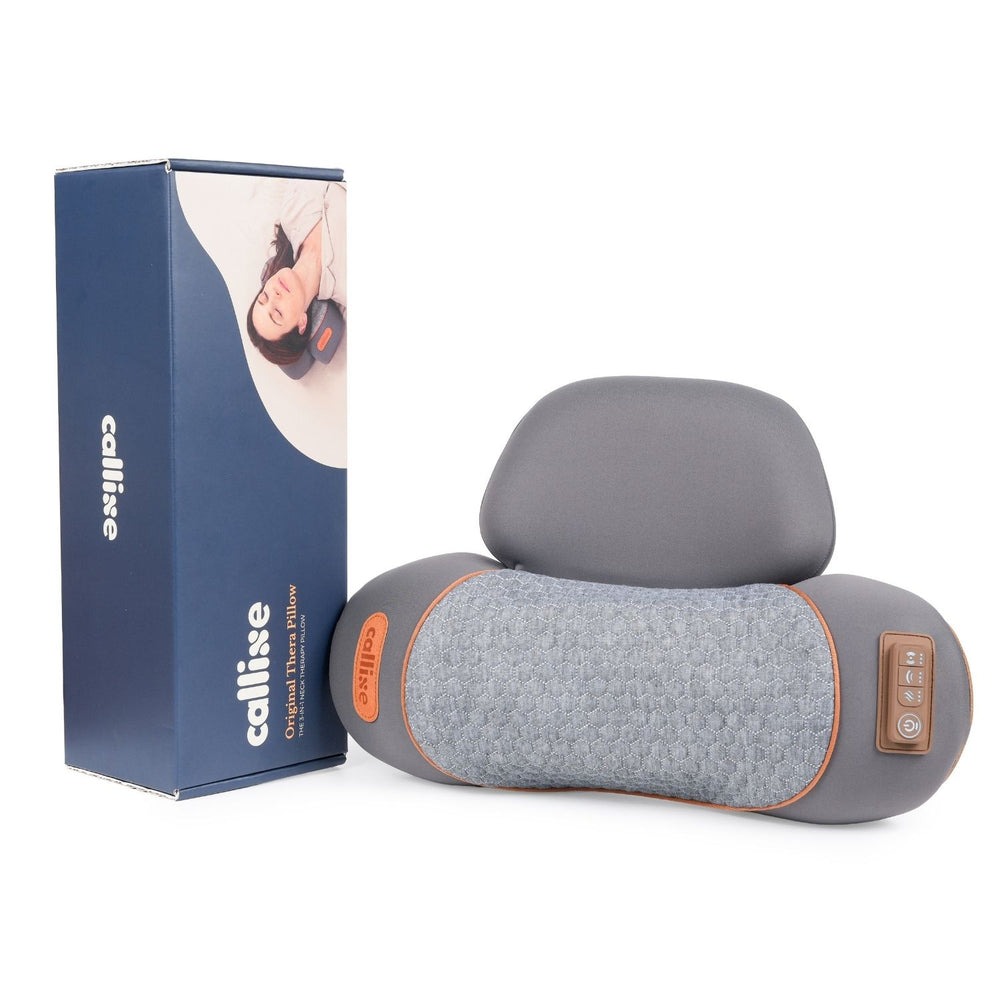
A device like this works best as one part of a routine. It does not replace a better desk setup, regular movement or advice from a professional.
When Is Neck Pain a Sign of Something Serious?
Neck pain can be a sign of something more serious when it comes with numbness, tingling or weakness in the arms. The same goes for pain after a fall or accident, or pain with fever, a severe headache or trouble with balance. Most tech neck is muscle strain, and it eases within days to a few weeks once habits change.
Get medical care quickly if you have any of these warning signs. You should also see a doctor if the pain is severe and constant or keeps you up at night. The same is true if it keeps getting worse, or has not improved after a few weeks of self-care. Unexplained weight loss, neck pain with chest pain or shortness of breath, or problems with bladder or bowel control need urgent attention.
A doctor or physical therapist can check what is causing the pain and give you exercises that fit your body and your daily routine.
The Bottom Line
Tech neck comes from holding the head forward for long stretches, and it is very common. Raise your screens, hold your phone higher, take short breaks and do a few simple exercises each day. Use warmth or a supportive pillow to unwind in the evening if it helps you. And if the pain is severe, keeps getting worse or comes with numbness or weakness, get it checked.
Other Articles You May Find of Interest...
- Tech Neck: Why Phones and Desks Strain Your Neck and What Helps
- Pain in the Left Buttock: Causes and Relief
- Thinking About Knee Surgery? What to Know First
- Common Causes of Chronic Pelvic Pain and When to Seek Medical Attention
- Massage and Pain Management: What Men Should Know Before Booking
- Bone Specialist in Singapore: What to Prepare Before Your First Appointment
- Lower Right Back Cramps: Causes and Relief





