Your Health Magazine Contributor
4201 Northview Drive
Suite 102
Bowie, MD 20716
More Beauty Skin Care & Gorgeous Smiles Articles
How to Compare At-Home Red Light Therapy Devices

At-home red light therapy devices are available for different areas of the body, including the face, scalp, neck, chest and hands. Some products are also sold together in multi-device bundles designed to cover several treatment areas.
Comparing these products requires looking beyond the product name. One set might include a face mask and scalp device, while another combines devices for the face, neck and chest. Treatment areas, device specifications and recommended use can differ considerably.
The examples below show how several multi-area red light therapy sets differ in the devices included, treatment areas and method of light delivery.
Examples of Multi-Area Red Light Therapy Sets
| Bundle | What Is Included | Areas Covered | Light Delivery |
|---|---|---|---|
| Maysama Hand on Heart Bundle | PRANA LED Mask + Chin2Chest LED Device + LED Hand Glove | Face, lips, neck, décolletage, hands | Pulsed LED at 100Hz |
| HigherDose Red Light Starter Kit | Red Light Face Mask + Red Light Hat + two serums | Face and scalp | Continuous |
| Solawave Face and Neck Bundle | Wrinkle Retreat Pro + Neck & Chest Pro | Face, neck, chest | Continuous |
| CurrentBody LED Face and Neck Kit | LED Mask Series 2 + Neck & Décolletage Mask | Face, neck, décolletage | Continuous |
Hand on Heart by Maysama
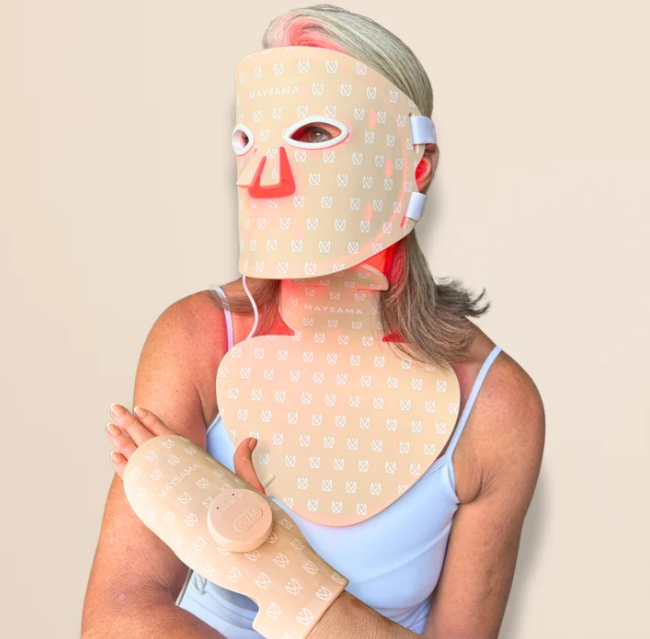
The Maysama Hand on Heart Bundle combines three devices: the PRANA LED Mask, the Chin2Chest LED Device and the LED Hand Glove.
The PRANA mask is designed for the face and lips, the Chin2Chest device covers the chin, neck and décolletage, and the glove is designed for the hands. Together, the devices illustrate how some bundles combine products intended for several treatment areas.
The mask uses 138 LEDs and pulsed light technology at 100Hz. The glove has a fingertips-free design, allowing the hands to remain more functional during treatment. Maysama recommends using the devices at least three to five times per week.
For people comparing multi-area systems, the Maysama Hand on Heart Bundle is one example of a set that combines devices for the face, neck, décolletage and hands.
HigherDose Red Light Starter Kit
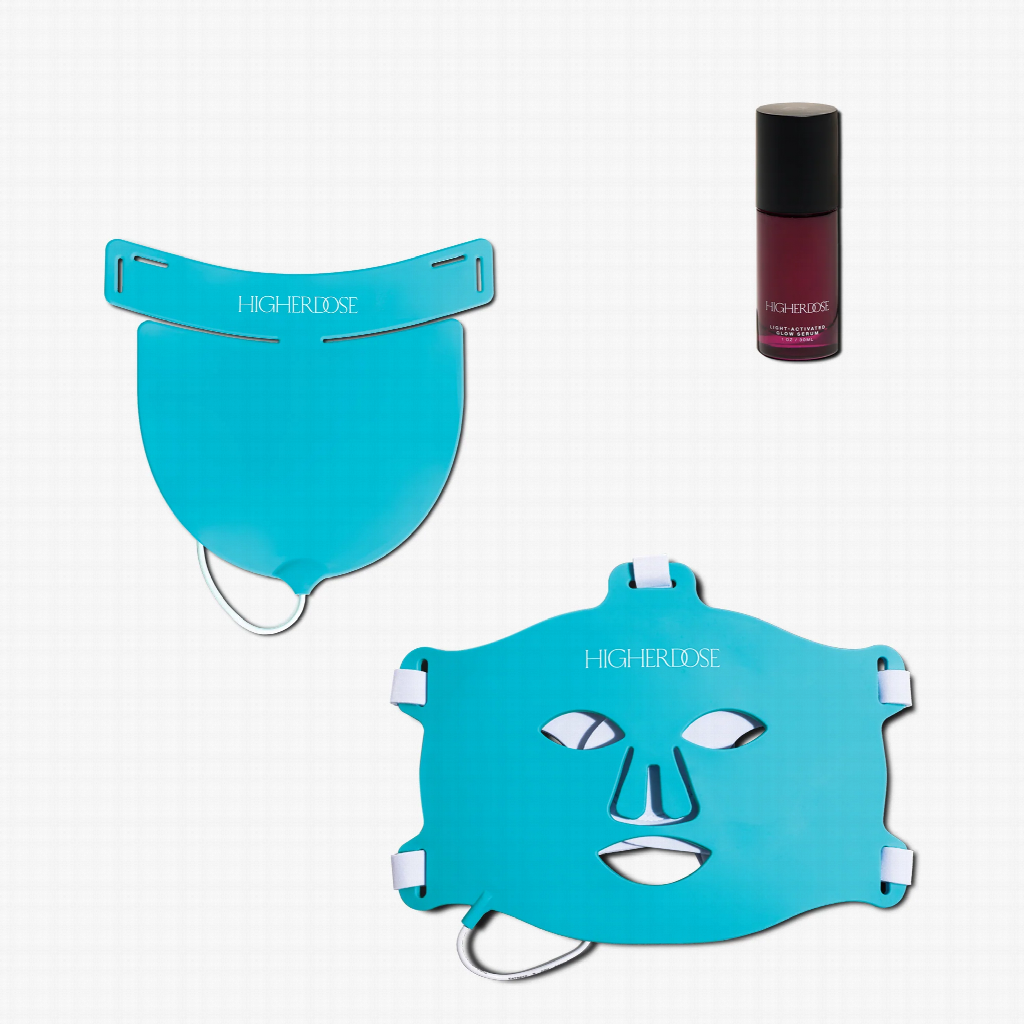
The HigherDose Red Light Starter Kit combines devices intended for both facial and scalp use.
It pairs the Red Light Face Mask with the Red Light Hat, along with two serums. This illustrates another approach to bundling, with separate devices intended for facial and scalp use.
People considering this type of set should compare the specifications and recommended treatment schedule of each device before deciding whether it fits their routine.
Solawave Face and Neck Bundle
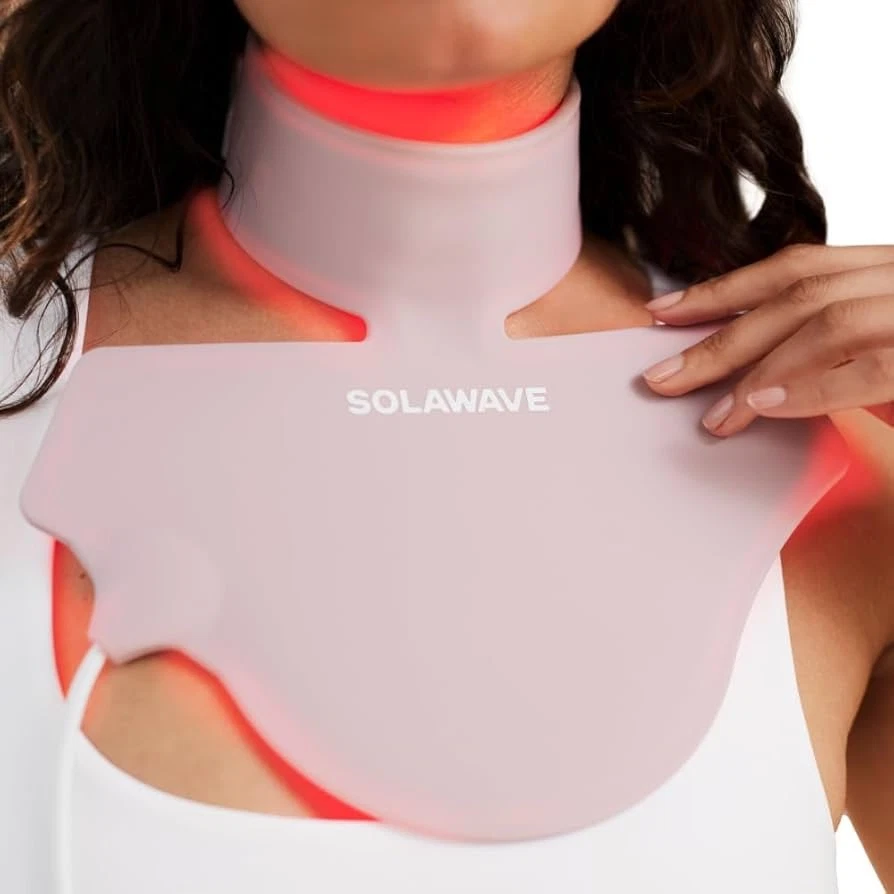
The Solawave Face and Neck Bundle combines the Wrinkle Retreat Pro with the Neck & Chest Pro to cover the face, neck and chest.
The face mask contains 320 LEDs and has a treatment session of around three minutes, while the neck and chest device extends treatment to those areas.
Its relatively short treatment sessions may be one factor to consider for people comparing how different devices fit into a regular routine.
CurrentBody LED Face and Neck Kit
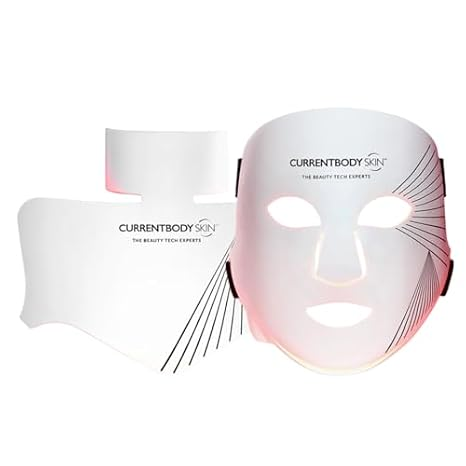
CurrentBody’s Face and Neck Kit combines separate LED devices for the face and for the neck and décolletage.
It combines the LED Light Therapy Mask Series 2 with the Neck & Décolletage Mask, which use red, near-infrared and deep near-infrared light. The devices use a flexible silicone design and are intended to deliver light across the treatment area.
As with other devices, consumers should compare its specifications, treatment schedule, warranty and instructions rather than relying on brand recognition alone.
What to Check Before You Buy
Before choosing a red light therapy device or bundle, several practical factors are worth comparing.
First, consider the areas you actually want to treat. Face-focused devices are common, but separate products are available for the neck, décolletage, scalp and hands. Paying for additional treatment areas may not make sense if those devices are unlikely to be used regularly.
Second, look at how the light is delivered. Some devices use continuous light, while others, including Maysama’s, use pulsed delivery. Neither approach is automatically right for everyone, so compare the manufacturer’s specifications and instructions.
It is also useful to look at the wavelengths provided by a device. Red and near-infrared light are commonly used in consumer devices, but wavelengths, power output and treatment protocols can vary considerably between products.
Treatment time matters as well. Some devices require only a few minutes per session, while others recommend longer or more frequent use. A device is more practical when its recommended schedule realistically fits into your routine.
Fit and comfort should also be considered. Face masks, scalp devices, neck pieces and gloves all need to remain positioned correctly during treatment. A device that is uncomfortable or difficult to use may be harder to use consistently.
Finally, check what is included in the box and what the warranty or return policy covers. Bundles may include serums or accessories in addition to the light therapy devices, so compare the core devices separately from optional extras.
What Red Light Therapy Can and Cannot Tell You From Specifications Alone
Device specifications can help consumers make comparisons, but numbers do not automatically predict results.
Wavelength, power output, treatment distance, treatment time and total light dose can all affect how a device delivers light. However, two devices with similar specifications may still differ in design, fit, treatment coverage and recommended protocols.
Consumers should also distinguish between evidence supporting red or near-infrared light therapy generally and evidence evaluating a specific consumer device. Research involving one device or treatment protocol does not automatically establish that every device marketed for the same purpose will produce identical results.
Marketing terms such as “medical grade,” “professional strength” or “advanced technology” should therefore be considered alongside measurable specifications and available research rather than used as the sole basis for choosing a product.
Consider Safety and Instructions
Red light therapy devices should be used according to the manufacturer’s directions. Recommended treatment times and frequency should not be exceeded simply in the hope of obtaining faster results.
Eye-protection instructions can also vary depending on the device and treatment area. Follow the manufacturer’s recommendations rather than assuming every LED device can be used in the same way.
People taking medications that increase sensitivity to light, those with certain medical or skin conditions, or anyone receiving treatment from a dermatologist should ask a healthcare professional whether an at-home light device is appropriate for them.
Red light therapy should also not replace medical evaluation of a new or changing skin condition.
Consistency Matters
At-home light therapy generally requires repeated use rather than occasional sessions. This makes the recommended treatment schedule an important part of comparing devices.
A shorter session is not automatically better, just as a longer session does not necessarily mean a device is more effective. The relevant question is whether the device delivers its intended treatment according to a practical schedule that someone can follow consistently.
Consumers should therefore compare treatment time, recommended weekly frequency and maintenance recommendations before making a decision.
Final Thoughts
At-home red light therapy devices vary substantially in the areas they cover, their light specifications, treatment schedules and design.
Rather than choosing based on brand recognition or the number of devices included, compare treatment areas, light specifications, session length, safety instructions and warranty terms. Consistent use according to the manufacturer’s directions is also an important consideration when evaluating any at-home red light therapy device.
Other Articles You May Find of Interest...
- What Are the Best Science-Backed Skincare Ingredients?
- How to Compare At-Home Red Light Therapy Devices
- Vitamin C Face Serum: Benefits and Daily Routine for Indian Skin
- Why Your Face Changes Shape With Age and What Modern Aesthetic Treatments Can Address
- How to Address Common Skin Concerns Through Daily Care and Professional Treatments
- Laser Hair Removal: What to Know Before Your First Session
- Dry Patches on the Skin: Causes and Care