Your Health Magazine Contributor
4201 Northview Drive
Suite 102
Bowie, MD 20716
More Medical Tourism Articles
Planning Dental Implants in Turkey – What to Expect at Each Stage
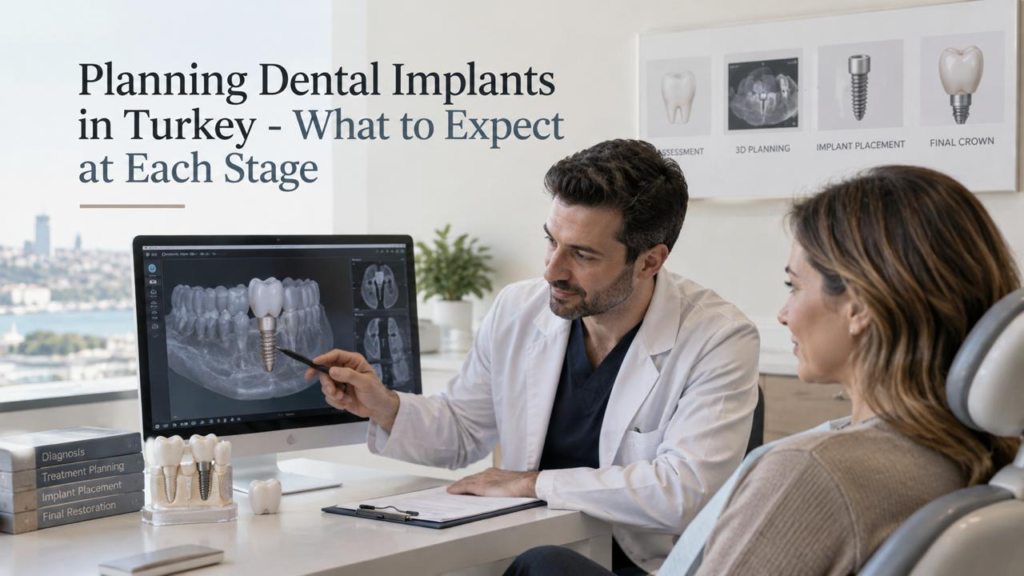
Dental implant treatment abroad is easier to plan when you think of it as a sequence rather than a single appointment. For a UK patient considering dental implants turkey treatment normally moves from initial assessment to clinical examination and imaging then to implant placement healing and the final restoration. The exact sequence depends on your oral health bone condition number of missing teeth and the type of prosthesis planned.
Most implant cases are staged because the implant needs time to become stable within the jawbone before it carries the definitive crown or bridge. Some patients may be suitable for immediate placement or a temporary restoration while others need extra procedures or a longer healing period. The dentist should decide the timing after examining you rather than fitting treatment into a fixed travel schedule.
Stage 1 Remote assessment before you travel
A remote assessment is useful for deciding whether an implant consultation is reasonable and for identifying information the dentist will need when you arrive. You may be asked about missing teeth previous dental treatment medical conditions medicines smoking history and any current pain or infection. Existing dental X-rays or scans can also provide useful background if they are recent and clear enough to review.
Remote screening cannot replace an in-person examination. Bone dimensions gum condition bite relationships and the condition of neighbouring teeth may change the treatment plan once the dentist examines your mouth. For that reason travel arrangements should leave room for the plan to be confirmed after clinical assessment rather than assuming that a provisional plan is final.
Stage 2 Examination and 3D imaging
The in-person appointment is where implant planning becomes specific. The dentist checks the proposed implant site the gums the remaining teeth and the way the upper and lower teeth meet. If more detailed cross-sectional information is needed a cone beam computed tomography scan may be used to assess the jaw in three dimensions and show structures that matter for implant positioning.
Imaging is only one part of the decision. The dentist also considers bone height and width signs of infection general health and whether the final tooth or teeth can be positioned in a way that works for chewing cleaning and appearance. At Ekiz Dental Clinic the treatment plan is determined after clinical and radiographic assessment at its Vadistanbul location in Maslak Sariyer Istanbul.
Stage 3 Confirming the treatment plan
Once the examination is complete the dentist can explain how many implants are proposed whether any teeth need to be removed and whether bone augmentation or another preparatory procedure may be necessary. A single missing tooth and a full-arch reconstruction are very different projects. Full mouth dental implant treatment may involve several implants supporting a fixed or removable prosthesis rather than one implant for every missing tooth.
This is also the point to confirm the planned number of visits. Some cases allow an implant to be placed soon after extraction. Others require healing before implant placement. Likewise a temporary prosthesis may be appropriate in selected situations while another patient may need a different interim solution. These choices depend on the condition of the bone and soft tissues implant stability and the restorative plan.
Stage 4 Implant placement
During implant surgery the clinician prepares a site in the jawbone and places the implant according to the planned position. Local anaesthesia is commonly used for implant placement. The surgical approach can differ according to the number and location of implants and whether extra procedures are being performed at the same appointment.
After surgery the clinic provides instructions for the early recovery period. Swelling tenderness and minor bleeding can occur after oral surgery and should generally improve as healing progresses. Contact the treating dentist if symptoms are worsening or if you develop concerns such as persistent bleeding increasing swelling fever or severe pain. Medicines including antibiotics are not automatically required for every implant case. A dentist may weigh them only after examination and according to the clinical situation.
Stage 5 Healing and osseointegration
The healing phase is one of the main reasons treatment abroad is often divided into separate visits. During this period bone heals around the implant in a process known as osseointegration. The implant should not be treated as ready for the final restoration simply because the gum looks healed from the outside.
Ekiz Dental Clinic explains that recovery time varies between patients and that the dentist decides when the implant is ready for the prosthetic stage. Its implant information notes that a healing period of about three months is common in its treatment pathway while also recognising that timing changes with the individual case. Factors such as bone quality implant stability additional surgery and the type of restoration can alter the schedule.
For a UK patient this usually means planning travel around clinical milestones rather than choosing return dates first. Before leaving after surgery ask what symptoms are expected how oral hygiene should be managed what follow-up is required at home and what would justify contacting the clinic before the next visit.
Stage 6 The final crown or prosthesis
When the dentist is satisfied with healing the restorative phase begins. Depending on the implant system and treatment design an abutment may connect the implant to the crown bridge or full-arch prosthesis. Digital scans or impressions can be used to record the position of the implant and surrounding tissues so the laboratory can produce the final restoration.
The final crown is not simply chosen from a standard shape. Its fit bite contact with neighbouring teeth emergence from the gum and ability to be cleaned all matter. For several missing teeth the final restoration may be an implant-supported bridge. For a completely edentulous arch the design can be a fixed or removable implant-supported prosthesis according to the plan agreed with the dentist.
Why are separate visits often necessary?
Separate visits allow the biological and restorative stages to happen at the appropriate time. The first trip may include examination imaging surgery and an interim restoration when suitable. A later trip can focus on confirming integration taking restorative records trying in the prosthesis when required and fitting the definitive teeth. Trying to compress every stage into one visit is not appropriate for every patient.
Immediate protocols do exist but they are selection dependent. They require the dentist to judge factors such as bone condition implant stability infection status and the planned bite. The relevant question is therefore not whether a one-visit option exists but whether it is clinically appropriate for your specific mouth.
What shapes the cost of implant treatment?
For anyone comparing dental implants cost in Turkey the useful figure is the total treatment plan rather than a headline price for one implant component. Cost can change with the number of implants the type of final restoration the need for extraction bone grafting or sinus procedures diagnostic imaging temporary teeth laboratory work and the complexity of the case.
A full-arch case will therefore be quoted differently from a single-tooth implant. Ekiz Dental Clinic states that pricing varies according to the complexity and requirements of the service. A personal quotation should follow assessment because only then can the dentist define what treatment is actually being proposed. When comparing implant price information ask exactly which clinical and prosthetic stages are included so that different quotes can be compared on the same basis.
Planning your trip around the clinical plan
Before booking flights for the surgical and restorative visits ask for a written outline of the expected stages and which parts remain conditional on examination or healing. Confirm how long the clinic wants you to remain in Istanbul after surgery what follow-up is expected between visits and who to contact if a problem develops after you return to the UK.
The most important planning point is that implant treatment follows biology rather than a holiday timetable. Remote assessment can prepare the process but the definitive plan begins with the in-person examination. Implant placement starts the healing phase rather than ending treatment and the final crown or prosthesis is fitted only when the dentist decides the implant and surrounding tissues are ready.
Other Articles You May Find of Interest...
- Why Choose a Plastic Surgery Coordinator When Traveling Abroad
- Planning Dental Implants in Turkey – What to Expect at Each Stage
- Hair Transplant in Turkey: What International Patients Should Know
- Booking a Specialist Visit in China: What Your Appointment Confirmation Should Tell You
- Considering Zirconia Crowns in Turkey? A Patient’s Guide to Materials, Laboratories and Quality
- Why Turkey Has Become a Global Destination for Advanced Dental Care
- How Clinics Screen International Patients for Plastic Surgery Safety