Your Health Magazine Contributor
4201 Northview Drive
Suite 102
Bowie, MD 20716
More Medical Tourism Articles
How Clinics Screen International Patients for Plastic Surgery Safety

For international patients considering plastic surgery abroad, the screening process begins well before the day of surgery. A responsible clinic needs to establish whether a patient is medically suitable for the requested procedure, whether anesthesia can be administered safely, and whether the patient can reasonably manage the recovery period away from home.
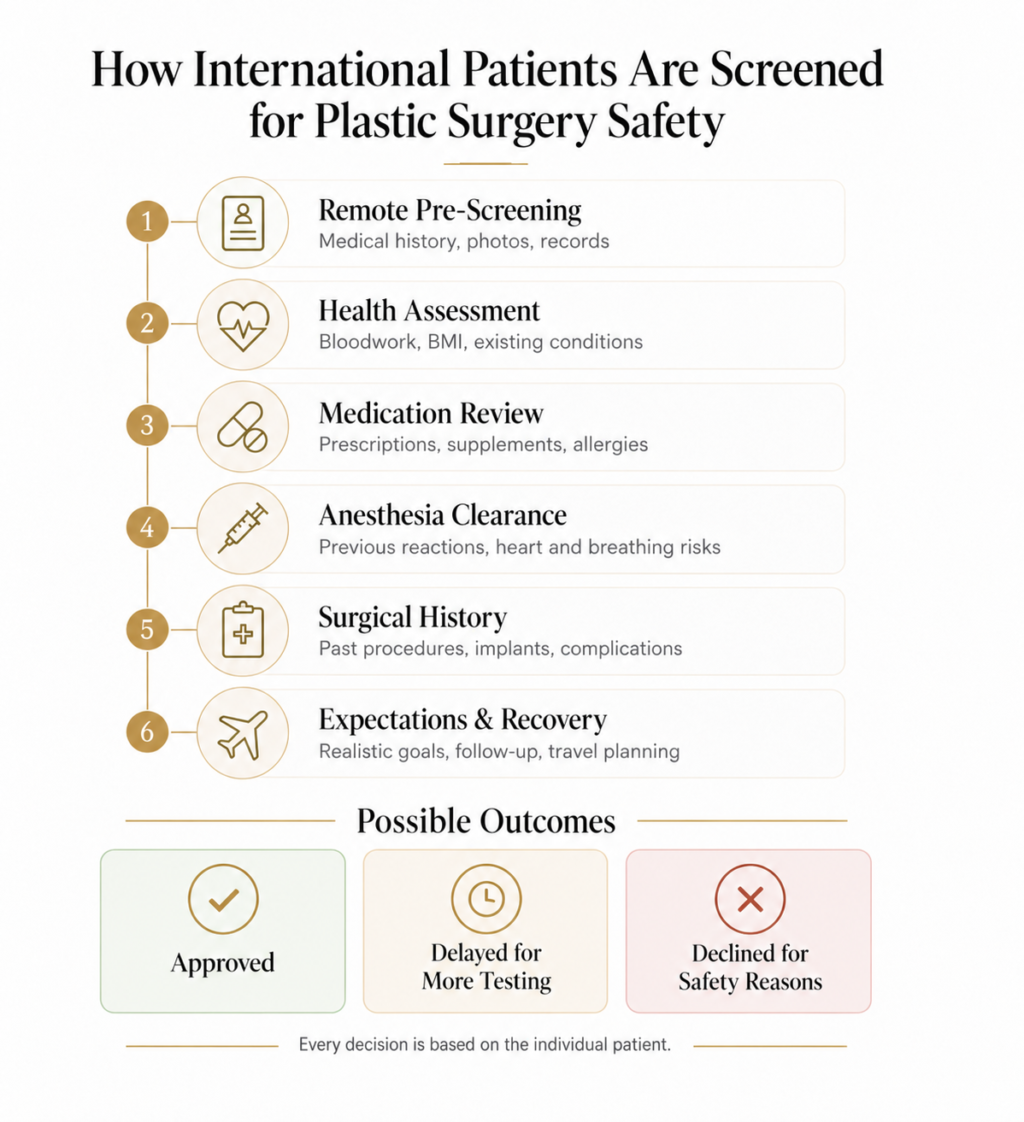
Unlike a routine consultation, international patient screening often begins remotely. Clinics may review medical histories, photographs, medications, previous surgical records, laboratory results, and other health information before confirming treatment. This allows the medical team to identify potential concerns before the patient travels.
Medical History Is the Starting Point
A clinic’s first priority is understanding the patient’s overall health.
International patients are typically asked to provide information about previous surgeries, existing medical conditions, allergies, previous anesthesia experiences, and any complications they have experienced during earlier treatments. The medical team may also ask about smoking, medications, supplements, and other factors that could affect surgery or recovery.
This information is not simply collected for administrative purposes. It helps the clinical team determine whether the requested procedure is appropriate for the individual patient.
For example, a history of a previous surgical complication may require additional records or specialist evaluation before the clinic can make a decision. Similarly, an existing medical condition may not automatically prevent surgery but could require additional precautions.
For example, patients considering treatment abroad can review information from providers such as Estherian Clinic while comparing how international patient consultations and medical screening are handled. However, the important consideration is not simply whether a clinic offers a particular procedure. Patients should understand how the provider determines whether an individual is actually suitable for treatment.
Photographs Help With the Initial Assessment
When a patient lives in another country, an initial assessment may take place virtually. In these situations, photographs can help the surgical team understand the patient’s concerns and evaluate the area being considered for treatment.
Clinics may request photographs from specific angles and under suitable lighting. These images can provide useful information about the patient’s anatomy and help the surgeon determine whether the requested procedure may be appropriate.
However, photographs are only one part of the screening process.
They cannot provide the same information as a physical examination. A surgeon may therefore use photographs for an initial assessment but require an in-person consultation before giving final approval.
This distinction matters because a preliminary indication that someone may be a candidate is not necessarily the same as final surgical clearance.
Bloodwork Can Identify Issues Before Surgery
Depending on the patient’s health and the procedure being considered, the clinic may request blood tests or other medical investigations.
Bloodwork can provide information relevant to surgical planning and may help identify issues that require further evaluation. The exact tests vary according to the patient’s medical history, age, procedure, and anesthesia requirements.
If results indicate a potential concern, the clinic may postpone surgery rather than proceeding immediately.
For example, a patient may need to obtain medical clearance from another healthcare professional, complete additional testing, or address an underlying health issue before surgery can be reconsidered.
This is one reason international patients should allow sufficient time between their initial consultation and planned procedure. A screening process that identifies a concern shortly before travel can otherwise create significant logistical difficulties.
BMI and Overall Health May Affect Eligibility
BMI can form part of a clinic’s assessment, particularly for procedures where body weight may influence anesthesia, mobility, wound healing, or postoperative risks.
However, BMI is generally considered alongside other health factors rather than viewed in isolation. Blood pressure, cardiovascular health, respiratory conditions, existing medical problems, and the type of procedure may all influence the clinical decision.
A patient who does not currently meet a clinic’s criteria may not necessarily be permanently declined. In some situations, surgery may be postponed until certain health factors improve or additional medical information is available.
The purpose of these limits is to determine whether the potential benefits of surgery justify the patient’s individual risks.
Medication Review Is an Essential Safety Check
Patients are expected to disclose all medications and supplements they are taking.
This includes prescription medications, over-the-counter drugs, vitamins, herbal products, and other supplements. Some substances can influence bleeding, blood pressure, anesthesia, or interactions with medications prescribed during recovery.
International patients should provide medication names, dosages, and relevant instructions whenever possible. This is particularly useful when a medication has a brand name that may not be recognized in the destination country.
Patients should never independently discontinue prescribed medication because surgery is approaching. Any medication changes should be made only after consultation with an appropriate healthcare professional.
A medication review may also reveal the need for additional testing or medical clearance before surgery is approved.
Anesthesia Clearance Adds Another Layer of Screening
Being suitable for a surgical procedure does not automatically mean that a patient is suitable for every type of anesthesia.
The anesthesia assessment may consider previous reactions to anesthesia, allergies, respiratory conditions, cardiovascular issues, sleep-related breathing disorders, and other relevant health factors.
Depending on the procedure and the patient’s history, the clinic may request an anesthesia consultation or additional medical clearance.
This stage can affect whether surgery proceeds as originally planned. A patient may require additional evaluation, a different anesthesia approach, or postponement until a medical concern has been addressed.
For international patients, understanding who will administer anesthesia and what monitoring and emergency resources are available is an important part of the preoperative process.
Previous Surgery Can Change the Assessment
Previous cosmetic or reconstructive procedures can influence the feasibility of future surgery.
Patients should disclose previous operations, including procedures performed in other countries. Surgical scars, implants, altered anatomy, previous infections, complications, and revision procedures can all affect planning.
Medical records are particularly valuable when a patient is seeking revision surgery. An operative report can help the new surgical team understand what was previously done and what complications, if any, occurred.
If those records are unavailable or the surgical history is unclear, the clinic may request additional information before making a final decision.
In more complex cases, the requested procedure may be modified or declined if the surgeon determines that the risks are too significant.
Realistic Expectations Are Part of Patient Screening
Safety screening is not limited to physical health.
The surgeon also needs to understand what the patient expects from the procedure. Patients may arrive with a specific appearance in mind, influenced by photographs, social media, or previous consultations.
During the consultation, the surgeon should explain what the procedure can realistically achieve and discuss its limitations.
If a patient’s desired outcome cannot reasonably be achieved through the requested procedure, the clinic may recommend an alternative approach or decide not to proceed.
This conversation is particularly important for international patients because traveling a long distance can create additional emotional and financial pressure to proceed. A thorough consultation gives both the patient and surgeon an opportunity to establish realistic expectations before treatment.
Some Patients Are Approved, While Others Are Delayed
The screening process ultimately helps the clinic determine the appropriate next step.
A patient may be approved when the available medical information supports proceeding with the requested treatment and no significant contraindications are identified. Final approval may still depend on an in-person examination or preoperative assessment.
A patient may be delayed when the medical team needs additional information. This could involve bloodwork, specialist clearance, previous surgical records, medication review, or time to address a health concern.
A patient may be declined when the procedure presents an unacceptable level of risk, the patient’s health makes surgery unsuitable, or the expected outcome is not considered realistic.
Being declined for one procedure does not necessarily mean that a patient can never receive plastic surgery. It may mean that the specific procedure or timing is inappropriate under the patient’s current circumstances.
Recovery and Travel Are Considered Before Surgery
For an international patient, the clinic also needs to consider what happens after the operation.
Recovery does not stop when the patient leaves the surgical facility. Patients may need follow-up appointments, wound checks, medication management, and monitoring for complications.
Travel plans therefore form part of the practical safety discussion. A patient may need to remain in the destination country for a certain period before returning home, depending on the procedure and their recovery.
The CDC recommends that medical travelers consider what will happen if complications arise after returning home and make arrangements for follow-up care.
Patients should know who will provide postoperative support, how urgent concerns will be handled, and how their medical records can be shared with a healthcare provider at home if necessary.
The Decision Should Be Based on the Individual Patient
There is no single screening checklist that determines whether every international patient can safely undergo plastic surgery.
The appropriate assessment depends on the patient’s health, medical history, requested procedure, anesthesia requirements, previous treatments, and recovery circumstances.
That is why a responsible screening process should involve more than reviewing photographs or completing an online form. The clinical team needs enough reliable information to make an individualized medical assessment.
Patients can make this process easier by providing accurate records, disclosing all medications and health conditions, completing requested testing, and answering questions honestly.
The NHS guidance on cosmetic procedures also emphasizes considering the risks, practitioner qualifications, aftercare, and what happens if something goes wrong before undergoing cosmetic treatment.
Conclusion
Screening international patients for plastic surgery safety is a structured clinical process designed to determine whether treatment is appropriate for a particular individual.
Medical history, photographs, bloodwork, BMI and other health considerations, medication use, anesthesia clearance, previous surgeries, and realistic expectations can all influence the decision. The result may be approval, a delay while additional requirements are completed, or a decision not to proceed.
For international patients, the screening process is an important safeguard rather than a formality. It allows the medical team to identify potential concerns before surgery and helps ensure that treatment decisions are based on the patient’s individual circumstances rather than simply the procedure they have requested.
FAQs
What information do clinics usually request from international patients?
Clinics may request medical history, current medications, previous surgical records, photographs, laboratory results, allergies, and information about existing health conditions. The exact requirements depend on the procedure and the patient’s circumstances. Additional medical clearance may be requested when the initial information identifies a potential concern.
Can a patient be declined for plastic surgery after traveling to another country?
Yes. A clinic can determine that surgery is not appropriate after reviewing the patient’s health, medical history, examination, testing, anesthesia risks, or expectations. Patients should therefore complete as much screening as possible before traveling rather than assuming that a booked consultation guarantees that surgery will proceed.
Why is postoperative planning important for international patients?
International patients must consider where they will recover, how follow-up appointments will be handled, when they can safely travel home, and who will manage complications if they occur. Having a clear postoperative plan before surgery can help maintain continuity of care after the patient leaves the country.
Other Articles You May Find of Interest...
- How to Choose a Safe Hair Transplant Clinic in Turkey: A Patient’s Health Guide for 2026
- Affordable Aesthetic Treatment in Seoul: What US Patients Should Know About Pricing and Clinic Practices
- Planning a Medical Transfer: What Families and Care Teams Should Coordinate
- Hollywood Smile in Istanbul: Why Your Smile Should Be Planned, Not Copied
- Why Choose a Plastic Surgery Coordinator When Traveling Abroad
- Planning Dental Implants in Turkey – What to Expect at Each Stage
- Hair Transplant in Turkey: What International Patients Should Know