Your Health Magazine Contributor
4201 Northview Drive
Suite 102
Bowie, MD 20716
More Medical Tourism Articles
Considering Zirconia Crowns in Turkey? A Patient’s Guide to Materials, Laboratories and Quality
A zirconia crown can restore a damaged tooth, but choosing one involves more than selecting a shade or comparing a price per tooth. For international patients considering treatment in Turkey, the most useful starting point is a clear explanation of why a crown is proposed, how it will be made and what support will be available afterwards.
What to consider before choosing zirconia crowns
A crown is a restoration that fits over a prepared tooth. Zirconia is a ceramic material used to make some crowns; the precise type and design should suit the tooth being treated and the clinical plan. A veneer is different: it usually covers the visible front surface of a tooth rather than fitting over it like a crown. Both treatments involve decisions about the existing tooth, so they should not be treated as interchangeable cosmetic options.
A dentist may consider a crown when a tooth needs substantial restoration, but appearance alone does not establish that one is necessary. Ask what the examination shows about the tooth, its existing fillings, the gums and your bite. If several teeth are included in a proposed plan, the reason for treating each one should be explained separately. You should also be able to ask whether a less extensive approach is appropriate in your circumstances.
Photographs and remote discussions can help start a conversation before travel, but they may not settle every clinical question. Find out what will be confirmed during an in-person examination and whether the plan could change once the dentist assesses your teeth. A sound decision leaves room for that assessment rather than assuming the same restoration is right for everyone.
Look beyond the price per tooth
A quoted price is easier to interpret when you know what it includes. Ask the clinic to identify the proposed zirconia material and its manufacturer, and to explain why that choice has been recommended for your teeth. The answer need not be highly technical: you are looking for a clear connection between the material, the proposed restoration and your clinical needs.
It is also worth asking who will make the crowns and where the laboratory work will take place. Clarify the stages of treatment, including examination, tooth preparation, impressions or scans, any temporary restorations, fitting and final adjustments. If you are travelling, check how much time the plan allows for trying in the crowns and addressing concerns before you leave. A schedule should be realistic enough to accommodate clinical decisions and necessary changes.
Ask what happens if a crown’s shade, fit or bite needs adjusting, and whether those steps are included in the proposal. You should know whom to contact if you notice discomfort after fitting and what follow-up the clinic offers once you have returned home.
These questions do not imply that a higher price automatically means better treatment. They help you compare proposals on their clinical explanations, production arrangements and aftercare, rather than on a single figure that may not describe the same service at every clinic.
Why the laboratory matters
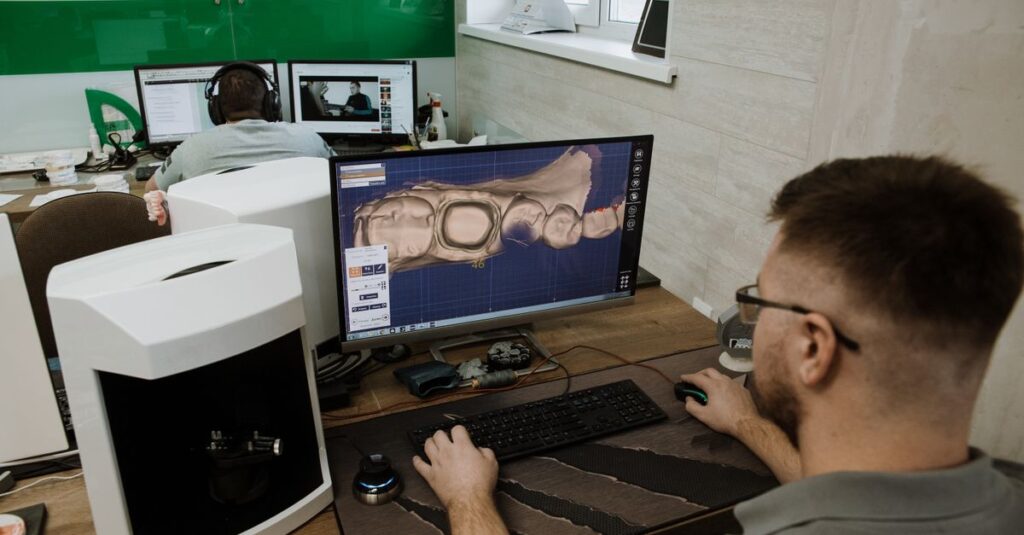
The finished crown depends on more than the name of its material. The dentist first needs suitable information about the prepared tooth and surrounding teeth. A digital scan is one way of recording their shape; the laboratory then uses that information to design a restoration intended to fit the preparation and work within the patient’s bite. If a clinic proposes another impression method, ask how the resulting information is checked and passed to the laboratory.
In a CAD/CAM process, a technician uses computer-aided design to plan the crown’s shape, and a milling machine produces it from a suitable block or disc of material. Zirconia restorations then undergo sintering, a controlled heating stage that is part of the manufacturing process. Finishing may involve refining the surface and appearance. Those steps still require people to make decisions and check the result; digital equipment does not remove the need for clinical and technical judgement.
Communication matters when a technician needs to understand details that a scan alone may not convey, such as the intended appearance or how a crown should relate to neighbouring teeth. The dentist should assess the crown at fitting, including its seating, contacts with adjacent teeth, shade where relevant and the way the teeth meet. A patient’s account of how the bite feels is useful at this stage too.
Material selection, design, milling, sintering, finishing and fitting can all influence consistency, appearance and function.
Questions worth asking your clinic
You can take a short checklist into a consultation, whether it takes place before or after you travel:
- Which zirconia material and manufacturer are proposed, and why are they suitable for my treatment plan?
- Who will produce the crowns, and which stages will the laboratory carry out?
- How will the dentist and technician coordinate the design, shade and any requested changes?
- How will the team check fit, appearance and bite before the crowns are finally fitted?
- What adjustments and follow-up are available, including after I return home?
Ask for answers specific to your proposed treatment. If a plan changes following examination, the clinic should explain what changed and give you an opportunity to consider the revised recommendation.
A practical example: Esnan’s Diamond Partnership
Laboratory arrangements can be easier to assess when a clinic describes how its clinical and production teams work together. One example is Esnan Dental Clinics and Esnan Digital Laboratory, which dental technology manufacturer Amann Girrbach has confirmed as its first Diamond Partner Clinic and Laboratory. Esnan’s Diamond Partnership with Amann Girrbach describes that manufacturer relationship.
According to Amann Girrbach, the partnership provides for an integrated workflow using its solutions across key production stages, alongside a jointly developed, structured training programme for clinical and laboratory teams. For a patient considering zirconia crowns, the relevance is practical: shared processes and training can provide a framework for coordinating the people involved in designing and producing a restoration. The important question remains how those processes are applied to an individual treatment plan and how the resulting crown is checked at fitting.
Diamond Partner status reflects a manufacturer partnership rather than an independent clinical accreditation. However, Esnan’s JCI accreditation and its Skyland clinic’s Temos accreditations demonstrate independent assessment against patient safety and quality standards.
Other Articles You May Find of Interest...
- Why Choose a Plastic Surgery Coordinator When Traveling Abroad
- Planning Dental Implants in Turkey – What to Expect at Each Stage
- Hair Transplant in Turkey: What International Patients Should Know
- Booking a Specialist Visit in China: What Your Appointment Confirmation Should Tell You
- Considering Zirconia Crowns in Turkey? A Patient’s Guide to Materials, Laboratories and Quality
- Why Turkey Has Become a Global Destination for Advanced Dental Care
- How Clinics Screen International Patients for Plastic Surgery Safety