More Health Education Articles
Where Are the Pores of Sweat Glands Located?
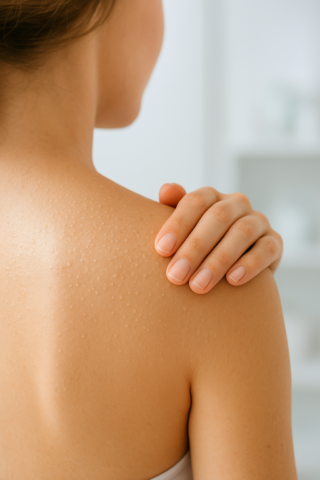
By Your Health Magazine Health Information Team
The pores of the sweat glands are located in the epidermis, at the outer surface of the skin. These tiny openings are the endpoints of ducts that carry sweat upward from glands located deeper in the skin. This description applies mainly to eccrine sweat glands, which release sweat directly onto the skin. Apocrine sweat glands usually empty into hair follicles instead of through separate surface pores.
Where Sweat Glands and Their Pores Are Found
A sweat gland is not located inside the pore itself. Most of the gland is a small, coiled structure within the dermis, the supportive layer beneath the epidermis. Some glands extend close to the tissue below the dermis. A narrow duct travels from the gland through the dermis and epidermis before reaching its opening.
- The secretory coil produces sweat. This part is situated deep within the skin.
- The sweat duct carries the fluid upward. The duct passes through the dermis and epidermis.
- The sweat pore releases the fluid. The pore is the duct’s opening at the skin surface.
Therefore, if a question asks where the pores of the sweat glands are located, the most accurate short answer is on the skin surface within the epidermis. The National Library of Medicine’s overview of sweat gland anatomy explains that the glands themselves reside within the dermis even though their ducts may open at the surface.
Understanding this difference between a structure and its location is useful throughout anatomy. A similar approach helps when learning where the female heart is located in the body in relation to surrounding tissues.
Eccrine and Apocrine Glands Have Different Openings
The body has two principal types of sweat glands. Their ducts do not end in exactly the same place.
| Gland type | Where its duct opens | Common locations | Main role |
|---|---|---|---|
| Eccrine | Directly onto the skin surface through a sweat pore | Most of the body, with especially high concentrations on the palms, soles and forehead | Producing watery sweat that helps regulate body temperature |
| Apocrine | Usually into the upper part of a hair follicle | Primarily the armpits, groin and areas around the nipples | Producing a thicker secretion that can contribute to body odor after skin bacteria break it down |
Eccrine glands are the glands people usually mean when discussing sweat pores. They are widely distributed and begin releasing sweat when the nervous system signals that the body needs cooling. Sweat on the skin can evaporate, carrying away heat.
Apocrine glands are concentrated in hair-bearing regions and become active around puberty. Because their secretions enter hair follicles, they generally do not have the same type of independent opening seen with eccrine glands.
Are Sweat Pores the Same as Hair or Oil-Gland Pores?
Not always. The word “pore” is commonly used for several types of small skin openings, but these structures are different:
- Eccrine sweat pores are openings of sweat ducts directly onto the skin.
- Hair-follicle openings are channels through which hair reaches the surface.
- Sebaceous gland secretions usually enter hair follicles and help lubricate the hair and skin.
- Apocrine gland ducts also generally empty into hair follicles rather than separate surface pores.
This distinction explains why eccrine sweat can appear on the palms and soles even though those areas do not have hair follicles. These surfaces contain many eccrine glands and their associated pores.
Can You See Sweat Pores?
Individual sweat pores are usually too small to identify easily without magnification. Moisture may first become noticeable as tiny beads of sweat, especially on the forehead, upper lip, palms or soles. What looks like one visible “pore” may instead be a hair-follicle opening or a small depression in the skin.
Sweat pores also do not open and close like doors. Heat, exercise, fever and emotional stress can stimulate sweat production, making the openings more noticeable because the skin becomes wet. Cooling the skin reduces the signal to produce sweat, but it does not permanently shrink or close the ducts.
What Happens When Sweat Ducts Are Blocked?
When sweat becomes trapped because a duct is obstructed, irritated bumps known as heat rash or miliaria can develop. This is more likely in hot, humid conditions, beneath tight clothing or in areas where the skin remains covered and damp. Cooling the skin, wearing breathable clothing and avoiding heavy products that trap heat may help reduce minor irritation.
Antiperspirants work differently from deodorants. Antiperspirants temporarily reduce sweat reaching the surface by forming plugs within sweat ducts. Deodorants primarily address odor and do not necessarily reduce sweat production. People with persistent excessive sweating can review the American Academy of Dermatology’s information on hyperhidrosis treatment and discuss appropriate options with a healthcare professional.
When to Seek Care
Sweating normally increases with physical activity, heat, anxiety or fever. However, a medical evaluation may be appropriate if sweating is new, unexplained, occurs frequently during sleep or interferes with daily activities. Excessive sweating can sometimes be related to a medication or an underlying health condition, although many cases are not caused by a serious disorder.
Too little sweating can also be dangerous because it limits the body’s ability to release heat. Seek prompt medical attention if you cannot sweat in hot conditions and develop weakness, dizziness, nausea, headache or unusually hot skin. Confusion, fainting or severe overheating may indicate a medical emergency.
A primary care clinician can assess generalized or sudden changes in sweating. A dermatologist may help with persistent localized sweating, recurrent heat rash or other suspected sweat-gland disorders. The MedlinePlus guide to sweat and sweating disorders provides additional information about excessive and reduced sweating. Readers can also explore other medically reviewed MedlinePlus health topics.
In summary, sweat-gland pores are surface openings in the epidermis, while the glands that produce sweat are located deeper in the dermis. Eccrine glands empty directly through these pores; apocrine glands usually release their secretions into hair follicles.
Other Articles You May Find of Interest...
- Where Are the Pores of Sweat Glands Located?
- Why Event Medical Planning Matters More Than Most Organizers Expect
- Your Patients Are Already Buying Peptides Online. Here Is How to Talk About It
- Is Phenibut Safe? What the Evidence and the Law Say in 2026
- The Hormonal Cost of Anabolic Steroids: Heart, Liver and Endocrine Health
- Vaccinations: An Important Part Of Preventive Healthcare
- First Aid Courses: What to Expect and How to Choose the Right One