Your Health Magazine Contributor
4201 Northview Drive
Suite 102
Bowie, MD 20716
More Sleep Articles
Smart Mattress Covers: A Guide to Cooling and Sleep Tracking
Summer training in the Mid-Atlantic can mean humid nights, a bedroom that never quite cools off, and restless sleep before the next workout.
Smart mattress covers add adjustable bed-surface temperature and sleep tracking. They can supplement a comfortable room and a consistent sleep schedule, but they don’t replace either.
Key Takeaways
- Start with the room and your schedule. Try a bedroom temperature in the mid-60s if comfortable, and allow for at least seven hours of sleep before buying equipment.
- Smart covers offer more control. Some water-based systems let each sleeper choose a temperature and track sleep-related measurements without a wearable.
- Compare the full cost. Subscriptions, maintenance, and warranty conditions matter alongside the purchase price.
- Sports partnerships aren’t proof of results. Partnerships such as IRONMAN Europe’s with Eight Sleep show interest in sleep technology, not evidence of performance gains.
Why Cooler Sleep Helps Recovery
Falling asleep involves a natural decline in core body temperature. A comfortably cool bedroom supports that process, which is why about 65°F is often suggested as a starting point. You shouldn’t need to feel cold to sleep well.
For people who train regularly, protecting sleep matters because it supports recovery. An overly warm room can delay sleep or cause waking during the night, reducing total sleep time. A warm shower or bath an hour or so before bed may also help some people settle as the body cools afterward.
Temperature is only one factor. Most adults need at least seven hours of sleep, and a consistent bedtime and wake time remain important.
Start With Low-Cost Cooling Changes
Before spending on equipment, try a few simpler adjustments:
- Set the thermostat in the mid-60s overnight if that feels comfortable and your home and budget allow it.
- Use fans or air conditioning as needed. Open windows when outdoor conditions are cooler and suitable.
- Switch to lighter blankets and breathable sheets, such as cotton or linen.
- Keep a short wind-down routine and a consistent sleep schedule, including on weekends.
Notice whether these changes reduce waking or make the bed more comfortable. If overheating persists despite reasonable room cooling, a system that adjusts the bed’s temperature may be worth considering.
Smart Covers: How They Cool and What They Track
Bed-cooling systems use several approaches. Water-based covers circulate temperature-controlled water through channels inside the cover, supplied by a bedside hub. Air-based systems move air under the sheets. Fan-based toppers use airflow to carry heat and moisture away from the body.
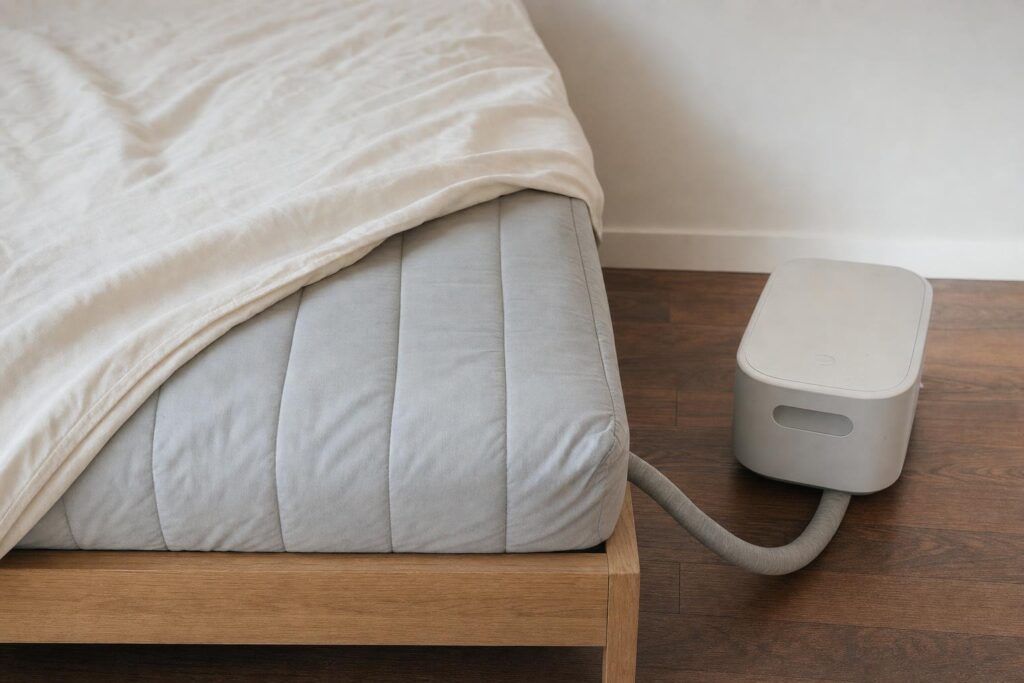
“Dual-zone” means each side of the bed has its own temperature setting, which can help couples with different preferences. Some covers also use built-in sensors to track heart rate, breathing, and other sleep-related measurements without a watch or ring. Heart rate variability, or HRV, describes changes in the time between heartbeats.
Features vary by model, and sleep-stage results are estimates rather than direct measurements of brain activity. Don’t treat a consumer sleep tracker as a medical device. Room conditions also matter: cooling the bed surface doesn’t cool or dehumidify the bedroom.
Spotlight: Dual-Zone Cooling and Tracking Without a Wearable
The Pod 5 fits over an existing mattress and connects to a bedside Hub. Its listed temperature range is 55°F to 110°F, with independent controls for each side. It tracks heart rate and HRV, estimates sleep stages, and monitors snoring without a wearable. Wake-up options include vibration or a temperature change instead of an alarm tone.
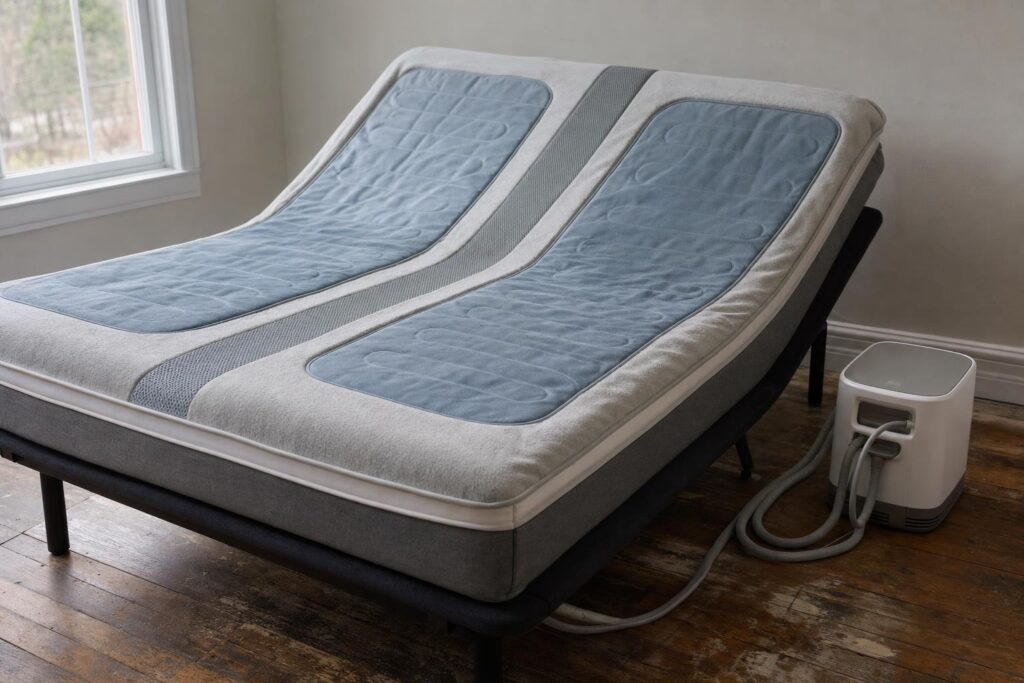
The Eight Sleep Pod combines temperature control and tracking in one setup. When comparing it with other systems, include the required first-year Autopilot plan in the total cost, and check how the membership tier affects warranty coverage.
Autopilot is required for the first 12 months and covers two users per Pod. The Base, Blanket, and Pillow Cover are optional add-ons sold separately. Eight Sleep lists the Pod 5 at $2,999 before promotional discounts, with the required Enhanced Autopilot plan adding $299 for the first year. Prices, promotions, and plans can change, so confirm the current total before purchasing.
What Sports Partnerships Tell You
Eight Sleep is the Official Sleep Fitness Partner of IRONMAN Europe, while Sleep Number is the NFL’s Official Sleep + Wellness Partner and offers active warming and cooling in its Climate collection.
These examples show an interest in sleep technology within sport. They don’t establish that a particular product improves performance or reveal what every athlete uses. For everyday training, the practical priority is comfortable, consistent sleep rather than matching a professional partnership.
Alternatives at a Glance
Other options range from cooling-only systems to full smart beds and tracking mats:
- Sleepme Chilipad Dock Pro: a water-based system with a listed range of 55°F to 115°F and no required subscription.
- BedJet 3: an air-based system with a sweat-dry mode; dual-zone control requires two units.
- Perfectly Snug Smart Topper: a fan-based topper that uses airflow rather than circulating water.
- Sleep Number Climate360: a full smart bed with an integrated adjustable base, at an MSRP of $10,249 for a queen.
- Withings Sleep: a tracking-only mat placed under the mattress. It estimates sleep cycles and tracks breathing-related measurements and heart rate, but doesn’t provide cooling.
Water-based systems can provide substantial surface cooling but need refilling and cleaning according to the manufacturer’s instructions. Air systems avoid water maintenance but can produce fan noise. Water-based hubs can also make noise, so neither approach should be assumed silent. Review bedroom temperature and airflow before comparing current specifications and pricing.
How to Choose
Use these questions to narrow the choices:
- Do you share a bed with someone who prefers a different temperature? If so, independent controls may be useful.
- Do you need active cooling, or would lighter bedding and better airflow be enough?
- Do you want sleep tracking without wearing a device?
- How much maintenance and operating noise will you tolerate?
- What is the total cost, including any required subscription?
- Does the system fit your mattress, and is there room for the hub beside the bed?
Build Your Sleep Setup in Order
Start with the room and your schedule, then decide whether adjustable bed cooling addresses a remaining problem. For hot sleepers or couples with different temperature preferences, a dual-zone system offers control that ordinary bedding can’t. Treat it as one part of a recovery routine, not a substitute for sufficient sleep.
FAQ
How should I use non-wearable sleep-tracking results?
Look for patterns over several nights rather than reacting to one score. Estimates can help you review habits, but they can’t diagnose a sleep disorder. Persistent snoring, breathing concerns, or daytime sleepiness warrant a conversation with a healthcare professional.
Other Articles You May Find of Interest...
- Smart Mattress Covers: A Guide to Cooling and Sleep Tracking
- The Science of Micro Rest and How to Actually Recharge
- How Bedroom Temperature, Airflow, and Lighting Affect Sleep Quality
- How to Choose a Mattress for Neck Pain Without Wasting Money
- The Real Connection Between Your Mattress and Sleep Quality
- How Buckwheat Pillows May Support Better Sleep Posture
- How to Sleep Better During Stressful Times