Your Health Magazine Contributor
4201 Northview Drive
Suite 102
Bowie, MD 20716
More Workplace Health & Safety Articles
The Growing Demand for Made-to-Order Industrial Components
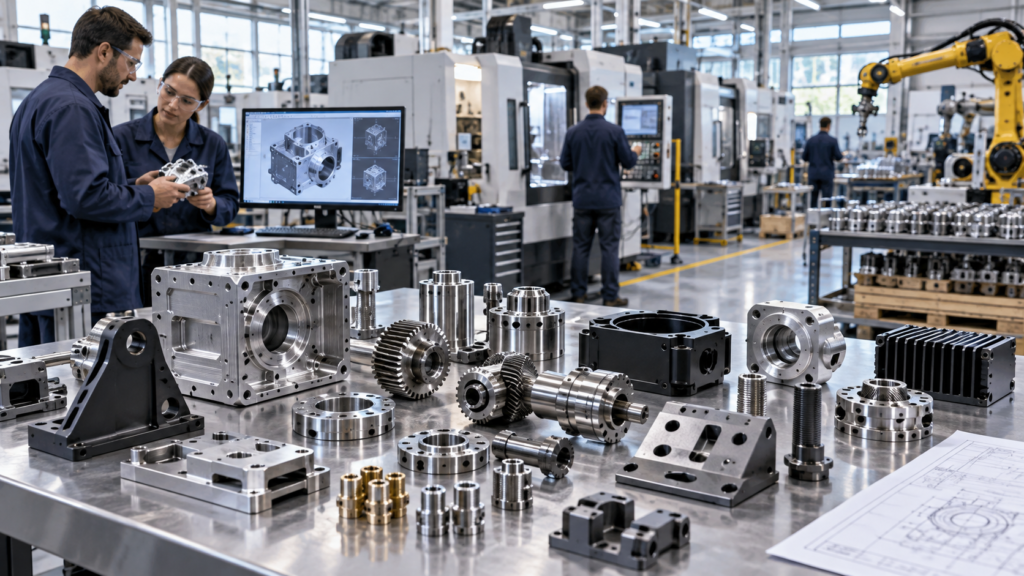
Industrial equipment is rarely built around a one-size-fits-all approach. Machines may operate in unusual environments, older systems may require discontinued replacement parts, and new automation projects often need components designed around very specific dimensions. As a result, manufacturers increasingly need parts that are produced for a particular application rather than selected from a standard catalog.
Safety and production requirements also remain important. OSHA’s machine guarding guidance emphasizes the need to protect workers from hazards associated with moving machine parts, making component design more than a question of dimensions and cost.
1. Custom Requirements Are Driving Component Demand
Industrial systems often contain components designed for a specific machine, production line, or operating environment. When one of those parts fails or needs modification, finding an identical off-the-shelf replacement may be difficult.
A made-to-order component can address that problem by being designed around the actual application. Dimensions, mounting points, material requirements, tolerances, and operating conditions can all be considered before production begins.
For example, a factory may need a protective cover that fits around an existing assembly with limited clearance. Rather than redesigning the entire assembly to accommodate a standard cover, the cover itself can be produced around the existing equipment.
For plastic components, working with a thermoforming company can also be appropriate when a project requires formed parts with specific shapes, dimensions, or functional requirements.
This approach gives engineers more flexibility when standard components do not provide the right fit.
2. Low-Volume Production Is Becoming More Practical
Traditional manufacturing methods can become expensive when production quantities are small. Tooling, setup, and minimum order requirements can make a standard production process difficult to justify for a component that may only be needed in dozens or hundreds of units.
Modern manufacturing technologies are making smaller production runs more accessible.
NIST notes that additive manufacturing can support low-volume production, customization, rapid prototyping, and replacement parts. It can also reduce the need for dedicated tooling in certain applications.
This does not mean one manufacturing method is suitable for every project. Instead, manufacturers can evaluate the required quantity, material, geometry, tolerance, and production timeline before selecting a process.
For some applications, CNC machining may be suitable. For others, thermoforming, injection molding, sheet fabrication, or additive manufacturing may make more sense.
3. Digital Design Makes Customization Easier
The growth of digital manufacturing has made it easier to move from an idea or physical reference part to a manufacturable component.
A typical workflow may begin with measurements, drawings, photographs, or an existing CAD file. Engineers can then create or modify a digital model before evaluating the design for manufacturing.
Digital models make it easier to identify potential problems before material is ordered. Designers can check clearances, mounting points, wall thicknesses, interfaces, and other important features.
The same digital file can also support future production. If a replacement part is needed several years later, the design information can provide a starting point instead of requiring the component to be recreated from scratch.
This is particularly valuable for older machinery where original drawings or supplier information may no longer be available.
4. Material Selection Has Become More Application-Specific
A made-to-order component should not simply match the original part’s shape. It also needs to perform under the conditions where it will be used.
Engineers may need to consider:
- Temperature exposure
- Chemical contact
- Moisture
- UV exposure
- Mechanical loads
- Wear and friction
- Electrical requirements
- Weight limitations
- Cleaning requirements
A plastic enclosure used indoors, for example, may have very different material requirements from one exposed to outdoor weather or industrial chemicals.
Material selection should therefore happen alongside design rather than after the geometry has already been finalized.
5. Replacement Parts Are a Major Use Case
Industrial equipment can remain operational for decades, while individual components may become obsolete much sooner.
This creates a difficult situation when a small but essential part fails. The machine may still be functional, but the original supplier may no longer manufacture the required component.
Made-to-order production provides another path. An existing component can be measured, modeled, and redesigned where appropriate before a replacement is manufactured.
This can be particularly useful for older equipment, specialized machinery, discontinued assemblies, and low-volume industrial systems.
However, replacement does not always mean copying the original part exactly. A newer material or manufacturing process may provide a better solution if the operating requirements have changed.
6. Prototyping Helps Reduce Design Risk
Producing a final batch immediately is rarely the best approach when a component has not been tested.
A prototype allows engineers to examine the physical part before committing to larger production quantities. Depending on the application, the prototype can be used to check fit, assembly, movement, access, appearance, and basic functional performance.
For example, a custom bracket may look correct in a CAD model but interfere with an adjacent component once installed. A prototype can reveal that problem early.
Rapid prototyping is particularly useful when several design iterations are expected. NIST identifies rapid prototyping and design iteration as important applications of additive manufacturing.
7. Tolerances Matter as Much as Overall Dimensions
A component can have the correct overall size and still fail to fit or function correctly.
Small differences in hole diameter, wall thickness, alignment, flatness, or mating surfaces can affect assembly. This is why made-to-order manufacturing requires clear specifications rather than simply providing a general shape.
Tolerance requirements should reflect the actual function of the part. Not every feature needs extremely tight tolerances, and unnecessarily strict tolerances can increase manufacturing difficulty and cost.
The goal is to identify which dimensions are critical to performance and which can allow reasonable variation.
8. Safety Should Be Considered During Design
Industrial components can interact directly with machinery, operators, tools, and moving systems. A poorly designed component can introduce risks even if it performs its intended mechanical function.
OSHA states that machine guards should protect workers from hazards such as rotating parts, ingoing nip points, and flying chips or sparks. Guards should also avoid creating new hazards themselves.
For custom components, this means safety should be considered during the design stage. Edges, access points, moving interfaces, mounting methods, and potential failure modes may all require attention.
A component intended for an industrial environment should be evaluated within the complete system rather than viewed as an isolated part.
9. Documentation Supports Future Production
One advantage of made-to-order manufacturing is the opportunity to create a complete digital record of the component.
Useful documentation may include:
- CAD files
- Engineering drawings
- Material specifications
- Critical dimensions
- Tolerance information
- Revision history
- Finishing requirements
- Inspection requirements
- Assembly notes
Good documentation makes future production easier and reduces the risk of recreating a part differently each time.
It can also support maintenance teams when replacement components are required years after the original production run.
10. The Right Manufacturing Process Depends on the Application
There is no universal manufacturing process for made-to-order industrial components.
CNC machining may be appropriate for precise parts and durable materials. Additive manufacturing can be useful for complex geometries, prototypes, and selected low-volume applications. Thermoforming can suit certain shaped plastic components, while injection molding may become more practical as production quantities increase.
The decision should consider the complete set of requirements rather than focusing on the manufacturing method alone.
Important questions include:
- How many parts are required?
- What material is appropriate?
- What tolerances are necessary?
- How complex is the geometry?
- What environmental conditions will the part face?
- Does the component require tooling?
- How quickly is the part needed?
- How will the finished component be inspected?
Answering these questions early can prevent expensive changes later in the process.
Conclusion
The growing demand for made-to-order industrial components reflects a broader shift toward flexible, application-specific manufacturing. Businesses need practical ways to support aging equipment, low-volume production, customized machinery, new automation projects, and replacement-part requirements.
Digital design, rapid prototyping, and flexible manufacturing processes have made it easier to produce components around real-world requirements. At the same time, successful custom production still depends on fundamentals such as material selection, tolerances, testing, safety, and documentation.
Rather than treating customization as an exception, manufacturers can view it as one part of a broader strategy for maintaining equipment and developing more adaptable industrial systems.
FAQs
What are made-to-order industrial components?
Made-to-order industrial components are parts manufactured according to specific requirements rather than selected from a standard catalog. They may be designed around unique dimensions, materials, operating conditions, or equipment interfaces. Common examples include replacement parts, machine guards, brackets, housings, fixtures, and specialized production components.
When is custom manufacturing useful?
Custom manufacturing is useful when a standard component does not meet the required dimensions, material, performance, or quantity. It can be especially practical for obsolete replacement parts, specialized machinery, prototypes, low-volume production, equipment modifications, and applications where a component must fit an existing system.
How can companies reduce risk when ordering custom components?
Companies can reduce risk by clearly documenting dimensions, tolerances, materials, operating conditions, and functional requirements before production. Prototyping can also reveal fit or design problems early. Testing the component in its intended environment and maintaining accurate design documentation can further support reliable future production.
Other Articles You May Find of Interest...
- How Classic Car Restoration in South Florida Can Bring Your Vehicle Back to Life
- The Growing Demand for Made-to-Order Industrial Components
- From Treatment Room to Final Disposal: Understanding the Medical Waste Journey
- First Aid Certification Levels in Ontario: Which One Do You Need in 2026?
- How Workplace Health Programs Support Business Growth
- How Walking Pads Can Help People Stay Active at Work
- Safety and Skill at the Heart of Australia’s Construction and Logistics Industries