






Your Health Magazine Contributor
4201 Northview Drive
Suite 102
Bowie, MD 20716
More Beauty Skin Care & Gorgeous Smiles Articles
Peptides vs Retinoids for Sensitive Skin: Why Matrixyl 3000 and CoQ10 Are Changing the Conversation
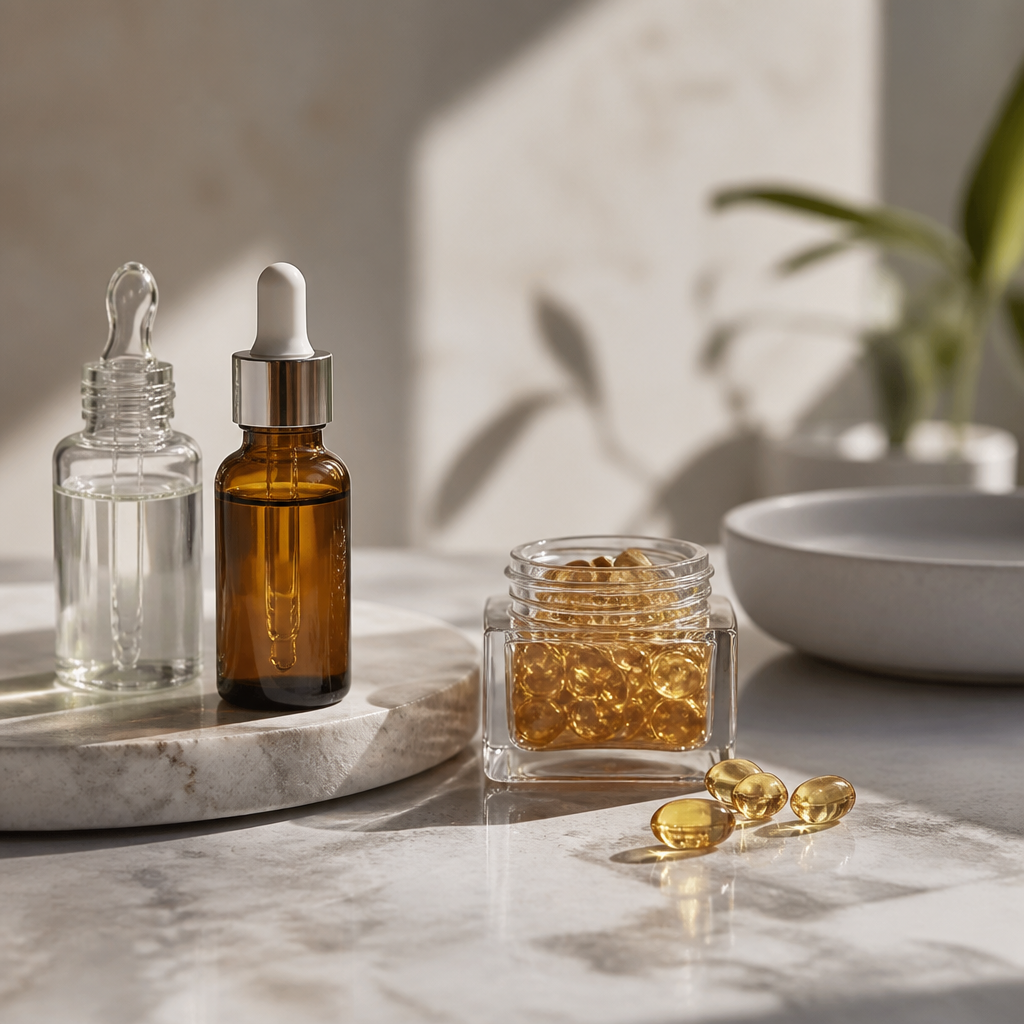
For years, retinoids were considered the gold standard in anti-aging skincare. Dermatologists recommended them almost universally, and beauty editors praised their ability to accelerate cell turnover, fade hyperpigmentation, and stimulate collagen production. But for the millions of people with sensitive, reactive, or compromised skin, retinoids have always come with a significant caveat: irritation, peeling, redness, and a prolonged adjustment period that can feel more punishing than restorative. As the skincare industry matures, a new conversation is emerging — one that centers on peptides, antioxidants, and bioactive compounds that may offer visible benefits with less irritation for some people with sensitive skin.
The Core Problem with Retinoids and Sensitive Skin
Retinoids work by binding to retinoic acid receptors in skin cells, triggering accelerated turnover and increased collagen synthesis. This mechanism is clinically validated and genuinely effective — but it is also inherently aggressive. The same process that drives cellular renewal also disrupts the skin’s natural lipid matrix, temporarily weakening the barrier and leaving skin vulnerable to transepidermal water loss, environmental stressors, and inflammatory responses.
For individuals with rosacea, eczema-prone skin, or naturally thin and reactive complexions, this disruption is not a minor inconvenience. It can trigger prolonged flare-ups, compromise the microbiome, and paradoxically accelerate the very signs of aging that retinoids are meant to address. Dermatologists often recommend buffering techniques, low-concentration formulas, and extended introduction periods — all of which underscore the fundamental tension between retinoid efficacy and skin tolerance.
Peptides as a Precision Alternative
Peptides represent a fundamentally different approach. Rather than forcing the skin into accelerated turnover, peptides communicate with skin cells using the same signaling language the body already understands. These short chains of amino acids act as biological messengers, instructing fibroblasts to produce more collagen, elastin, and hyaluronic acid — without triggering the inflammatory cascade that retinoids often provoke.
What Makes Matrixyl 3000 Particularly Effective
Matrixyl 3000 is one of the most studied peptide complexes in cosmetic science. It combines two matrikines — palmitoyl tripeptide-1 and palmitoyl tetrapeptide-7 — that work synergistically to stimulate collagen synthesis and reduce the production of inflammatory cytokines. Clinical studies have reported improvements in wrinkle appearance with Matrixyl 3000 over several weeks of use, although the exact magnitude varies by formulation and study design. The available evidence supports its use as an anti-aging cosmetic peptide, but it has not been established as equivalent to retinoids.
What distinguishes Matrixyl 3000 from other peptide complexes is its dual-action mechanism. While palmitoyl tripeptide-1 signals the skin to rebuild its extracellular matrix, palmitoyl tetrapeptide-7 simultaneously suppresses excess interleukin-6, a key inflammatory marker. This combination makes it particularly well-suited for sensitive skin types where inflammation is both a trigger and a consequence of barrier dysfunction.
CoQ10: The Antioxidant That Amplifies Peptide Performance
Coenzyme Q10, or CoQ10, is a naturally occurring antioxidant found in every cell of the human body. Its primary role is in cellular energy production, but its relevance to skincare lies in its ability to neutralize free radicals, protect mitochondrial function in skin cells, and support the enzymatic processes that maintain skin firmness and elasticity. As we age, CoQ10 levels in the skin decline significantly — a process that accelerates with UV exposure, pollution, and chronic stress.
When paired with peptides like Matrixyl 3000, CoQ10 can add antioxidant support to a skincare formula. Topical CoQ10 has evidence supporting antioxidant effects and improvement in some visible signs of skin aging, although the specific combination of CoQ10 with Matrixyl 3000 has not been established as producing superior or more durable results than either ingredient alone. As modern skincare increasingly prioritizes barrier integrity and hydration science, combinations of peptides and antioxidants are receiving greater attention in formulations designed to support long-term skin health.
Where Skin Recovery and Daily Skincare Intersect
One of the most important shifts in contemporary dermatology is the recognition that recovery and maintenance are not separate phases — they are continuous processes that happen simultaneously. Skin is always repairing itself, always responding to environmental inputs, and always recalibrating its barrier function. A skincare routine that supports this ongoing recovery, rather than interrupting it, will consistently outperform one that prioritizes aggressive intervention.
This is especially relevant for those navigating post-procedure skin, chronic sensitivity, or the cumulative effects of years of over-exfoliation. Understanding where skin recovery and everyday skincare actually meet is essential for building a regimen that respects the skin’s biological rhythms rather than working against them. Peptide-based formulas, by their very nature, align with this philosophy — they support rather than override the skin’s own regenerative intelligence.
Neuropeptides: The Next Evolution in Sensitive Skin Care
Beyond matrikines like Matrixyl 3000, neuropeptides represent a more sophisticated category of bioactive compounds that interact with the skin’s neuro-cutaneous communication network. The skin is not merely a passive barrier — it contains a complex network of nerve endings, neuropeptide receptors, and neuroendocrine cells that regulate everything from inflammation to sebum production to the perception of discomfort. Neuropeptides modulate these signals, helping to calm reactive skin at a neurological level rather than simply masking surface symptoms.
Research into neurogenic inflammation shows that neuropeptides and sensory nerve signaling can play a role in conditions involving stinging, burning, flushing, and inflammation. This has created interest in cosmetic formulations such as a neuropeptide cream, although evidence that topical neuropeptide cosmetics can reliably recalibrate sensory thresholds or reduce reactive episodes remains limited.
Bonjil and the Science of Bioactive Skincare
Bonjil has positioned itself at the intersection of clinical efficacy and skin-first formulation philosophy. Their approach to neuropeptide skincare reflects a deep understanding of the neuro-cutaneous axis and the specific needs of sensitive, aging, or compromised skin. Rather than relying on a single hero ingredient, Bonjil’s formulations are designed around synergistic ingredient systems — combining neuropeptides with structural peptides, antioxidants like CoQ10, and barrier-supporting lipids to create a comprehensive approach to skin health.
This multi-layered strategy is precisely what differentiates advanced peptide skincare from the more blunt-instrument approach of retinoid therapy. It acknowledges that skin is a dynamic, intelligent organ that responds best to nuanced, biologically aligned inputs — not to ingredients that force it into submission.
Making the Right Choice for Your Skin
The peptides versus retinoids debate is not really a debate at all — it is a question of matching the right tool to the right skin type and the right goal. For individuals with robust, non-reactive skin who can tolerate the adjustment period, retinoids remain a powerful option. But for the significant portion of the population whose skin cannot tolerate that disruption, peptide-based formulations — particularly those incorporating Matrixyl 3000, CoQ10, and neuropeptide complexes — offer a scientifically credible, clinically supported alternative that delivers results without compromise.
The future of anti-aging skincare is not about intensity — it is about intelligence. Formulations that work with the skin’s biology, respect its barrier, and support its natural regenerative capacity will consistently produce better long-term outcomes than those that prioritize short-term transformation at the cost of skin health. For sensitive skin, that distinction is not just a preference — it is a necessity.
Other Articles You May Find of Interest...
- Peptides vs Retinoids for Sensitive Skin: Why Matrixyl 3000 and CoQ10 Are Changing the Conversation
- Whitehead or Pustule? How to Tell These Acne Bumps Apart
- What Patients Should Know About Skin Removal Surgery
- Breast Augmentation vs. Breast Lift: Understanding the Difference
- 5 Things New Moms Should Know About Tummy Tuck Timing
- How Do You Choose the Right Breast Implant Size? 5 Key Factors to Consider
- Skin Probiotics: Can They Strengthen the Skin Microbiome?




