






More Women's Health & Beauty Articles
Can Sperm Affect a Home Pregnancy Test Result?
By Your Health Magazine Health Information Team
You had sex recently, took a home pregnancy test, and now you are wondering whether semen left in or around the vagina could have changed the result. It is an understandable concern, especially if a line looks faint or the result does not match what you expected.
The short answer is that sperm ordinarily does not affect a home pregnancy test. These tests detect human chorionic gonadotropin, or hCG, in urine—not sperm. Sexual activity itself will not make a properly used test positive or negative. However, if semen directly contaminates a collected urine sample, repeating the test with a fresh, clean sample is sensible because unusual sample contamination can make any home test less dependable.
Can Sperm Affect a Pregnancy Test?
In normal circumstances, no. Sperm cells do not trigger the chemical reaction that home pregnancy tests use to identify pregnancy. The test is designed to respond to hCG, a hormone produced after a fertilized egg implants and the developing placenta begins to form.
The vaginal opening and the urethral opening, where urine leaves the body, are separate. Semen deposited in the vagina therefore does not normally enter urine stored in the bladder. Having sex shortly before testing should not change the hCG level in your urine or alter the result.
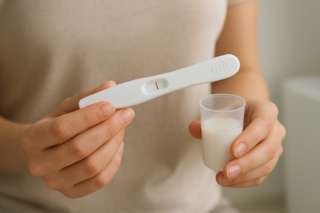
Direct contamination is slightly different. Small amounts of semen may occasionally mix with a urine sample when someone urinates soon after vaginal sex, particularly when urine is collected in a cup. Seminal fluid has been identified as a possible source of interference with certain urine hCG tests, although this appears to be uncommon and is not the usual explanation for an unexpected result.
If semen is visible in the collection cup, gets directly on the absorbent tip, or you are otherwise unsure whether the sample was clean, discard that test. Wash your hands, gently clean away external fluids if needed, and repeat the test using a new device and a fresh urine sample.
Can Taking a Test Right After Sex Show Pregnancy?
No pregnancy test can tell whether sex that occurred minutes, hours, or just a few days earlier caused a pregnancy. Even if fertilization occurs, the body does not immediately produce enough hCG for a home test to detect.
Testing too soon is a much more common concern than interference from sperm. A negative result shortly after sex only means that detectable hCG was not present at that time. It cannot rule out a pregnancy resulting from that recent sexual encounter.
For the most reliable result, follow the timing directions supplied with the test. Many tests are most accurate beginning around the expected period or afterward. If you do not know when your period is due, a healthcare professional or pharmacist can help you determine an appropriate testing schedule based on your menstrual cycle and the date of unprotected sex.
What Is More Likely to Affect the Result?
When a home pregnancy test seems incorrect or confusing, one of the following explanations is generally more likely than sperm:
- Testing too early: The urine may not contain enough hCG yet, producing a false-negative result.
- Diluted urine: Drinking a large amount of fluid before testing can lower the concentration of hCG.
- Not following the instructions: Holding the test in urine too long, using the wrong collection method, or reading it outside the instructed time window can cause confusion.
- An expired or damaged test: Test components may not work properly after expiration or improper storage.
- Fertility medication containing hCG: An hCG injection or another fertility treatment containing the hormone may cause a positive result even before pregnancy can be confirmed.
- A very early pregnancy loss: A test may detect hCG from a pregnancy that stopped developing soon after implantation.
- Recent pregnancy: hCG can remain in the body for a period after childbirth, miscarriage, or other pregnancy outcome.
- Uncommon medical or laboratory factors: Certain health conditions and test interferences can occasionally produce unexpected hCG results and require professional evaluation.
How to Take a More Reliable Home Pregnancy Test
Read the complete package instructions because timing and collection methods vary between brands. Check the expiration date and make sure the packaging is intact before opening it.
If you are testing early, first-morning urine is often helpful because it is usually more concentrated. Avoid drinking excessive amounts of water immediately beforehand. Depending on the product, you may urinate directly on the absorbent tip or collect urine in a clean, dry container.
Use a timer and check the test only during the manufacturer’s stated reading window. A mark that develops much later may be an evaporation or indent line rather than a true positive. The control indicator must also appear; without it, the test is invalid.
If the result is negative but your period does not start, repeat the test after several days. If the result is faint, positive, or inconsistent with another test, contact a healthcare professional for confirmation. Blood testing or other clinical evaluation may be appropriate in some situations.
What a Positive or Negative Result Means
A positive home test usually means hCG has been detected and pregnancy is likely. Sperm alone is not a likely explanation for a positive result obtained from an uncontaminated urine sample. Arrange follow-up care rather than assuming the line was caused by recent sex.
A negative result means the test did not detect hCG above its detection threshold. It does not always mean pregnancy is impossible, especially when testing occurred before or around the expected period. Repeat testing may provide a clearer answer as hCG rises.
For trustworthy general information about pregnancy, prenatal care, and related health topics, review the MedlinePlus pregnancy health resources. If pregnancy is confirmed, questions may soon expand beyond testing to daily comfort, including whether you can lie on your back with pillows while pregnant.
When to Seek Care
Contact an obstetrician-gynecologist, primary care clinician, midwife, or reproductive health provider if you repeatedly receive mixed results, have a positive result after using hCG-containing fertility medication, or continue to miss periods despite negative tests.
Seek prompt medical evaluation for a positive test accompanied by severe or one-sided abdominal or pelvic pain, shoulder pain, fainting, marked dizziness, or heavy vaginal bleeding. These symptoms can have several causes, but urgent assessment may be needed to rule out complications such as an ectopic pregnancy.
The Bottom Line
Sperm does not normally affect a pregnancy test because the test looks for hCG in urine, not sperm cells. Sex before testing also does not instantly produce a positive result. If semen may have directly contaminated the urine or test strip, repeat the test with a new device and a clean sample. Unexpected, conflicting, or persistent results should be confirmed by a healthcare professional.
Other Articles You May Find of Interest...
- Can Sperm Affect a Home Pregnancy Test Result?
- Menstrual Disorder Treatment: Causes, Symptoms, and Options
- What Patients Should Know About Minimally Invasive Treatment Options
- The Stages of Labor, Explained From First Contraction to Birth
- Can Bifidobacterium Bacteria Help Your Vagina?
- 5 Common Reproductive Health Concerns and When to Seek Care
- Postpartum Health & C-Section Recovery




