More Kratom Education Articles
Red Borneo Kratom: The Strain That Built the Modern Kratom Market

Borneo is the third largest island on Earth, spanning three countries, and is home to some of the oldest rainforests on the planet. It also produces more kratom than nearly any other region in the world.
Many people searching online for Red Borneo Kratom are unfamiliar with what “Borneo” actually refers to. Some assume it is simply a marketing term. It is not.
The climate, geography, and soil composition of Borneo create conditions that have shaped Mitragyna speciosa cultivation for generations. Local farmers have been harvesting kratom leaves for well over a century. Even before kratom became a widely traded commodity, it was integrated into the daily lives of indigenous peoples of Borneo.
Red Borneo is one of the most widely available kratom strains on the market today. It can be found at virtually any kratom retailer or major vendor website.
That widespread availability presents a potential problem. Because the name is so common, a significant portion of products sold under it may not be properly sourced, consistently processed, or accurately labeled.
This article explains what Red Borneo Kratom actually is, how it is produced, what distinguishes quality products from the rest, and what current research indicates about this strain.
Why Borneo Matters as a Kratom Origin
Origin is more than a label. It conveys information about growing conditions.
Borneo’s interior rainforests sit close to the Equator. The climate is hot and humid year-round, creating ideal conditions for Mitragyna speciosa trees to thrive.
The island’s river systems — particularly the Kapuas River system running through Kalimantan — pass through extensive lowland areas that support kratom cultivation. Environmental factors such as soil, climate, and growing conditions may influence leaf composition.
Indonesian Borneo, known as Kalimantan, is home to the majority of commercial kratom production. Farmers there have developed harvesting techniques passed down through generations.
When “Borneo” appears on a product label, it should trace back to actual cultivation sites within Kalimantan, or the Malaysian states of Sabah and Sarawak. Some vendors can verify this. Many cannot.
What the “Red” Designation Actually Means
The color code in kratom strain names refers to the vein running through the leaf at the time of harvest.
Red vein leaves are typically harvested later in the growth cycle, after the vein has matured past the white and green stages.
Mature leaves may differ in alkaloid composition from earlier-harvested leaves, although alkaloid content is also influenced by genetics, growing conditions, and processing. This contributes to differences observed between red, green, and white vein products.
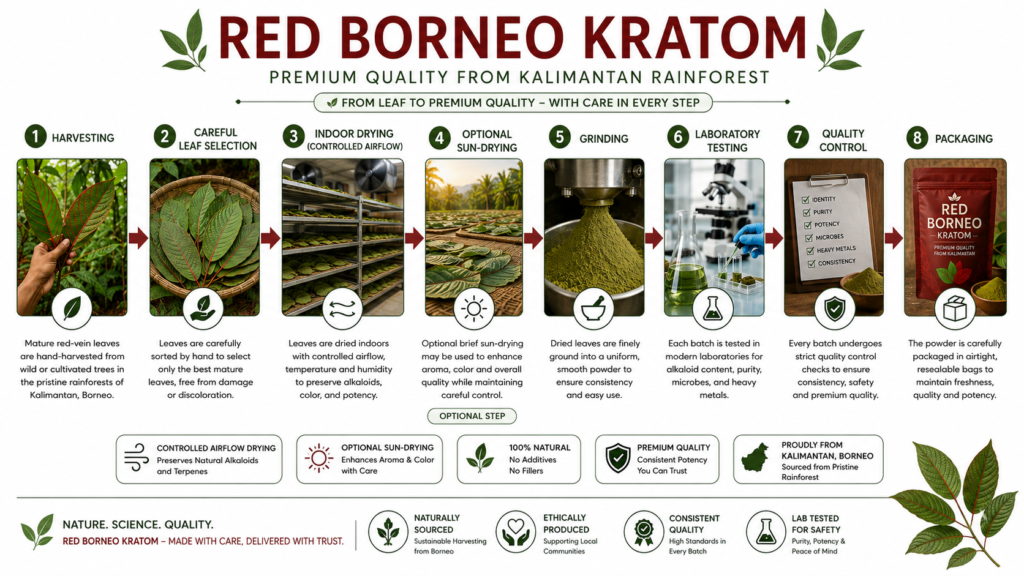
After harvest, red vein leaves go through a drying process. The most common method for Red Borneo involves indoor drying with reduced light exposure. Some producers use a brief outdoor sun-drying phase followed by an indoor finishing step.
The drying method matters. Temperature and light exposure during drying influence the alkaloid balance of the finished powder.
The Alkaloid Composition Behind Red Borneo
Kratom’s profile is derived from alkaloids — naturally occurring compounds found within the leaf.
Mitragynine is the most prevalent alkaloid in nearly all kratom varieties. It typically comprises 60 to 70 percent of the total alkaloid concentration in processed powders.
7-hydroxymitragynine is present in smaller amounts but has drawn significant scientific interest due to its potency relative to mitragynine.
Red Borneo kratom also contains secondary alkaloids, including:
- Speciociliatine — one of the four principal oxindole alkaloids found in kratom
- Speciogynine — a secondary alkaloid with distinct chemical characteristics
- Paynantheine — present in most kratom varieties at varying levels
- Corynantheidine — a minor alkaloid found within the overall profile
The ratio of these compounds varies depending on the harvest batch, cultivation area, tree age, and processing method. No two batches are chemically identical.
Research into the pharmacology of these compounds is ongoing. Scientists are still working to understand how various alkaloid combinations interact.
Traditional Use and Historical Context
Kratom’s roots in Borneo predate the modern supplement market by centuries.
Farmers across Southeast Asia — particularly in Thailand, Malaysia, and Indonesia — used kratom leaves as part of everyday routines. Leaves were chewed directly or prepared as tea.
In Borneo specifically, kratom was incorporated into traditional herbal medicine practices. Local healers used it alongside other medicinal plants native to the island’s biodiverse ecosystem.
The commercialization of kratom as an exported powdered product is relatively recent, largely a development of the past two to three decades. Expansion into the U.S. market in particular drove a significant increase in Indonesian kratom cultivation.
What was previously small-scale subsistence activity in many villages evolved into a substantial agricultural enterprise. This shift created economic opportunities for some Borneo farmers, but also introduced quality inconsistencies as production volume outpaced careful processing.
How Red Borneo Compares to Other Popular Strains
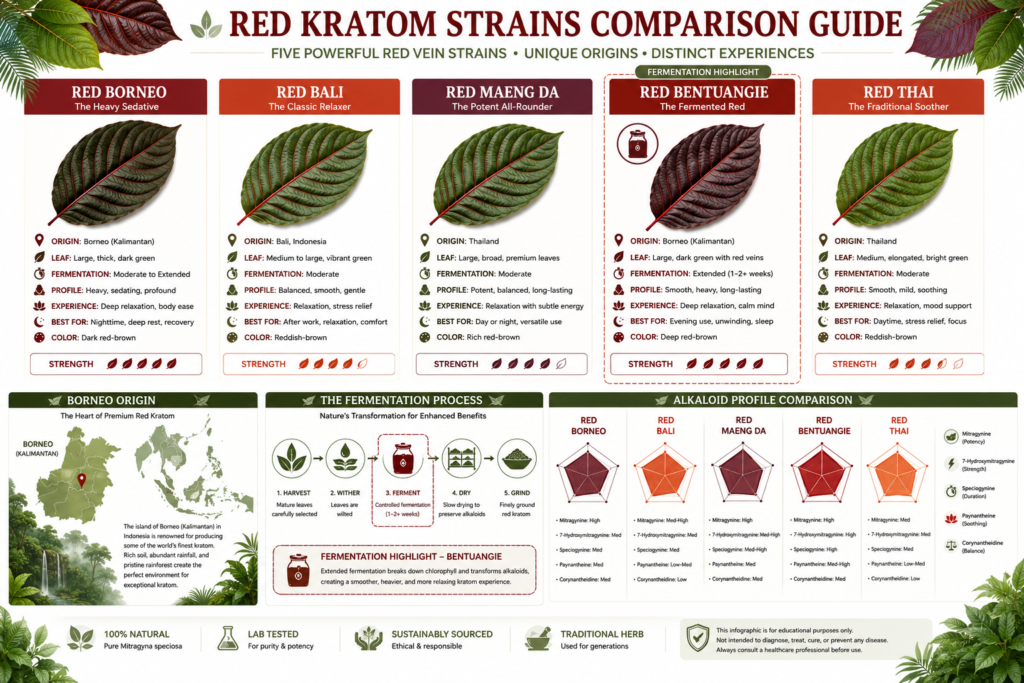
| Strain | Common Description | Key Characteristics | Important Limitation |
| Red Borneo | Classic Indonesian red vein | Mature leaf harvest, moderate alkaloid profile, widely accessible | Quality varies greatly among vendors; name used loosely |
| Red Bali | One of the most globally available red veins | Sometimes blended from multiple sources including Bali and Borneo | May not be single-origin despite the name |
| Red Maeng Da | Marketed as a high-mitragynine selection | Often grafted or selectively bred plants | Loose naming conventions; no standardized definition across the industry |
| Red Bentuangie | Fermented Borneo variant | Distinct alkaloid conversion via fermentation | Authenticity of fermentation difficult to verify without vendor documentation |
| Red Thai | Red vein of Thai origin | Historically significant strain with traditional roots | Thai kratom exports are legally restricted; source claims require careful examination |
Red Borneo occupies a middle position in the market. It is widely available without the heavily marketing-driven associations tied to strains such as Maeng Da.
What Experienced Users Tend to Observe
Consumer experiences are not clinical data. They are gathered from community boards, forums, and user feedback.
With that caveat noted, common themes appearing in Red Borneo user accounts include:
- Described as having a balanced profile compared to more extreme red vein varieties
- Often cited as a reliable starting point by those new to red vein kratom
- Aroma described as woody and earthy, consistent with Indonesian red veins generally
- Some users report batch-to-batch variation even within the same vendor
These patterns appear consistently enough to be worth noting. They align with what the alkaloid composition might suggest — a mature leaf strain with a fuller secondary alkaloid profile, rather than a mitragynine-dominant product.
Experienced kratom users frequently reference Red Borneo as a baseline when comparing other similar strains.
Safety Standards, Lab Testing, and What to Demand From Vendors
Important: Kratom is not approved by the FDA for any medical use. Kratom may cause physical dependence, withdrawal symptoms, and adverse health effects. It may also interact with prescription medications, over-the-counter drugs, and other substances. Anyone considering kratom use should consult a licensed healthcare provider before doing so.
The kratom industry operates without FDA oversight of individual products. This places the burden of safety testing and accountability on vendors.
Third-party laboratory testing is the most important consumer protection tool currently available.
A complete Certificate of Analysis (COA) for a Red Borneo kratom product should include:
- Mitragynine content — confirmation of the primary alkaloid level
- 7-hydroxymitragynine percentage — verification of trace levels consistent with natural kratom
- Heavy metal panel — arsenic, lead, mercury, and cadmium
- Microbial screening — salmonella, E. coli, and total aerobic plate count
- Pesticide residue testing — particularly important for imported botanical products
- Batch identification — COAs must correspond to the specific lot being sold
The American Kratom Association (AKA) operates a Good Manufacturing Practices (GMP) program. Participating vendors are required to undergo audits, meet testing requirements, and comply with labeling standards.
AKA GMP certification is voluntary and not a government regulatory program. However, it is the most established accountability framework currently operating in the kratom market.
Label transparency is another important indicator. A compliant label should include the strain name, vein color, net weight, batch number, and a warning statement. Incomplete or missing label information should prompt further investigation before any purchase is made.
Misconceptions About Red Borneo Kratom
Misconception: Red Borneo and Red Bali are essentially the same product.
These strains share a broad geographic region but differ in origin and processing. Red Bali is frequently a blend sourced from multiple Indonesian locations. Authentic Red Borneo should be traceable specifically to Borneo or Kalimantan cultivation. Their alkaloid profiles and sensory characteristics differ in side-by-side comparisons.
Misconception: Darker powder color indicates higher quality.
Powder color reflects the drying method and leaf age more than it reflects quality. Darker coloration may result from extended drying or heat exposure. Color alone provides no reliable information about alkaloid concentration, contaminant levels, or overall product quality. Only third-party testing can provide that information.
Misconception: Red vein strains are always more potent than white or green vein strains.
Potency is not determined solely by vein color. It is determined by the alkaloid levels in a specific batch. A green vein kratom with a high mitragynine percentage may appear stronger than a poorly harvested red vein. Vein color indicates the maturity of the plant at harvest, but does not guarantee potency.
Misconception: Kratom is legal throughout the United States.
Kratom is not federally scheduled, but it is prohibited in several U.S. states, including Alabama, Arkansas, Indiana, Rhode Island, Vermont, and Wisconsin. Local ordinances in certain cities and counties also restrict kratom. Legal status can change, and consumers should verify the current laws in their specific area before making any purchase.
Frequently Asked Questions
What is Red Borneo Kratom and where does it come from?
Red Borneo Kratom is a variety of Mitragyna speciosa originating from the island of Borneo in Southeast Asia, primarily from the Indonesian province of Kalimantan. Its “red” designation refers to the mature, red-veined leaves harvested from older growth trees. Borneo’s equatorial climate, high humidity, and nutrient-rich river basin soils create distinct conditions for tree development. After harvest, leaves are processed into powder using drying techniques that vary by producer. It is one of the most widely available kratom strains sold globally.
What makes Red Borneo Kratom different from other red vein strains?
The key differences lie in geographic origin and processing method. Red Borneo comes specifically from Kalimantan or Malaysian Borneo, not from Sumatra, Bali, or Thailand. The alkaloid profile of Borneo material reflects its particular soil and climate conditions, which differ from other cultivation regions. Red Borneo is generally not fermented — unlike Red Bentuangie — and is not typically grafted or selectively bred like some Maeng Da varieties. It represents a relatively traditional red vein process compared to more modified varieties on the market.
What alkaloids are present in Red Borneo Kratom?
Red Borneo contains the same primary alkaloids found in all kratom varieties. Mitragynine is the predominant compound, followed by 7-hydroxymitragynine in smaller amounts. Secondary alkaloids including speciociliatine, paynantheine, speciogynine, and corynantheidine are also present. The specific ratios vary by batch, harvest timing, tree age, and drying process. No two batches are chemically identical. A third-party Certificate of Analysis from an accredited laboratory is the only reliable method for determining the alkaloid levels of a specific product.
Is Red Borneo Kratom legal in the United States?
At the national level, kratom is not a federally scheduled controlled substance in the United States as of the time of writing. However, several states have enacted prohibitions — Alabama, Arkansas, Indiana, Rhode Island, Vermont, and Wisconsin prohibit the possession and sale of kratom. Certain cities and counties have their own restrictions that go beyond state law. Many states have adopted versions of the Kratom Consumer Protection Act, which regulates kratom sales without banning them outright. Legal status can change, and consumers should verify the current laws in their area before purchasing any kratom product.
What should I look for before purchasing a Red Borneo Kratom product?
Begin by requesting or locating the product’s Certificate of Analysis. This laboratory document should cover alkaloid quantification, heavy metal contamination, microbial screening, and pesticide residues, and must be specific to the batch being sold — not a generic document. Look for AKA GMP-certified products, which indicates the manufacturer has undergone third-party inspections against defined manufacturing standards. Review the product label for complete information: strain name, vein color, net weight, and batch number should all be present. Vendors that cannot or do not provide this information fail to meet basic transparency standards, regardless of the claims made in their marketing.
A Grounded Look at Red Borneo
Red Borneo Kratom has earned its place among the most widely available strains on the market through genuine historical production, not solely through popularity.
Its Borneo origin provides geographic context, although product characteristics ultimately depend on factors such as sourcing, harvest timing, and processing methods, which can vary among producers.
However, widespread availability can result in significant quality variation. The strain name alone reveals little about what is actually inside a specific package. Laboratory documentation, vendor accountability, and label transparency remain the only reliable indicators of product quality.
The legal landscape surrounding kratom continues to evolve. Consumers who stay informed about legal developments are better positioned than those who rely exclusively on marketing materials.
Red Borneo is neither uniquely superior nor fundamentally different from other kratom strains in kind. It is a well-established strain with a genuine production history and a market presence that reflects real consumer demand — provided it is properly sourced, tested, and labeled.
Other Articles You May Find of Interest...
- Kratom Legality in 2026: Why the Rules Vary by Location
- 7 Things to Know About Split Kilo Kratom Before a Bulk Order
- Red Thai Kratom: The Strain With a Complicated History and a Loyal Following
- Red Sumatra Kratom: What Makes This Strain Stand Apart
- Red Indo Kratom: The Strain That Built the Modern Kratom Market
- Red Hulu Kapuas Kratom: What Makes This Rare Strain So Talked About?
- Red Borneo Kratom: The Strain That Built the Modern Kratom Market