Your Health Magazine Contributor
4201 Northview Drive
Suite 102
Bowie, MD 20716
More Vision & Eye Care Articles
Reading Glasses 101: Signs You Need Them and How to Choose the Right Pair
It often starts with a restaurant menu. The print seems smaller than it used to be, the lighting seems dimmer, and you find yourself holding the page farther away to bring the words into focus. For most adults, this isn’t a sign that something is wrong. It’s a normal, age-related change in the eye, and for many people, reading glasses are a simple and effective way to handle it.
Still, not every pair of reading glasses is the right pair. Understanding why close-up vision changes, how lens strength works, and when to involve an eye doctor can make the difference between readers you forget you’re wearing and readers that leave you squinting.
Why Close-Up Vision Changes After 40
The gradual loss of near focusing ability has a name: presbyopia. Inside each eye sits a natural lens that changes shape to shift focus between distant and nearby objects. In younger eyes, that lens is soft and flexible. Over time it becomes stiffer, and the eye can no longer bend it enough to bring close objects into sharp focus.
Most people begin to notice presbyopia somewhere in their early to mid-40s, and it tends to progress gradually into the early 60s. It happens to nearly everyone, including people who have never needed glasses before. If you already wear glasses for distance, you’ll likely notice that close work becomes harder even with your current pair.
Signs You May Need Reading Glasses
Because presbyopia develops slowly, many people adapt without realizing it. Common signs include:
- Holding books, phones, or menus at arm’s length to read them
- Needing brighter light than you used to for close-up tasks
- Blurry small print, especially at the end of the day
- Tired eyes or headaches after reading, sewing, or other detailed work
- Enlarging the text size on your phone or computer more and more often
If several of these sound familiar, it’s a good time to schedule an eye exam. A comprehensive exam confirms whether presbyopia is the cause and checks the overall health of your eyes at the same time.
Over-the-Counter vs. Prescription Reading Glasses
Over-the-counter readers, the kind sold on drugstore racks, are simple magnifiers. They use the same power in both lenses and place the optical centers at a standard, average distance apart. For people whose eyes are similar and who have no other vision needs, they can work well as an inexpensive option.
They’re a less comfortable fit in several situations:
- Your eyes need different strengths. Off-the-rack readers can’t adjust each lens separately.
- You have astigmatism. Standard readers don’t include the correction it requires, so text may still look slightly smeared.
- Your pupils are wider or narrower apart than average. You may end up looking through the edges of the lenses rather than their centers.
- You also need distance correction. Readers only help up close; everything farther away will look blurry through them.
In these cases, custom-made reading glasses built to your eye exam results, or bifocal or progressive lenses that combine near and distance correction, are usually more comfortable choices. Your eye doctor can help you decide which fits your needs.
How Reading Glasses Strength Works
Reading glasses are labeled in diopters, the unit that measures lens power. Common strengths run from +1.00 to +3.00 in steps of 0.25, and a higher number means more magnification. Many people start around +1.00 in their early 40s and move up gradually over the following two decades.
If you’ve had a recent eye exam, look for the “ADD” value on your prescription. That number reflects the extra power your eyes need for close work. Without a prescription, some people test strengths at a store by holding reading material at a comfortable distance, typically 14 to 16 inches, and choosing the lowest power that makes the text clear.
Choosing too strong a lens is a common mistake. It can shorten your comfortable reading distance and leave your eyes feeling strained. When in doubt, the lower of two workable strengths is often the more comfortable one.
Choosing Frames and Lenses
The right lens power matters most, but the frame affects how often you’ll actually wear your glasses. A few practical considerations:
Full frames vs. half-eye styles. Half-eye readers sit low on the nose so you can look over them to see across the room. Full frames provide a wider reading area and are better for long sessions with a book or laptop.
Weight and fit. If you wear readers for hours at a time, lightweight materials like titanium or TR90, along with adjustable nose pads, help prevent pressure marks. Spring hinges hold up better if you frequently push your glasses onto your head or take them on and off.
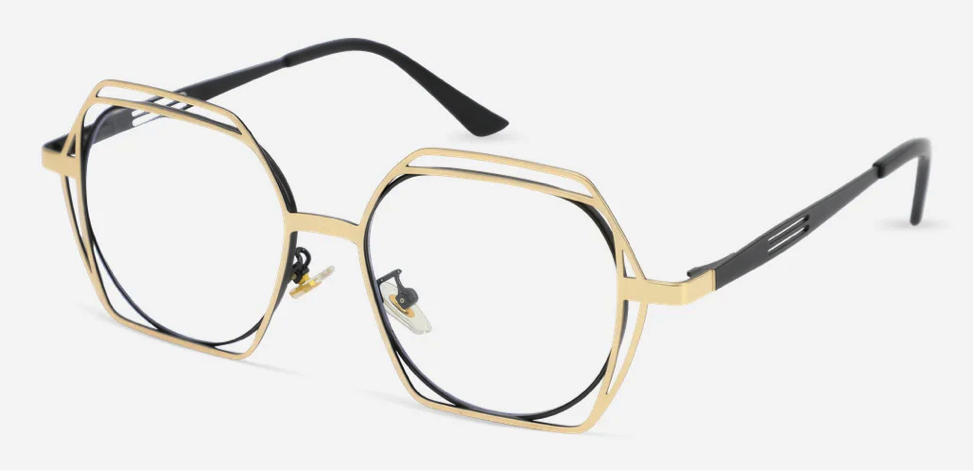
Style. Readers no longer have to look like an afterthought. Online retailers now offer reading glasses in hundreds of full-size frame styles, from cat-eye and round acetate to classic rectangles and aviators, and some allow you to set a different strength for each eye and add your pupillary distance. Virtual try-on tools make it easier to find a shape that suits your face before you order.
Screen use. Much of today’s close-up reading happens on phones, tablets, and computers. Some people choose readers with blue-light filtering lenses, but current evidence does not show that blue-light filtering reduces digital eye strain. Regular breaks, appropriate viewing distance, reduced glare, and frequent blinking are more useful strategies.
More than one pair. Because reading glasses are easy to misplace, many people keep a pair wherever they read most, such as the nightstand, desk, and car glove box.
Everyday Habits for Comfortable Close-Up Work
Reading glasses work best alongside a few simple habits:
- Use good lighting. Aging eyes need more light for close work. A lamp positioned behind or beside you, rather than glare from a window, makes reading easier.
- Take regular breaks. Many eye care professionals recommend the 20-20-20 rule: every 20 minutes, look at something about 20 feet away for about 20 seconds.
- Blink often. People tend to blink less when concentrating on screens or small print, which can leave eyes feeling dry.
- Take readers off to look into the distance. Reading glasses are designed for close range. Don’t walk around, climb stairs, or drive while wearing them.
A common worry is that reading glasses will make your eyes “lazy” or weaker over time. They won’t. Presbyopia progresses on its own schedule whether or not you wear readers; the glasses simply make close work more comfortable in the meantime.
When to See an Eye Doctor
Reading glasses address a normal change in focusing ability, but they aren’t a substitute for regular eye exams. Routine exams become more important after 40, when the risk of other eye conditions begins to rise, and many of those conditions cause no early symptoms.
Contact an eye care professional promptly if you notice sudden changes in vision, new flashes of light or a shower of floaters, double vision, eye pain, or a shadow or curtain over part of your vision. You should also book an appointment if your readers stop helping, if you need to change strength frequently, or if you have trouble seeing at night or while driving. These signs call for a closer look rather than a stronger pair of readers.
The Bottom Line
Needing reading glasses is one of the most common parts of getting older, and it’s one of the easiest to manage. Start with an eye exam to confirm what your eyes need, choose a strength that feels comfortable rather than as strong as possible, and pick frames that fit your face and your routine.
With the right pair and a few healthy reading habits, menus, books, and screens can come back into clear focus, without the arm’s-length stretch.
Other Articles You May Find of Interest...
- Can Blepharoplasty Improve Peripheral Vision? What Patients Should Know
- What Causes Blood Clots in the Eye?
- Can You Have Laser Eye Surgery With Glaucoma?
- Why Are Contact Lens Users Asked to Stop Wearing Lenses before Laser Eye Surgery Tests?
- What Credentials to Look for When Searching for the Right Eye Doctor in New York
- New Flashes, Floaters, or a Shadow in Your Vision: When to Seek Prompt Eye Care
- Still wearing contacts every day? When it may be worth asking about LASIK