Your Health Magazine Contributor
4201 Northview Drive
Suite 102
Bowie, MD 20716
More Supplements Articles
Soursop Tea Side Effects: Evidence, Safety, and Who Should Be Careful

Search for “soursop tea side effects” and you are likely to find sharply different claims. Some sources promote soursop for blood sugar, blood pressure, immunity, or even cancer prevention, while others warn about neurological effects, liver or kidney damage, and movement disorders. The evidence is more complicated than either extreme suggests.
One reason for the confusion is that “soursop” can mean several different things. Drinking a cup of soursop leaf tea is not equivalent to eating the fruit, drinking soursop juice, taking a concentrated extract, using a supplement, or studying an isolated plant compound in a laboratory. Much of the available research involves these other preparations rather than ordinary brewed leaf tea.
This article looks at what research can reasonably tell us about soursop tea side effects, regular use, medication considerations, pregnancy and breastfeeding, blood pressure, blood sugar, annonacin, and long-term exposure.
What Is Soursop Leaf Tea?
Soursop, or Annona muricata, belongs to the custard apple family. Its tropical fruit has a spiny green exterior, soft white flesh, and hard black seeds. The fruit is eaten fresh and is also used in juices, desserts, and other foods.
Soursop leaf tea is made from the leaves rather than the fruit. Because the leaves do not come from Camellia sinensis, plain soursop tea is naturally caffeine-free, unlike green tea or black tea.
The difference between plant parts matters when interpreting nutrition and research. Fresh soursop fruit, for example, contains vitamin C, but that does not mean a cup of leaf tea provides the same nutrient profile. Studies of the fruit, leaves, extracts, and individual plant compounds may all answer different questions.
Graviola tea is another common name for soursop leaf tea. Whatever name appears on the package, the form of the product is important when comparing it with published research.
Why Preparation and Exposure Matter
Preparation can greatly change how much of a plant’s naturally occurring compounds a person is exposed to.
A concentrated laboratory extract may contain much higher levels of certain compounds than an herbal infusion. Capsules, liquid extracts, isolated compounds, fruit preparations, and experimental doses used in animal studies can also differ substantially from a normally brewed cup of tea.
Even brewed tea can vary in strength depending on how much leaf material is used, the amount of water, and the preparation method.
This is why broad statements such as “soursop lowers blood pressure,” “soursop fights cancer,” or “soursop causes neurological problems” need context. Before drawing a conclusion, ask:
What form of soursop was actually studied?
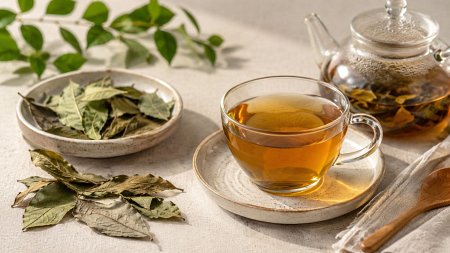
Dried soursop leaves beside a simple cup of brewed herbal tea.
Research using concentrated extracts or isolated compounds can reveal biological mechanisms and identify areas worth studying further. It cannot automatically predict what will happen when someone drinks ordinary soursop leaf tea.
There is also no universally established long-term intake level for soursop leaf tea based on robust human trials. Preparation instructions should therefore come from the applicable product label rather than being extrapolated from animal studies or unrelated dosing information.
What Research Suggests About Soursop
Soursop contains many naturally occurring compounds that have attracted scientific interest, including phenolic compounds, flavonoids, alkaloids, and annonaceous acetogenins.
Laboratory and animal studies have examined soursop preparations for antioxidant activity, antibacterial properties, anti-inflammatory effects, changes in blood sugar and blood pressure, and activity against certain cancer cells.
These studies are useful for understanding possible biological effects, but most represent an early stage of research. Results from cells, animals, or concentrated extracts cannot be assumed to occur after drinking brewed tea.
Cancer research is a good example. Some laboratory studies have tested soursop-derived compounds against cancer cells, but this does not make soursop tea a cancer treatment or a proven cancer-prevention strategy. Reputable cancer organizations, including Cancer Research UK, have noted the lack of reliable clinical evidence supporting soursop as a cancer therapy.
Similar caution applies to claims involving weight loss, digestive health, immune function, blood sugar, blood pressure, or other potential benefits.
Laboratory antioxidant activity may show that certain plant compounds can interact with oxidative processes. It does not tell us that drinking the tea will prevent disease or produce a clinically meaningful health benefit.
More well-designed human research using ordinary brewed soursop leaf tea is needed.
Readers who want more detail about study types and product forms can review this guide to soursop leaf research and evidence.
Possible Soursop Tea Side Effects
Human research specifically examining ordinary brewed soursop leaf tea remains limited. As a result, precise rates for many of the side effects mentioned online are not available.
Reported or discussed concerns include digestive discomfort, nausea, changes in blood pressure or blood sugar, drowsiness, and neurological effects. These concerns do not all have the same level of supporting evidence.
Digestive Symptoms
Digestive symptoms such as nausea or stomach discomfort are mentioned in some discussions of soursop products, but good human data showing how often they occur specifically with ordinary brewed soursop leaf tea are limited.
Anyone who develops an unexpected or persistent reaction after drinking soursop tea should stop using it and seek appropriate medical advice if symptoms are significant.
Blood Pressure
Some preclinical studies involving Annona muricata preparations have observed effects related to blood pressure. This research is one reason soursop is sometimes promoted online as a natural way to lower blood pressure.
Human evidence for ordinary brewed tea is far less clear.
For people who already have low blood pressure or take antihypertensive medication, regular consumption is worth discussing with a healthcare professional because direct interaction studies remain limited.
Blood Sugar and Diabetes
Animal studies and other preclinical research have explored possible effects of soursop preparations on blood glucose and related metabolic markers.
These findings are sometimes translated into claims that soursop “supports healthy blood sugar.” That wording can imply more certainty than the available human evidence provides.
Research involving extracts or animal models does not show that brewed soursop leaf tea treats diabetes, reliably controls blood glucose, or prevents diabetic complications.
The more practical question for someone using diabetes medication is whether a botanical product with possible glucose-related activity could complicate medication management.
Direct studies of ordinary brewed soursop tea together with diabetes medicines are scarce, so individual guidance is more useful than assuming either a benefit or a harmful interaction.
People with diabetes or other metabolic conditions should discuss regular use with their healthcare team, particularly if medication doses or blood glucose levels are being closely managed.
Annonacin, Acetogenins, and Movement Disorders
Neurological findings are among the more important safety questions around soursop, although the evidence comes from very different types of exposure.
Annona muricata contains annonaceous acetogenins, including annonacin. Annonacin has been studied because it can interfere with mitochondrial complex I in experimental systems.
Laboratory and animal research using purified annonacin has reported effects on nerve cells under specific experimental conditions. Separately, epidemiological research in the French West Indies has found associations between frequent consumption of Annonaceae products and atypical Parkinsonism or other movement disorders.
These findings raise legitimate questions about long-term or high exposure to certain compounds found in Annona species.
They do not tell us that an occasional cup of normally prepared soursop leaf tea causes neurological disease.
The exposures examined across this research vary considerably. Some studies involve isolated compounds, while population research may include fruit, herbal preparations, and other Annonaceae foods consumed over long periods.
Association in an observational study also cannot by itself establish causation.
Taken together, the research supports caution with frequent or prolonged exposure; what it means for an occasional cup of brewed tea is still uncertain.
Liver, Kidney, and Other Organ Safety Questions
Questions about possible liver and kidney toxicity also appear frequently in searches about soursop.
Some reviews and preclinical studies have raised concerns involving high-dose or prolonged exposure to certain Annona muricata preparations. These studies often use concentrated extracts, supplements, experimental doses, or animal models rather than ordinary tea.
Available human evidence does not establish that ordinary-strength soursop leaf tea causes liver or kidney injury.
Human data are too limited to support either a clear toxicity claim for a normally brewed cup or a blanket assurance about unrestricted long-term use.
People with existing liver or kidney disease, or those taking several medications that require medical monitoring, should discuss regular herbal-product use with an appropriate healthcare professional.
Medication Interactions
Online discussion of medication interactions often sounds more certain than the underlying evidence.
Because some soursop preparations have shown blood-pressure or glucose-related activity in preclinical studies, people taking antihypertensive or diabetes medication may reasonably wonder whether soursop could add to the effects of their treatment.
Direct clinical interaction studies involving ordinary brewed leaf tea remain limited.
For a typical cup, severe hypotension or hypoglycemia has not been demonstrated in strong clinical studies. Regular use still deserves more attention when blood pressure or glucose is already being managed with medication.
People taking blood-pressure medicines, diabetes medicines, multiple prescription drugs, or undergoing complex medical treatment should discuss regular soursop use with their healthcare professional.
Herbal teas should not replace prescribed treatment for cancer, diabetes, high blood pressure, heart disease, or other diagnosed medical conditions.
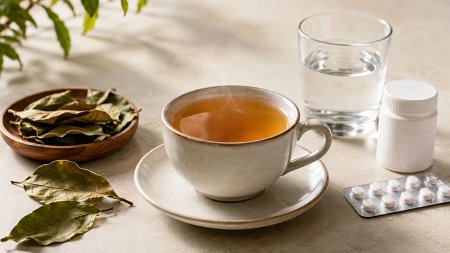
A cup of herbal tea shown beside medication, illustrating why regular herbal-product use may warrant a medication review.
For a broader overview, see this guide to soursop tea safety and interactions.
Pregnancy and Breastfeeding
Reliable human safety data for soursop leaf tea during pregnancy and breastfeeding are limited.
The absence of safety data is not evidence of harm, but it leaves regular use during pregnancy or breastfeeding insufficiently studied.
Online sources sometimes describe soursop as “contraindicated” during pregnancy. That wording can imply a stronger level of direct clinical evidence than currently exists for ordinary brewed leaf tea.
A precautionary approach is more appropriate.
People who are pregnant, trying to conceive, or breastfeeding should discuss soursop leaf tea and other herbal products with an appropriate healthcare professional before regular use.
Is It Safe to Drink Soursop Tea Every Day?
There is no well-established universal daily amount or long-term duration for soursop leaf tea supported by strong human safety trials.
Soursop leaves have a history of traditional use in several regions, but traditional use and modern clinical safety thresholds are not the same thing.
Animal studies are also not suitable for creating a simple human serving recommendation. Experimental research may use extracts, body-weight-based dosing, or exposures much higher than those found in herbal tea.
For someone considering frequent or long-term consumption, several factors matter:
- preparation strength
- frequency of use
- medications
- existing health conditions
- other soursop products being consumed
- total duration of exposure
Occasional use and daily long-term use should not automatically be treated as equivalent.
People who enjoy caffeine-free herbal beverages can also include variety rather than relying on any single botanical as a necessary daily drink.
Fruit, Tea, and Supplements Are Not Interchangeable
Soursop fruit and soursop leaf tea are often discussed together, but they are different foods with different compositions.
Fresh soursop fruit provides a fruit-based nutrient profile that includes vitamin C. A leaf infusion has a different chemical and nutritional profile.
Supplements and concentrated extracts differ again. Depending on how they are manufactured, they can expose a person to different amounts and combinations of plant compounds than a normally brewed cup of tea.
When reading research or health claims, check whether the evidence involves:
- brewed leaf tea
- fresh leaves
- soursop fruit
- juice
- concentrated extracts
- supplements
- seeds
- isolated compounds such as annonacin
Those differences can substantially affect how relevant a study is to the product someone actually consumes.
How to Evaluate Soursop Tea Claims Online
Information about soursop often blends scientific research, traditional medicine, product marketing, social-media claims, and personal testimonials.
Rather than accepting a headline claim, look at a few basic details in the study behind it.
What Type of Study Is Being Cited?
Human clinical research is generally more directly relevant when the question is what happens in people.
Laboratory studies can reveal biological mechanisms, while animal studies can provide information about whole-organism effects. Both are valuable, but neither automatically predicts what will happen after drinking a cup of herbal tea.
What Form of Soursop Was Used?
Check whether researchers studied tea, fruit, juice, leaves, extracts, supplements, seeds, or an isolated compound.
This is often the most important detail.
Does the Claim Match the Evidence?
Statements such as “soursop fights cancer,” “prevents cancer,” “cures high blood pressure,” or “guarantees healthy blood sugar” go beyond current scientific evidence.
Warnings can overreach too. Claims that ordinary soursop tea inevitably causes nerve damage, kidney or liver toxicity, or a Parkinson-like disorder flatten together research on very different products and exposure patterns.
Is a Laboratory Result Being Presented as a Treatment?
A soursop leaf extract showing antibacterial activity against bacteria in a laboratory does not mean drinking the tea can treat an infection.
The same applies when plant compounds show activity against cancer cells.
Such findings can justify additional research without establishing a clinical treatment.
Does the Source Make Uncertainty Clear?
Reliable health information should distinguish what is known from what remains uncertain.
Terms such as “may,” “has been studied,” “has been associated with,” and “research suggests” are useful when they accurately reflect the strength of the evidence. They should clarify uncertainty rather than simply being repeated as disclaimers.
Should You Avoid Soursop Tea?
Current evidence does not show that every healthy adult needs to avoid soursop leaf tea.
It also does not provide enough long-term human data to treat unlimited or prolonged use as conclusively safe.
Based on current evidence, soursop leaf tea is best viewed as a traditional, naturally caffeine-free herbal infusion for which modern long-term human safety data remain incomplete.
Extra caution makes sense for people taking prescription medication, managing significant health conditions, or considering frequent long-term consumption. Pregnancy and breastfeeding also deserve additional consideration because direct safety data are sparse.
The better question is not whether soursop tea is simply “good” or “bad,” but whether the evidence fits the specific claim.
The Bottom Line
Soursop tea side effects are often discussed online with more certainty than the research supports.
Studies of Annona muricata have raised important questions about blood pressure, blood sugar, annonacin, acetogenins, neurological effects, and long-term exposure. Much of that research, however, involves laboratory experiments, animal studies, concentrated extracts, isolated compounds, fruit, or patterns of consumption that differ from an ordinary cup of brewed leaf tea.
The same caution should be applied to claimed benefits. Early findings involving antioxidant activity, antibacterial properties, anticancer activity, phenolic compounds, or metabolic effects do not show that soursop tea can prevent cancer, treat disease, produce weight loss, strengthen immunity, or replace conventional medical care.
A quick check goes a long way: what preparation was studied, how much was used, what kind of study was it, and who was studied?
That leaves room to enjoy soursop leaf tea as a traditional caffeine-free herbal beverage without turning early findings into promises or uncertainties into certainties. More human research on ordinary brewed leaf tea is needed, especially for frequent and long-term use.
References & Further Reading
1. Caparros-Lefebvre D, Elbaz A; Caribbean Parkinsonism Study Group. Possible relation of atypical parkinsonism in the French West Indies with consumption of tropical plants: a case-control study. The Lancet. 1999;354(9175):281-286.
2. Champy P, Höglinger GU, Féger J, et al. Annonacin, a lipophilic inhibitor of mitochondrial complex I, induces nigral and striatal neurodegeneration in rats: possible relevance for atypical parkinsonism in Guadeloupe. Journal of Neurochemistry. 2004;88(1):63-69.
3. Champy P, Melot A, Guérineau Eng V, et al. Quantification of acetogenins in Annona muricata linked to atypical parkinsonism in Guadeloupe. Movement Disorders. 2005;20(12):1629-1633.
4. Raclariu-Manolica AC, Bakhiya N, Hirsch-Ernst KI. Risk assessment regarding the use of Annona muricata in food supplements. EFSA Journal. 2020;18(S1):e181112.
5. Cancer Research UK. Graviola (soursop): complementary and alternative therapy information. Source
Evidence note: These sources support discussion of annonacin, epidemiological associations, preparation and exposure differences, broader risk assessment, and the limits of cancer-treatment evidence. They do not establish that ordinary brewed soursop leaf tea causes the outcomes discussed in this article.
Other Articles You May Find of Interest...
- Ayurvedic Tablets Americans Are Ordering Online: What’s Actually in Chandraprabha Vati and Neem Tablets
- How Often Should You Get a Vitamin B12 Shot?
- Choosing a Black Maca and Ashwagandha Supplement
- NAD+ and Healthy Aging: A Cardiologist’s Guide to Choosing an NMN Supplement
- Amla and Nerve Pain: What the Science Can and Can’t Tell You
- What Is D-Ribose? Its Role in Cellular Energy, ATP Production, and NAD⁺ Synthesis
- How to Verify Green Tea Extract Catechin Profiles by HPLC