More Supplements Articles
7 Probiotics for Gut Health – What You Need To Know In 2026
The best probiotics for gut health are live microorganisms. Primarily Lactobacillus and Bifidobacterium strains that restore gut microbiome balance, reduce bloating, and support digestive regularity. Because probiotics are strain-specific and disease-specific, the right choice for supplementation depends on your symptoms: this article covers options marketed for IBS, antibiotic recovery, immune support, and daily gut maintenance.
Quick Comparison: Probiotics for Gut Health
| Product | Recommended For | CFU Count | Key Strains | Shelf-Stable | Price |
| Metagenics UltraFlora Balance | Daily gut balance | 2 billion | L. rhamnosus GR-1, L. reuteri RC-14 | Yes | Varies |
| Culturelle Digestive Daily | General gut health, antibiotic recovery | 10 billion | L. rhamnosus GG | Yes | ~$0.66 |
| Seed DS-01 Daily Synbiotic | Comprehensive multi-strain support | 53.6 billion AFU | 24 strains | Yes | $1.66 |
| Ritual Synbiotic+ | Vegan 3-in-1 gut formula | 11 billion | LGG, B. animalis BB-12 | Yes | $2.00 |
| Garden of Life Dr. Formulated | Women’s gut and vaginal health | 50 billion | L. reuteri, L. fermentum + 14 more | Yes* | ~$1.00 |
| Align Extra Strength | Bloating and IBS symptoms | 5 billion | B. longum 35624 | Yes | $1.31–$1.68 |
*CFU count should be verified through expiration date, not manufacture date (NIH recommendation). Check label for storage instructions on Garden of Life formulations.
7 Probiotics for Gut Health
Metagenics UltraFlora Balance Probiotic
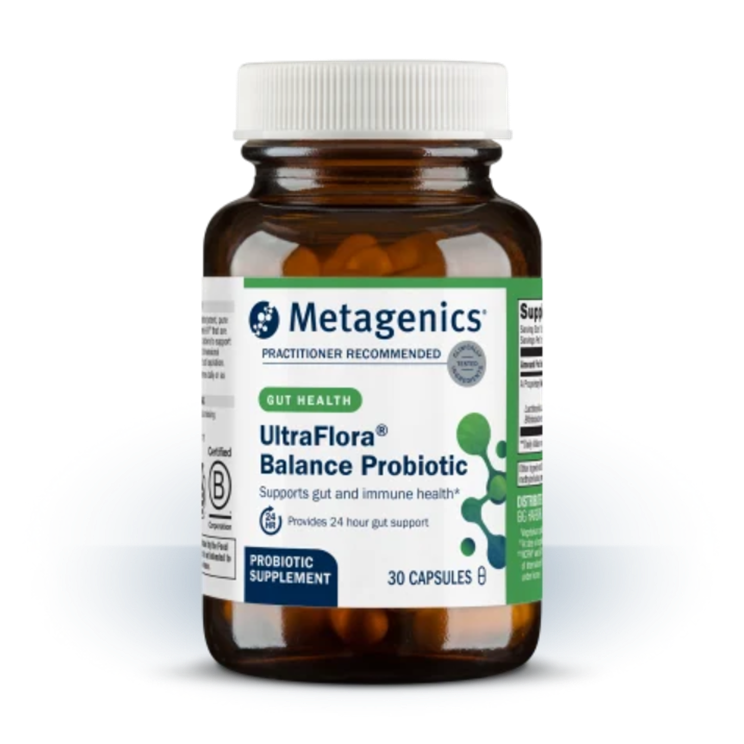
Recommended For: Daily gut maintenance, digestive balance, urinary and vaginal microbiome support
Key Specs:
● Strains: Lactobacillus rhamnosus GR-1 and Lactobacillus reuteri RC-14
● CFU: 2 billion per capsule
● Serving size: 1 capsule per day | 30 servings per container
● Certifications: Non-GMO, gluten-free, no preservatives, vegetarian
● Price: $24.95
Metagenics UltraFlora Balance Probiotic is built around two of the most clinically studied probiotic strains available: L. rhamnosus GR-1 and L. reuteri RC-14. It extends these clinically validated strains to daily gut health support, with human clinical trial evidence that meets the survivability and potency standards the NIH recommends consumers prioritize when selecting a probiotic supplement. As a practitioner-grade brand, Metagenics is positioned above the mass-market tier. Its formulations are developed with clinical rigor rather than marketing-first CFU inflation.
Pros:
● Contains two of the most extensively studied probiotic strains: L. rhamnosus GR-1 and L. reuteri RC-14
● Vegetarian, non-GMO, gluten-free, and free of preservatives
● Supports gut microbiome balance, immune function, and urinary tract health
● Practitioner-grade brand with clinically validated formulations
● Simple one-capsule-per-day dosing for consistent daily use
Cons:
● Lower CFU count (2 billion) than some competitors, though CFU count alone does not determine effectiveness; strain specificity does
● Less widely available at mass-market retailers compared to Culturelle or Align
Product Details: Strains: Lactobacillus rhamnosus GR-1, Lactobacillus reuteri RC-14 | Form: Capsule | Servings: 30 | Certifications: Non-GMO, gluten-free, preservative-free, vegetarian
Culturelle Digestive Daily Probiotic
For: General digestive health, antibiotic-associated diarrhea prevention, first-time probiotic users
Key Specs:
● Strains: Lactobacillus rhamnosus GG (LGG)
● CFU: 10 billion
● Serving size: 1 capsule per day
● Contains: 200 mg prebiotic inulin
● Certifications: Gluten-free, dairy-free | Shelf-stable (no refrigeration required)
● Price: $17.99
Lactobacillus rhamnosus GG is the most clinically studied probiotic strain available, backed by over 1,000 scientific studies and 30 years of research. Culturelle guarantees the stated number of CFUs on the box is viable through the expiration date. Which is a key quality marker recommended by the NIH that many competitors do not match. In a one-month Healthline user test, tester Parisa Syed reported improvements in typical gastrointestinal symptoms alongside a reduction in heartburn. Culturelle’s near-universal retail availability, pharmacies, big box stores, and Amazon making it the most accessible entry point for probiotic supplementation.
Pros:
● No refrigeration required
● Gluten-free and dairy-free
● CFU count guaranteed through expiration date
● Contains the most clinically studied probiotic strain (LGG)
● Available at most pharmacies and major retailers
Cons:
● Not routinely third-party tested for purity and potency by an independent lab
● Single-strain formula may not address multiple gut health concerns simultaneously
● Contains inulin prebiotic, which may cause gas or bloating in sensitive individuals
Product Details: Strains: Lactobacillus rhamnosus GG | CFU: 10 billion | Form: Capsule | Shelf-stable: Yes | Price: $17.99
Seed DS-01 Daily Synbiotic
For: Multi-strain gut support, menopause-related bloating, eco-conscious consumers, IBS symptom management
Key Specs:
● AFU: 53.6 billion (active fluorescent units)
● Strains: 24 clinically backed probiotic strains
● Prebiotic: Non-fermenting, low-FODMAP compatible
● Serving size: 2 capsules per day | Shelf-stable
● Price: $49.99
Seed DS-01 is a multi-strain synbiotic formulation with an emphasis on strain diversity and quality testing. Registered dietitian Ella Davar, cited in Vogue, puts it directly: “Probiotic diversity is critical for overall health. Products like Seed DS-01, which offer multi-strain formulations, are excellent for increasing diversity.” Seed undergoes more than 50 quality assurance and quality control checkpoints and is third-party tested for allergens, pesticides, and herbicides throughout manufacturing. Seed measures potency in AFUs (active fluorescent units) rather than CFUs. Which is a more accurate method that captures all viable cells, including those that may not be culturable.
Pros:
● Extensive quality testing throughout the manufacturing process, 50+ QA/QC checkpoints
● 24 research-backed probiotic strains for broad microbiome support
● Shelf-stable; no refrigeration required
● Vegan-friendly and free of gluten and major allergens
● Eco-friendly refillable glass jar packaging
Cons:
● Not independently third-party tested for potency (internal testing only)
● Subscription required, no one-time purchase option
● More expensive than single-strain alternatives
● Large capsule size reported by some users
Product Details: AFU: 53.6 billion | Strains: 24 (including B. longum SD-BB536-JP, L. rhamnosus SD-GG-BE, L. plantarum SD-LP1-IT, and 21 additional clinically backed strains) | Form: Nested capsule | Certifications: Third-party tested for allergens, pesticides, herbicides | Price: $49.99
Ritual Synbiotic+
For: Vegans, general digestive health, IBS symptom support, those seeking a 3-in-1 gut formula
Key Specs:
● CFU: 11 billion
● Strains: Lactobacillus rhamnosus LGG, Bifidobacterium animalis ssp. lactis BB-12
● Includes: Prebiotic PreforPro + Postbiotic Tributyrin
● Serving size: 1 capsule per day | Shelf-stable | Delayed-release capsule
● Certifications: Third-party tested for purity and potency, Non-GMO Project Verified, Made Traceable
● Price: $54
Ritual Synbiotic+ earns “best overall” ratings from both Healthline and Medical News Today for its 3-in-1 synbiotic formula. Registered dietitian Mia Syn, MS, RD, explains the mechanism in Vogue: “The prebiotics feed beneficial bacteria, the probiotics help populate the gut with live strains, and the postbiotics support the gut lining and immune function. Together, they work synergistically to promote a balanced microbiome.” Ritual’s delayed-release capsule design is specifically engineered to survive stomach acid and deliver probiotics directly to the colon. Which is a survivability advantage many conventional capsules lack.
Pros:
● Third-party tested for purity and potency
● Vegan-friendly; no refrigeration required
● Delayed-release capsule delivers probiotics directly to the colon
● 3-in-1 formula: prebiotic + probiotic + postbiotic
● Non-GMO Project Verified and Made Traceable certified
Cons:
● Premium price at $2.00 per serving
● Not ideal for people who are sensitive to prebiotics. Some users report gas and bloating
● Capsules described as “too minty” by some reviewers
Product Details: Strains: L. rhamnosus LGG, B. animalis ssp. lactis BB-12, Myoviridae, Siphoviridae, Tributyrin | CFU: 11 billion | Form: Delayed-release capsule | Certifications: Third-party tested, Non-GMO Project Verified, Made Traceable
Garden of Life Dr. Formulated Probiotics Once Daily
For: Women’s digestive health, vaginal microbiome support, post-antibiotic gut recovery, bloating relief
Key Specs:
● CFU: 50 billion
● Strains: 16 probiotic strains including L. reuteri and L. fermentum
● Serving size: 1 capsule per day | Shelf-stable
● Certifications: NSF Certified Gluten-Free, Non-GMO Project Verified, B Corp Certified
● Price: $27.99
Garden of Life Dr. Formulated Once Daily delivers the highest CFU count on this list (50 billion) across 16 clinically studied strains, with a formulation specifically designed for women’s gut and vaginal health. The inclusion of L. reuteri and L. fermentum specifically addresses vaginal microbiome balance. This strain combination is “especially important for vaginal health.
Pros:
● 16 diverse probiotic strains at 50 billion CFU
● Includes L. reuteri and L. fermentum for targeted vaginal microbiome support
● NSF Certified Gluten-Free, Non-GMO Project Verified, and B Corp Certified
● Third-party tested for purity and potency
● One capsule per day for consistent daily use
Cons:
● Large capsule size reported by some users
● Some formulations require refrigeration — check label for storage requirements
● Does not include L. crispatus or L. jensenii, which are also linked to vaginal health
Product Details: Strains: 16, including L. acidophilus, L. reuteri, L. fermentum, B. lactis, B. longum (full strain list on label) | CFU: 50 billion | Form: Capsule | Certifications: NSF Certified Gluten-Free, Non-GMO Project Verified, B Corp Certified | Price: $27.99
Align Extra Strength Probiotic
For: Bloating relief, IBS symptom management, occasional abdominal discomfort
Key Specs:
● CFU: 5 billion
● Strains: Bifidobacterium longum 35624 (patented single strain)
● Serving size: 1 capsule per day | Shelf-stable (store below 25°C)
● Certifications: DNA tested for potency | Gluten-free, soy-free, vegetarian
● Price: $29.99
Align Extra Strength is formulated around a single strain studied for IBS-related bloating. Bifidobacterium longum 35624 has been specifically studied to reduce IBS symptoms, particularly bloating. With a DNA-tested potency guarantee backing every bottle. For anyone prioritizing IBS or bloating symptom relief above broad-spectrum gut support, Align Extra Strength is one option consumers may see discussed for IBS-related bloating.
Pros:
● Research-backed single strain (B. longum 35624) specifically studied for IBS and bloating
● Shelf-stable with no refrigeration required
● DNA tested to guarantee potency
● Widely available at pharmacies and major retailers
● Gluten-free, soy-free, and vegetarian
Cons:
● Single-strain formula limits broader gut health benefits
● Some users with IBD report increased gas and bloating
● Switched from blister-pack to bottle packaging, making daily tracking slightly less convenient
Product Details: Strains: Bifidobacterium longum subsp. longum 35624 | CFU: 5 billion | Form: Capsule | Certifications: DNA tested for potency | Shelf-stable: Yes | Price: $29.99
What Are Probiotics and Why Do They Matter for Gut Health?
Probiotics are defined by the World Health Organization as “live microorganisms which, when administered in adequate amounts, confer a health benefit on the host.” In practical terms, they are beneficial bacteria. Primarily Lactobacillus and Bifidobacterium species that support the gut microbiome, a community of trillions of microorganisms that assist with digestion, immune function, nutrient absorption, and neurotransmitter production.
When this community is disrupted through antibiotics, illness, chronic stress, or a poor diet, the resulting imbalance is called dysbiosis. Dysbiosis is linked to digestive symptoms including bloating, diarrhea, constipation, and IBS, as well as broader immune and mental health consequences.
Probiotics are found naturally in fermented foods including yogurt, kefir, kimchi, sauerkraut, tempeh, miso, and kombucha. However, food processing can destroy live cultures. Always look for products labeled “live and active cultures” when choosing fermented foods. For targeted therapeutic use, probiotic supplements provide higher, more concentrated doses of specific strains.
Proven Health Benefits of Probiotics for Gut Health
Digestive Health and IBS
Research indicates that probiotics, especially multi-strain products containing Lactobacillus acidophilus can help improve IBS symptoms including bloating and abdominal pain. Specific strains studied for IBS include Bifidobacterium longum, Lactobacillus plantarum, Lactobacillus acidophilus, and Lactococcus lactis. IBS and constipation affect more women than men, and symptoms frequently worsen during menstrual cycles. Bifidobacterium infantis has demonstrated effectiveness in alleviating bloating and gas in IBS patients specifically.
Antibiotic-Associated Diarrhea Prevention
Antibiotic-associated diarrhea occurs in roughly 5–30% of patients during antibiotic therapy and can persist up to two months after a course ends. Saccharomyces boulardii is especially effective for protecting the gut during antibiotic treatment because, as a yeast rather than a bacterium, it is not killed by antibiotics themselves. Lactobacillus rhamnosus GG has similarly strong clinical evidence for preventing antibiotic-associated diarrhea. Research suggests taking targeted probiotic strains during antibiotic treatment may reduce the frequency of diarrhea episodes within as few as two days.
Immune System Support
Approximately 70% of the immune system resides in the gut, making a healthy gut microbiome fundamental to overall immune function. A healthy microbiome trains the immune system to recognize and eliminate harmful microbes. Clinical evidence supports probiotic supplementation for immune health maintenance. One study found a combination of Lactobacillus casei, Lactobacillus paracasei, and Lactobacillus fermentum helped reduce the frequency of upper respiratory tract infections ahead of cold season.
Gut-Brain Axis and Mental Health
The gut and brain are closely connected through what researchers call the gut-brain axis. Certain probiotic strains have been shown to reduce stress, anxiety, and depressive symptoms by influencing this bidirectional communication pathway. Bifidobacterium longum and Lactobacillus helveticus are among the specific strains studied for mental health applications. The gut microbiome also interacts with the immune and endocrine systems, influencing mood, pain tolerance, mental acuity, and fatigue. Probiotics should be considered a complementary approach. Not a replacement for therapy or medication in clinical mental health treatment.
How to Choose a Probiotic for Gut Health
Match the Strain to Your Specific Health Goal
Probiotics are not one-size-fits-all remedies. Certain strains are meaningfully more effective for specific conditions than others. Use this as a starting framework:
● Antibiotic-associated diarrhea: Lactobacillus rhamnosus GG (Culturelle), Saccharomyces boulardii (Florastor)
● IBS and bloating: Bifidobacterium longum 35624 (Align), Lactobacillus acidophilus, Bifidobacterium lactis
● Vaginal and urinary health: Lactobacillus rhamnosus GR-1, Lactobacillus reuteri RC-14 (Metagenics UltraFlora), Lactobacillus crispatus
● Constipation: Bifidobacterium lactis, Bifidobacterium longum, Lactobacillus reuteri
● General microbiome diversity: Multi-strain synbiotics like Seed DS-01 or Ritual Synbiotic+
Understand CFU Count and What It Means
CFU (colony-forming units) measures the number of viable bacteria per dose. Researchers suggest probiotics must contain at least 1 million viable CFUs per gram to survive digestion and produce a positive effect. Common effective doses range between 1–10 billion CFU, but higher counts do not automatically mean greater benefit. Strain specificity matters more than raw numbers. The NIH recommends selecting products that list the CFU count guaranteed through the expiration date, not just at time of manufacture.
Look for Third-Party Testing and Quality Certifications
Because the supplement industry is not as tightly regulated as pharmaceuticals, third-party testing is the most reliable quality signal available to consumers. Look for certifications from NSF International, USP, or ConsumerLab. Products certified Non-GMO Project Verified, NSF Certified Gluten-Free, or carrying B Corp status offer additional layers of transparency and accountability.
Consider Shelf Stability and Delivery Format
Shelf-stable probiotics (no refrigeration required) are more practical for travel and daily consistency. Delayed-release capsules, are engineered to bypass stomach acid and deliver live bacteria directly to the colon, improving survivability and efficacy.
How Long Does It Take for Probiotics to Work?
Timeline varies significantly by condition, strain, dose, and individual gut composition:
● Antibiotic-associated diarrhea: Effects may be noticeable within 2 days of starting a targeted strain
● Vaginal health: Oral probiotics can begin to influence the vaginal microbiome within 7 days
● IBS symptoms: Improvements may take 8 weeks or longer of consistent supplementation
● Microbiome-level changes: Registered dietitian Adiana Castro, RD, cited in Vogue, notes that it typically takes around 3 months to see measurable changes in the gut microbiome
If you are taking probiotics for a specific condition and they are working, you should be able to tell you are feeling better over time. Consistency at the recommended dose is essential to accurately judge effectiveness. The irregular use of the product produces unreliable results.
Frequently Asked Questions About Probiotics for Gut Health
Which probiotic strains have been studied for bloating?
Align Extra Strength (Bifidobacterium longum 35624) is the most specifically studied option for bloating reduction, particularly in IBS. For broader bloating symptoms, multi-strain blends containing Lactobacillus acidophilus and Bifidobacterium lactis are supported by clinical evidence. Start with a lower dose and increase gradually. Introducing new probiotic strains can temporarily trigger bloating, especially in sensitive individuals.
Which probiotic strains have been studied during and after antibiotic use?
Lactobacillus rhamnosus GG (Culturelle) and Saccharomyces boulardii (Florastor) have the strongest clinical support for maintaining gut health during and after antibiotic treatment. Saccharomyces boulardii is particularly useful because, as a yeast, it is not destroyed by antibiotics. A 2025 review found that targeted probiotic strains can prevent or reduce antibiotic-related diarrhea. Take probiotics 2–3 hours after antibiotic doses and check with your pharmacist about timing recommendations.
Are probiotic supplements better than probiotic foods for gut health?
Food sources support a broader range of microbes and often contain prebiotics. The fibers that feed probiotic bacteria and help them thrive. Harvard recommends a diet rich in fiber, fruits, vegetables, whole grains, and legumes as the safest long-term approach to microbiome health. However, most bacteria consumed through food is destroyed by stomach acid before reaching the gut. Supplements provide higher, more survivable concentrations of specific strains for targeted therapeutic use. The practical recommendation: use fermented foods for daily maintenance and consider supplements for specific, short-to-medium-term therapeutic goals under healthcare guidance.
Is it safe to take probiotics every day?
For healthy individuals, daily probiotic use appears safe based on available research, and can support consistent digestive health, balanced vaginal microbiome, and immune function. That said, research on long-term safety and effectiveness in people without existing health conditions remains inconclusive. People with weakened immune systems, severe illness, or those taking immunosuppressant medications should not take probiotics without first consulting a healthcare provider.
What probiotic strains are best for women’s gut health?
Most of the beneficial bacteria native to the vaginal microbiome belong to the Lactobacillus genus, playing a protective role from puberty through menopause. The most clinically supported strains for women’s health include:
● Vaginal and urinary health: L. crispatus, L. jensenii, L. gasseri, L. rhamnosus GR-1, L. reuteri RC-14
● IBS and menstrual symptom-related bloating: B. longum, L. plantarum
● UTI recurrence reduction: L. rhamnosus GR-1 and L. reuteri RC-14 (found in Metagenics UltraFlora Balance)
How do I know if my probiotics are working?
If you are taking probiotics for a specific condition, you should notice your target symptoms improving over time. For constipation or diarrhea, bowel movements should become more regular. For infection-related symptoms, readers should consult a healthcare provider rather than relying on probiotics alone. Take probiotics consistently at the recommended dose for an accurate read and keep the timeline in mind. Antibiotic-related effects may appear in days, while IBS and microbiome-level changes may take 8 weeks to 3 months to become noticeable.
Other Articles You May Find of Interest...
- Common Signs of Low Iron Levels and How to Address Them
- The Quest for Longevity: Supplement Trends Shaping Health Span in 2026
- How to Get a Vitamin B12 Shot Safely
- The Power of L-Methylfolate: Could Your Multivitamin or Methylfolate Supplement Be Using the Wrong Form of Folate?
- Vitamin B12 Supplements in the UK: Forms, Doses and What to Consider
- How to Buy Supplements Online Safely: What to Check Before You Order
- Can Evening Primrose Oil Help Breast Cyst Pain?