More Public Safety Articles
Why First Aid Training Matters for Families, Workplaces, and Communities
A toddler chokes on a grape at a family cookout. A coworker collapses in the break room. A youth soccer player goes down on the field and does not get back up. In moments like these, the people closest to the emergency often matter most.
They are the first link in what the American Heart Association calls the Chain of Survival, a sequence that starts with early recognition, early CPR, and rapid use of an automated external defibrillator (AED). Local first aid training helps everyday people act during the critical minutes before professional help arrives.
This article explains why first aid readiness matters at home, at work, and in the community. It also offers a practical checklist for choosing a reputable course near you.
Safety note: In any emergency, call your local emergency number first, such as 911 in the United States or 000 in Australia. This article is informational and is not a substitute for accredited training. Laws related to Good Samaritan protections and workplace safety requirements vary by location, so nothing here should be taken as legal advice.
Why It Matters at Home
Many serious emergencies happen at home. According to the American Heart Association, roughly 80 percent of out-of-hospital cardiac arrests occur in a home setting, which means a family member, housemate, or visitor may be the only person available to help at first.
Parents and caregivers also face everyday risks such as choking, allergic reactions, burns, and drowning, especially when young children are in the house.
Knowing the basics can change what happens next. Immediate bystander CPR can double or triple a person’s chance of surviving an out-of-hospital cardiac arrest, according to AHA data.
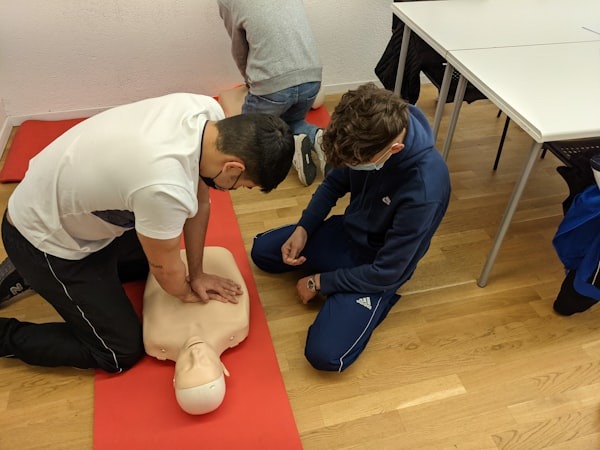
For adults and teens, Hands-Only CPR comes down to two steps: call emergency services, then push hard and fast in the center of the chest until professional help or an AED arrives. The American Academy of Pediatrics recommends pediatric life-support and first aid training for parents, caregivers, and school personnel.
It also notes that chest-compression-only CPR is better than no CPR if a rescuer cannot or will not give breaths.
You do not need to be a medical professional to keep someone safer until help arrives. You need a clear plan and enough practice to remember the steps under stress.
Why It Matters at Work
Workplace emergencies can range from deep cuts in a warehouse to sudden cardiac arrest in an office. Under OSHA Standard 29 CFR 1910.151(b), workplaces that are not near a clinic or hospital must have one or more adequately trained first aiders on site, along with readily available first aid supplies.
Beyond compliance, training reduces hesitation. When employees have practiced CPR and AED use, they are more likely to respond quickly instead of freezing. A few practical steps can make a workplace better prepared:
- Keep first aid kits visible, stocked, and easy to reach.
- Post the location of every AED in the building.
- Run a brief emergency drill at least once a year.
- Document which staff members hold current certifications.
Small businesses in the DMV area and elsewhere can often arrange group training sessions with local providers. Group classes can reduce scheduling friction and help coworkers learn the same response steps together.
Why It Matters in the Community
Coaches, faith-group volunteers, event organizers, and school staff may be the closest trained people when something goes wrong. Youth sports sidelines, summer camps, and community festivals are common settings where quick response matters and professional help may be several minutes away.
If you witness a collapse and are unsure what to do, emergency dispatchers can often coach you through Hands-Only CPR and direct someone nearby to retrieve an AED while help is on the way.
Group training days, where a neighborhood association or volunteer team takes a course together, can build a wider safety net. The more trained bystanders in a crowd, the better the chances that someone can act quickly.
What You Actually Learn
A standard first aid and CPR course covers a core set of skills that apply across home, work, and community settings:
- Scene safety assessment and calling emergency services
- Adult, child, and infant CPR
- AED use
- Choking relief for adults, children, and infants
- Bleeding control and wound care
- Burn treatment
- Recognizing shock
- Basic response to asthma attacks and anaphylaxis
Most American Red Cross First Aid/CPR/AED certifications are valid for two years from the course completion date. Some employers, licensing bodies, or state regulations may require more frequent renewal, so confirm the rules that apply to your role.
How to Choose Local First Aid Training
Not all courses are the same. Use this checklist when comparing local options:
- Recognized curriculum. Look for courses based on AHA, American Red Cross, or ASHI guidelines, or another program accepted by your state, employer, or licensing body.
- Adult vs. pediatric tracks. Parents and childcare workers may need pediatric-specific content, while workplace teams may need adult-focused training.
- Format. Blended courses combine online learning with a shorter in-person skills session. Fully in-person classes usually provide more hands-on practice time.
- Instructor credentials. Confirm that instructors hold current certifications from a recognized organization.
- Class size. Smaller groups often allow more practice time per student.
- On-site group options. Many providers can come to a workplace, school, or community center.
- Accessibility and language. Check for accessible venues and ask whether materials are available in the languages your group needs.
- Proof of completion. Make sure the provider issues a certificate or card that your employer or licensing body will accept.
For readers in Washington, DC, Maryland, and Northern Virginia, the YourHealthMagazine.net health and wellness directory is one place to explore nearby providers and related health topics. When comparing CPR, BLS, and first aid options, training provider reviews can also help you check curriculum fit, hands-on practice, and renewal details before you register.
For Readers in Ballarat, Victoria, Australia
If you are in Western Victoria and looking for in-person options, compare course pages from local providers, including Auspac Training Ballarat, with your workplace or organizational requirements before enrolling. Course suitability depends on the regulations and certificate standards that apply to your setting.
Make Your Skills Stick
Earning a certificate is a strong start, but skills fade without practice. A few simple habits can help maintain readiness between formal renewals:
- Post a quick-reference CPR card on the fridge or in the break room.
- Join local emergency drills when your workplace or community group offers them.
- Consider a brief refresher course at the one-year mark, even if your certification lasts two years.
The goal is to keep the steps fresh enough that you can act without hesitation if the moment comes.
Frequently Asked Questions
These common questions can help you understand what training covers and how to keep your certification current.
How often do I need to renew my CPR and first aid certification?
Most American Red Cross certifications are valid for two years. AHA courses follow a similar cycle. Always confirm with your provider and employer, because some industries or state regulations require more frequent renewal.
Can teenagers learn CPR?
Yes. The AHA’s Hands-Only CPR method, which involves calling emergency services and pushing hard and fast in the center of the chest, is recommended for lay rescuers of many ages, including teens. A growing number of U.S. states also require CPR instruction in high schools.
Am I legally protected if I try to help someone?
Federal law under 42 U.S.C. Section 238q provides civil liability protection for people who use or attempt to use an AED during a perceived medical emergency, subject to specified exceptions. Every state also has its own Good Samaritan statute, and protections vary. This is general information, not legal advice. If you have specific concerns, consult an attorney in your state.
Do I need an AED to help someone in cardiac arrest?
No. Start CPR immediately and send someone to look for the nearest AED. If you call emergency services, dispatchers may be able to coach you through Hands-Only CPR and help locate an AED nearby. Early chest compressions alone can improve survival odds.
Final Thought
Acting quickly can save lives, and a reputable local first aid training course is a practical next step. Whether you are a parent, a small-business owner, or a community volunteer, the skills you gain in a single class can make a real difference when it counts.
Other Articles You May Find of Interest...
- Common Swimming Pool Injuries and How Lifeguards Help Prevent Them
- Carbon Monoxide Poisoning: Symptoms Every Family Should Know
- Could Zombies Ever Exist in Reality? Exploring the Science Behind the Myth
- Do Zombies Really Exist? Exploring the Myths and Facts Behind Zombie Lore
- Zombies in Real Life: Exploring the Fascinating Intersection of Science and Fiction
- How Proper Safety Gear Reduces the Risk of Aquatic Accidents
- Why First Aid Training Matters for Families, Workplaces, and Communities