Your Health Magazine Contributor
4201 Northview Drive
Suite 102
Bowie, MD 20716
More Podiatry Foot Care Articles
What Makes Custom Orthotics Different From Personalized Insoles?
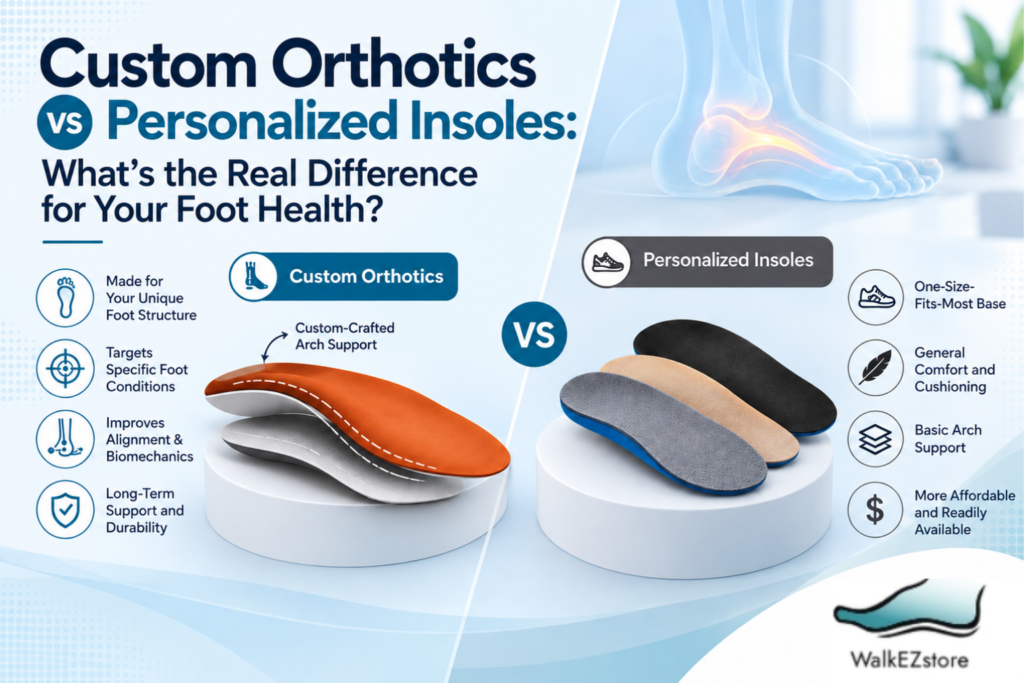
Choosing between a store display and an orthotic designed just for you may be overwhelming initially. Custom Orthotics are generally made from measurements, impressions, or scans intended to reflect an individual’s foot structure and clinical needs. Personalized or over-the-counter insoles may offer varying degrees of adjustment or customization, but they are not necessarily made from a clinician’s assessment of the individual’s biomechanics. It is essential to know the differences mentioned above since you will be able to make an appropriate choice.
How Are Custom Orthotics Different From Personalized Insoles?
Each one aims to give you some help; however, each one achieves its goal in a totally different manner. Once you look deeper into all the aspects concerned, the difference becomes obvious.
- Level of Individual Foot Assessment
Prior to the making of orthotics, the podiatrist needs to examine your gait, posture and pressure points. Such an examination helps identify any problems that might not be identified in a short fit session. That assessment can help the clinician design an orthotic suited to the patient’s biomechanics and specific foot concerns.
- Degree of Customization to Foot Structure
True Custom Orthotics are completely made according to the specific shape of your feet and your gait. On the other hand, personalized insoles usually begin with a general shape that will be slightly modified after that. It is this difference that determines their effectiveness at correction.
- Method Used to Create the Foot Support
Custom fit Orthotics devices are normally started with an impression or scan conducted in a clinical environment. In contrast, personalized insoles are normally produced from an impression made in a store environment. The goal of both techniques is to create a good fit, although the clinical procedure appears to be more accurate.
- Difference in Materials and Construction
There is also great variation between the materials used in both types of foot support. Custom-made orthotics will mostly comprise rigid plastics since their function is that of correcting the problem for a long time. Individualized insoles will mostly contain soft materials such as foam and gels.
- Amount of Arch and Heel Support
Custom arch supports can be designed around an individual’s foot shape, symptoms, and biomechanical needs. Depending on the design, they may help redistribute pressure or provide targeted support. Non-prescription or personalized insoles typically provide more general cushioning or arch support, although features vary by product.
- Control of Foot Alignment and Movement
Custom orthotics can be designed to influence foot mechanics, pressure distribution, or movement during walking. Because foot mechanics can affect movement elsewhere in the lower body, clinicians may consider the knees, hips, and overall gait during an assessment. Insoles may provide cushioning, arch support, or other forms of support depending on their design.
- Conditions They Are Intended to Treat
Podiatrists may recommend orthotic devices for certain patients with problems such as heel pain, abnormal foot mechanics, or other conditions affecting walking and comfort. The appropriate type of support depends on the diagnosis, symptoms, footwear, and individual biomechanics. Both custom and prefabricated devices may have a role in care, depending on the patient and condition.
- Compatibility of Foot Supports with Various Footwear
Custom shoe inserts are usually made based on the specific shoes that you will be wearing frequently. This is because one will be guaranteed that there will be no slipping, bulkiness, or discomfort due to tight-fitting shoes. The stockings go hand in hand with the depth of the shoes and their heels. Customized insoles offer greater flexibility.
- Purpose Behind Their Use
Custom orthotics come into being mostly to correct any mechanical problems that may have been diagnosed or imbalances. Personalized insoles, on the other hand, are usually selected just because of the convenience and for relieving minor fatigue only. They are good for individuals who spend most of the time standing but do not suffer from anything special.
- Professional Fitting and Review Needed
Follow-up visits are often required when it comes to shoe inserts to make sure that everything fits properly. This provides an opportunity to make necessary adjustments. WalkEZstore, for example, is one such resource that helps people get started on the right foot. Insoles, which are usually personalized, don’t necessarily require such follow-ups.
Are Custom Insoles the Same as Custom Orthotics?
No, but both terms can be used synonymously when it comes to day-to-day conversations. While custom insoles may be made for the exact measurements of your feet, on the other hand, orthotics also focus on correcting the alignment and mechanics of the feet.
The orthotic device is normally prescribed after the assessment of the condition and then made from a mold or scanned image for that particular condition. The insole, on the other hand, does not solve any condition; it just makes walking comfortable.
Can Custom Orthotics Still Cause Foot Pain?
Even good-quality gadgets may be somewhat uncomfortable during use on some occasions. This knowledge enables one to differentiate between adjustment and a possible issue.
- Normal Discomfort During the Adjustment Period
Some people experience mild pressure or temporary discomfort while adjusting to new orthotics. A clinician may recommend gradually increasing wear time during this period. Sharp or worsening pain, numbness, blistering, persistent soreness, or other significant symptoms should prompt a review of the fit rather than simply waiting for the problem to resolve.
- Poor Fit or Incorrect Support Placement
Sometimes, the problem may be that the arch and heel placement is just wrong. If the support is positioned too far forward and is being used too strongly, pain will be inevitable. Here, correction will solve the problem faster than time.
- When Persistent Pain Needs Professional Assessment
If there is persistent pain beyond the adjustment phase, then this problem cannot be neglected. Persistent pain may indicate a problem with the orthotic, footwear, fit, or the underlying condition. A podiatrist or other qualified clinician can reassess the device and determine whether an adjustment or different approach is needed.
Conclusion
While custom orthotics and insoles give support to your feet, there are variations between them regarding accuracy, use, and correction of problems. Orthotics are recommended by doctors and are made from scans or models that assist in correcting biomechanical and medical problems. Insoles are relatively cheap to purchase and can be used on a daily basis.
Other Articles You May Find of Interest...
- What Makes Custom Orthotics Different From Personalized Insoles?
- Tibialis Anterior Tendon Pain: Causes, Treatment, and Recovery
- What Causes Pain on the Lateral Side of the Foot?
- 8 Ways to Remove Dead Skin From Feet: A Chronic Cracked-Heel Rescue Plan
- Lowering the Risk Of Stress Fractures
- Sharp, Stabbing Big Toe Pain at Night: Common Causes
- Topical, Oral or Laser: Comparing Nail Fungus Treatments in 2026