More Parenting and Family Health Articles
Why Many Breastfeeding Moms Choose a Pumping Bra for a Hands-Free Nursing and Pumping Experience
A pumping bra is one of the simplest ways to make feeding life easier. It holds your pump in place, frees up your hands, and can make regular pumping more comfortable and more realistic to keep up with.
If you are trying to feed a baby, pump on schedule, and still do basic daily things, holding flanges in place gets old fast. The moms who stick with pumping usually are not doing anything magical; they are just using tools that make frequent sessions easier to manage. A good pumping bra can help you stay comfortable, keep your routine going, and make pumping feel less like a full-body task.

What a pumping bra actually does
It is not the same as a regular nursing bra
A nursing bra is mainly built for easy feeding access. It usually has clip-down cups or panels so you can nurse quickly, which is helpful when your baby wants to eat often.
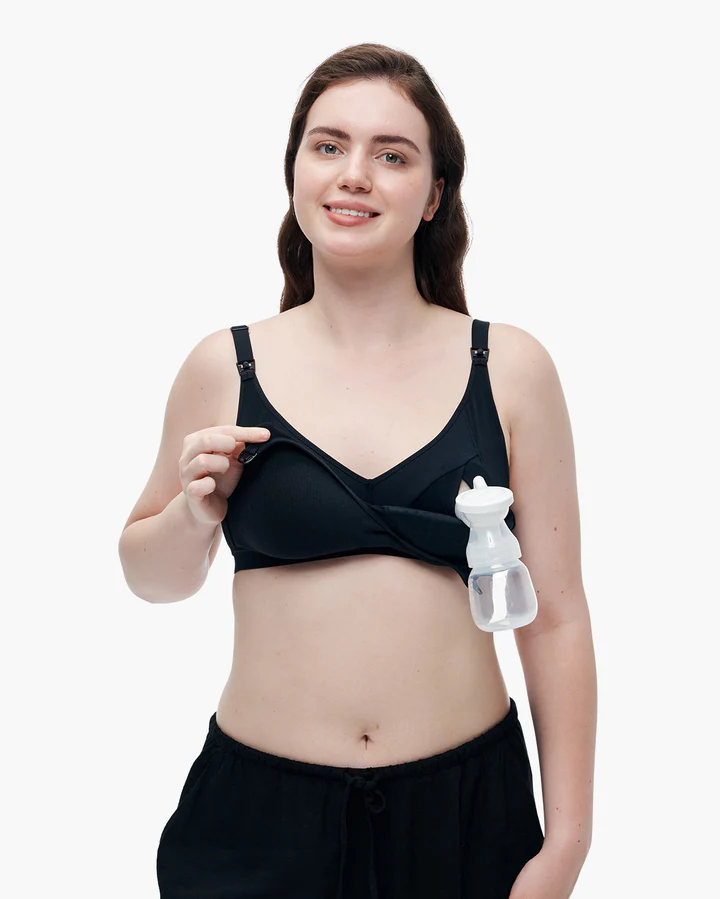
A pumping bra does a different job. It is designed to hold flanges, cups, or collection bottles in place so you do not have to use your hands the whole time. Some newer styles combine both functions, which is especially useful if you switch back and forth between nursing and pumping throughout the day.
That difference matters more than it sounds. A regular bra may not give enough support to keep the pump stable, and when the pump shifts, the seal can weaken and the whole session becomes more annoying.
It creates a true hands-free setup
A true hands-free setup means your bra is doing the holding for you. Once the flanges are in place and the bra is fitted correctly, your hands are free to eat, answer an email, hold your baby, or just sit back without bracing pump parts against your chest.
For moms using a standard double-electric pump, this is often the easiest way to pump both breasts at once without being stuck in one rigid position. That matters on days when every minute counts, especially if you are pumping every 3 to 4 hours and each session lasts 15 to 20 minutes.
Why it helps so much in real life
Breastfeeding is already a full-time rhythm
Newborn feeding is rarely neat or predictable. UCLA notes that about half of babies struggle to latch on the first day, and cluster feeding can happen as often as every 30 minutes for several hours, especially around the second night.
That kind of schedule changes how you think about gear. You do not need more stuff for the sake of it, but you do need a few practical things that lower the workload. A pumping bra does that by removing one repetitive strain: holding the pump in place over and over.
It can also help when milk is delayed or feeding is not going smoothly right away. UCLA reports that about 4 in 10 breastfeeding parents deal with delayed milk coming in, often improving by day 6 or 7. During that stretch, hand expression and pumping may become part of the routine, and having a bra that supports pumping can make that temporary extra work much easier to handle.
It gives you back some movement and mental space
The biggest benefit is not that you can suddenly do ten things at once. It is that pumping stops taking both of your hands and all of your attention.
For working moms, that can mean using a break more efficiently. For stay-at-home moms, it can mean pumping while helping an older child with a snack, folding a small load of laundry, or simply drinking water before the session is over.
That kind of flexibility matters because breastfeeding drop-off is common early on. The American Pregnancy Association notes that almost half of new mothers who start breastfeeding stop within the first 6 weeks. Anything that makes the routine less physically draining can make it easier to continue.
Comfort and milk expression depend on fit
A good fit supports the pump, not just your chest
This is where many moms get tripped up. A pumping bra is not helpful if it is too loose to hold the flanges steady or so tight that it presses into breast tissue.
Genuine Lactation makes a useful point here: the band does most of the support work. If the band is too loose, pumps can shift, tilt, or lose suction. Tightening the straps does not really fix that. A snug band with enough cup room usually works better than sizing up too far and hoping the straps will do the job.
The same goes for flange fit. The bra should hold the flange in the right position, but the flange itself still needs to fit your nipple correctly. Lactation experts note that poor flange fit can cause discomfort, nipple damage, and lower milk flow. Pumping should not be painful.
Too tight and too loose both cause problems
A too-tight bra can leave pressure marks, feel restrictive when you breathe, and compress the breast in a way that is just uncomfortable. The American Pregnancy Association also warns that bras that are too tight may contribute to plugged ducts, mastitis, or reduced milk supply.
A too-loose bra has its own problems. The pump can sag as bottles fill, the flange can lose alignment, and you may find yourself holding everything up anyway, which defeats the point.
A quick real-life check helps. When you put the bra on, make sure all breast tissue is inside the cup area, the center sits flat if the style is built that way, and the band feels supportive without digging in. Genuine Lactation suggests that a new band usually should not pull more than about 1 to 2 inches away from the body, with about 2 to 3 fingers of stretch.
What to look for when choosing a pumping bra
Prioritize support, access, and adjustability
The best pumping bra is not the fanciest one. It is the one that supports your pump securely, feels comfortable for the length of your session, and is easy to use when you are tired.
Look for soft, stretchy fabric, easy one-hand nursing access if you also nurse directly, and adjustable straps or band settings. The Bump highlights the same basics: support without compression, simple access, and enough flexibility to handle breast size changes when milk comes in.
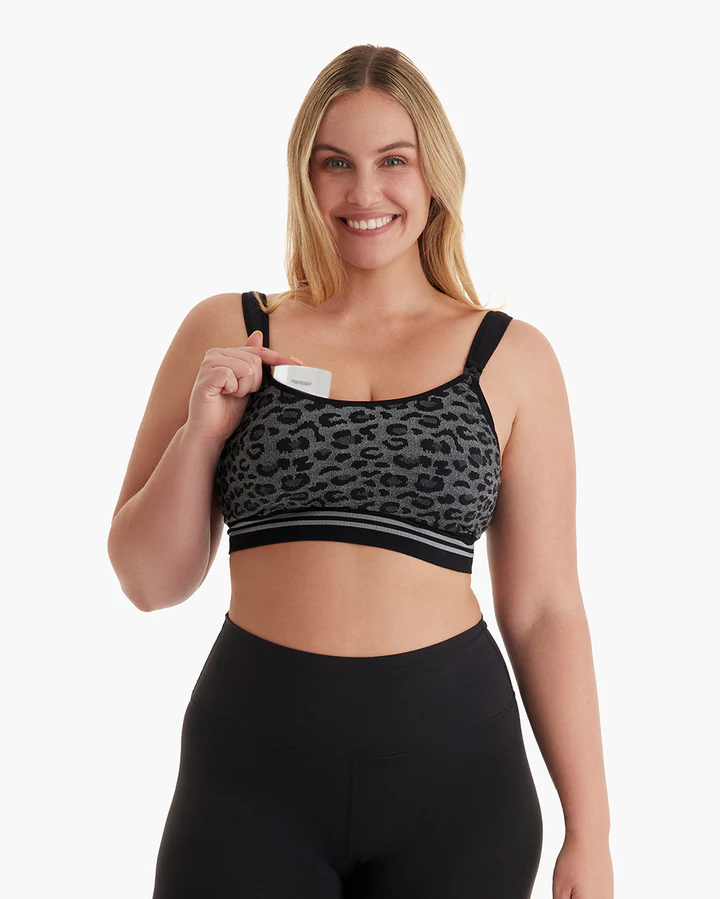
If you want one bra to do double duty, an all-in-one nursing and pumping bra can be a practical option. Many moms like styles with clip-down access plus structured openings that hold pump flanges in place, because it means fewer wardrobe changes during the day.
Size for your current body, not your old bra size
Postpartum bra sizing is tricky because your body changes fast. Genuine Lactation points out that many moms do not remeasure after pregnancy, even though band size often decreases while cup size increases.
Measure snugly under the bust and again around the fullest part of the bust. Then use the actual size chart for the bra you are considering, because letter sizing like L or XL can vary a lot between brands. If you plan to use wearable cups or heavier pumps, leave enough room for the device without letting the whole bra go slack.
If you are between sizes, think about your real routine. A mom pumping multiple times a day usually needs secure support more than extra looseness. Breasts also change through the day, so a little flexibility in the fabric and closures helps.
How to use a pumping bra without making pumping harder
Set it up so the pump can do its job
A pumping bra works best when the setup is simple and repeatable. Wash your hands, position the flanges or cups inside the bra openings, make sure they sit centered on the nipple, secure the bra, then attach tubing or the pump motor and start with suction that feels comfortable.
If the session hurts, do not assume that is normal. What to Expect notes that pain may point to the wrong flange size, suction that is too high, or irritated nipples. The nipple should move freely in the flange tunnel without pulling in too much areola.
If you are pumping often, consistency matters more than perfection. Pumping every 3 to 4 hours is a common target, and even a short 5-minute session is often better than skipping completely when your day falls apart.
Keep the bra clean and your routine practical
Because you may be wearing the same bra for nursing, pumping, and catching leaks, care matters. The American Pregnancy Association recommends having at least two bras and changing them when they get wet or dirty to reduce irritation and help prevent problems like sore skin or thrush.
It also helps to build a small pumping routine around the bra. Keep breast pads nearby if leaking is common. Store milk promptly, and remember that expressed milk can generally stay at room temperature for up to 4 hours, or in an insulated bag with ice packs for up to 24 hours before moving it to the refrigerator or freezer, according to What to Expect.
If you are in a pinch, there are even low-cost hands-free hacks using a nursing bra and elastic loops, described by KellyMom. But for moms who pump regularly, a purpose-built pumping bra is usually more secure, more comfortable, and easier to live with.
Practical Next Steps
Keep it simple and make it work for your day
If you are pumping more than occasionally, a pumping bra is not an extra. It is a practical tool that can save your hands, support a better fit, and make frequent sessions easier to keep up with.
Choose one that feels supportive but not tight, has enough structure to hold your pump steady, and still gives you easy access if you also nurse. Then test it during a normal day, not just for two minutes in front of a mirror.
If pumping still feels painful, messy, or strangely exhausting, look at fit first: bra fit, flange fit, and suction settings. Small adjustments there often make a bigger difference than buying more gear.
Other Articles You May Find of Interest...
- 7 Things Families Need From an ABA Therapy Provider
- A Day in the Life of a Single Dad: The Honest Hour-by-Hour Daily Life Guide
- What Parents Should Know About Introducing New Partners After Divorce
- Why Major Family Milestones Can Feel So Meaningful
- What PPEC Services Actually Include
- Building Healthy Habits for the Whole Family
- Breastfeeding Classes Washington DC: Building Confidence Before Baby Arrives