






More Medication Articles
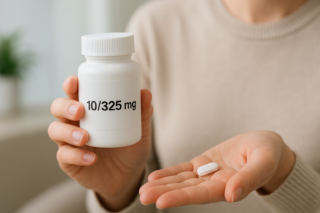
What 10/325 mg Means on a Pain Medication Label
By Your Health Magazine Health Information Team
You pick up a prescription after dental work, surgery, or an injury and notice “10 mg/325 mg” on the bottle. Does that mean the tablet contains 10 milligrams, 325 milligrams, or 335 milligrams? And which number tells you how strong the medicine is?
The short answer is that the two numbers usually represent two different active ingredients in one tablet. On common prescription pain medications, the 10 mg often refers to an opioid such as hydrocodone or oxycodone, while the 325 mg refers to acetaminophen. However, the numbers alone do not identify the medication. You must read the full drug name on the pharmacy label.
What Does 10/325 mg Mean?
A medication labeled 10 mg/325 mg is a combination product. Each number gives the amount of a separate active ingredient in a single dosage unit, usually one tablet.
-
10 mg: The amount of the first listed ingredient, commonly hydrocodone or oxycodone in prescription combination pain medicine.
-
325 mg: The amount of acetaminophen, a non-opioid pain reliever and fever reducer.
For example, a hydrocodone-acetaminophen label may list 10 mg of hydrocodone bitartrate and 325 mg of acetaminophen per tablet. An oxycodone-acetaminophen product may also come in a 10 mg/325 mg strength, but its first ingredient is oxycodone hydrochloride instead.
This is why a search for “10 325mg” does not provide enough information to determine exactly what someone has been prescribed. The full medication name, pharmacy directions, tablet description, and prescription number are all important.
Why the Numbers Should Not Be Treated as One Dose
Although the active ingredients add up mathematically to 335 milligrams, healthcare professionals do not describe the medicine as a single 335 mg drug. The ingredients have different purposes, effects, safety concerns, and ways of being processed by the body.
The opioid component changes how the brain and nervous system respond to pain. Acetaminophen also reduces pain, but it works differently and does not have the same opioid effects. Combining the ingredients may provide pain relief through more than one mechanism, but it also means that the precautions for both medicines apply.
The 10 mg number should not be compared directly with the milligram strength of an unrelated medication. Milligrams measure weight, not overall potency across different drugs. Ten milligrams of one medicine can have very different effects from 10 milligrams of another.
Why the 325 mg of Acetaminophen Matters
Acetaminophen appears in many prescription and over-the-counter products, including medicines for pain, fever, colds, flu, headaches, and sleep. On some labels, it may be abbreviated as “APAP.” Taking more than one acetaminophen-containing product can unintentionally increase the total amount consumed.
Too much acetaminophen can cause severe liver injury. The early signs of an overdose may be mild or absent, so someone should not wait for obvious symptoms before getting help after a suspected dosing error. People with liver disease or regular alcohol use should discuss acetaminophen-containing medicines with a healthcare professional.
Check the active-ingredient section of every prescription and nonprescription medicine you use. A pharmacist can help identify duplicate ingredients and review possible interactions. Additional consumer medication details are available through the MedlinePlus drug information resource.
Important Opioid Safety Concerns
Hydrocodone and oxycodone are opioids. Even when used as prescribed, they can cause drowsiness, dizziness, nausea, vomiting, constipation, and slowed breathing. They also carry risks of misuse, physical dependence, opioid use disorder, overdose, and death.
Alcohol, benzodiazepines, sleep medications, muscle relaxants, sedating antihistamines, and other substances that slow the central nervous system may intensify sedation or breathing problems. Do not combine medications or substances without first checking with the prescriber or pharmacist.
Until you know how the medicine affects you, avoid driving, operating machinery, or performing tasks that require alertness. Stand up slowly if you feel lightheaded, and contact the prescribing professional if side effects interfere with daily activities.
Use and Storage Habits That Reduce Risk
-
Follow the pharmacy label exactly rather than changing how much or how often you take the medicine.
-
Do not take someone else’s prescription or share yours with another person.
-
Ask a pharmacist before adding an over-the-counter pain, cold, flu, allergy, or sleep product.
-
Store opioid medication securely and out of sight and reach of children, visitors, and pets.
-
Use an authorized medication take-back option for unwanted tablets rather than keeping them for a future illness or injury.
-
Ask a healthcare professional about naloxone, a medicine that can temporarily reverse an opioid overdose.
How to Read the Prescription Label Correctly
Start with the complete generic or brand name, not just the numbers. Next, confirm whether the strength applies to each tablet, capsule, or measured amount of liquid. Read the patient Medication Guide and follow the individualized instructions printed by the pharmacy.
If the bottle, tablet appearance, or instructions differ from what you expected, pause and call the pharmacy before taking it. Do not identify a loose pill based only on its color or the “10 325” marking because appearance may vary among manufacturers.
Clear labels help people understand complicated health information. The same principle applies to visual anatomy resources, such as this explanation of a labeled nail diagram and nail health: individual labels are most useful when interpreted as parts of a complete picture.
When to Seek Care
Call the prescribing clinician or pharmacist if you do not recognize the medication, cannot understand the directions, have worsening or uncontrolled pain, experience troublesome side effects, or may have taken the wrong amount. Do not increase the dose or stop an opioid suddenly without professional guidance, particularly after regular use.
Seek emergency help for slow, shallow, or difficult breathing; blue or gray lips or nails; choking or gurgling sounds; extreme sleepiness; collapse; confusion; or inability to wake the person. If naloxone is available, administer it as directed and call 911. Emergency evaluation is still necessary even if the person wakes up.
For a possible acetaminophen overdose or accidental medication error, contact Poison Help promptly at 1-800-222-1222 in the United States. Do not wait for symptoms to appear. Understanding what 10/325 mg means is useful, but safe use depends on knowing both ingredients, following the prescription label, and asking a pharmacist whenever anything is unclear.
Other Articles You May Find of Interest...
- Single-Dose vs Multiple-Dose Vials: How to Read the Label
- Before Your First Compounded Prescription: Five Questions Worth Asking
- Medication Safety for Aging Parents: A Family Guide to Preventing Missed Doses and Dangerous Mix Ups
- Identifying Pink-and-White Benadryl Capsules
- Anti-Inflammatory Medicines for Trigger Finger: How Much Can They Help?
- What Fluticasone Propionate Cream Is Used For
- Identifying the Blue A 17 Pill and Avoiding Counterfeits





