






More Kratom Education Articles
Red Vein Kratom Effects: Everything You Need to Know

Many people assume that kratom’s color indicates exactly what they are purchasing. Red. Green. White. It appears straightforward, but it is not.
Red vein kratom is among the most searched kratom terms online. It is also among the most misunderstood. Millions of people purchase it each year without a clear understanding of the process behind it, what influences alkaloid content, or why two “red vein” products from different manufacturers can be entirely different from one another.
This gap in understanding matters — particularly when making an informed purchase.
This article explains what red vein kratom is, how it is made, what differentiates it from other varieties, and what quality and safety factors consumers should be aware of before purchasing any product.
What Red Vein Kratom Actually Is
Red vein kratom comes from Mitragyna speciosa, a tropical tree native to Southeast Asia.
The “red vein” name refers to the color of the central leaf vein and stem at the time of harvest. When leaves display red or reddish-pink veins, they are typically harvested later in the maturation cycle.
This matters because leaf age influences the alkaloid profile. More mature leaves tend to contain higher concentrations of certain compounds compared to younger, white-veined leaves. The two primary alkaloids found in all kratom are mitragynine and 7-hydroxymitragynine. Their ratios vary based on when the plant was harvested and how it was processed afterward.
Red vein kratom is produced predominantly in Indonesia, Thailand, Malaysia, and Borneo. Different growing regions produce distinct alkaloid profiles, even within the same “red vein” classification.
Why the Name Can Be Misleading
Kratom cultivar names are not regulated or standardized. “Red Bali,” “Red Maeng Da,” and “Red Borneo” are marketing terms. They do not correspond to strict botanical classifications. Two vendors selling “Red Bali” may source from entirely different farms, use different drying methods, and have measurably different alkaloid concentrations.
The vein color classification system gives consumers a general reference point, but it does not guarantee consistency.
Some vendors also blend powders from multiple sources while still using red vein labeling. Without third-party laboratory testing, it is not possible to determine the actual contents of a product.
Key Characteristics of Red Vein Kratom
Red vein kratom has several characteristics that tend to distinguish it from white and green vein varieties:
- Harvest timing: Leaves are picked later in the growth cycle
- Processing methods: More commonly sun-dried or fermented compared to other vein types
- Alkaloid ratio: Typically exhibits a different mitragynine-to-7-hydroxymitragynine ratio compared to white vein products
- Powder appearance: Can range from light brownish-red to deeper brown depending on processing
- Powder aroma: Often described as earthier compared to white vein powder
These characteristics vary by region and producer. They represent general tendencies, not absolutes.
Understanding Alkaloids and Composition
Kratom contains more than 40 known alkaloids. Two are primary:
Mitragynine is the most dominant alkaloid by concentration in most kratom products. It binds to opioid receptors but has a distinct chemical profile compared to traditional opioids.
7-Hydroxymitragynine is present in smaller amounts but is considered significantly more potent per milligram. Its concentration tends to increase as leaves mature and during certain post-harvest processes such as fermentation.
Red vein kratom often shows higher 7-hydroxymitragynine levels compared to white vein products, but this is not universal. Lab results can vary between batches, even from the same supplier. Understanding the alkaloid profile — not just the vein color — provides more meaningful information about what a product actually contains.
Processing, Harvesting, and Quality Factors
How kratom is processed after harvest significantly impacts the final product.
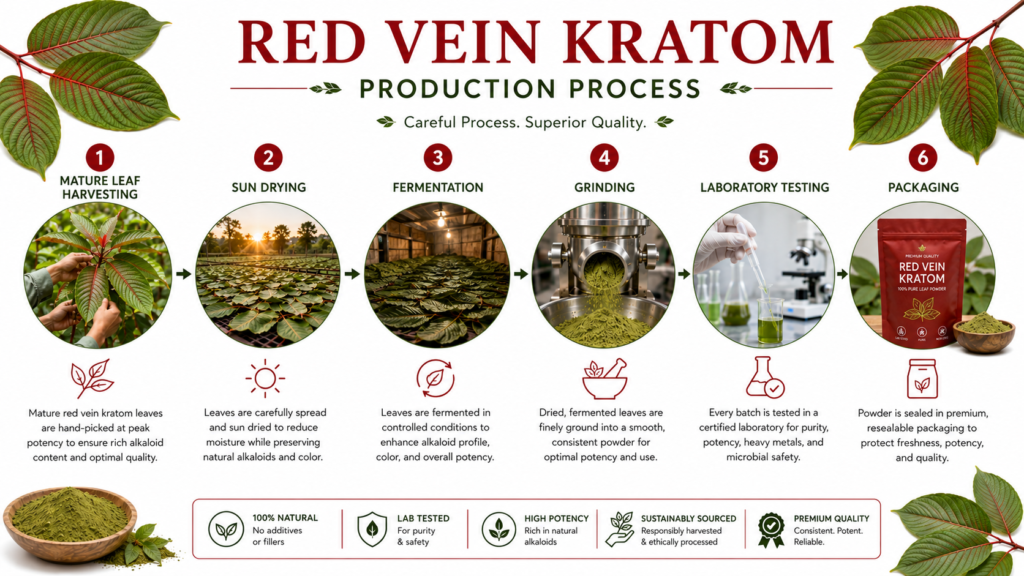
Sun drying is the oldest method. Leaves are dried outdoors for extended periods. Exposure to UV light can affect alkaloid stability and conversion.
Indoor drying produces a more stable, controlled product and is favored by producers focused on consistency and quality.
Fermentation — used in products such as Bentuangie — alters the alkaloid composition more substantially. Some red vein products undergo partial fermentation to modify their alkaloid ratios.
Milling and grinding also affect product quality. A consistent, fine powder indicates more careful processing. Uneven or coarse grinds suggest inconsistency in milling.
Third-party testing for heavy metals, microbial contamination, and alkaloid content remains the most reliable measure of product quality.
Red Vein Kratom vs Other Popular Strains
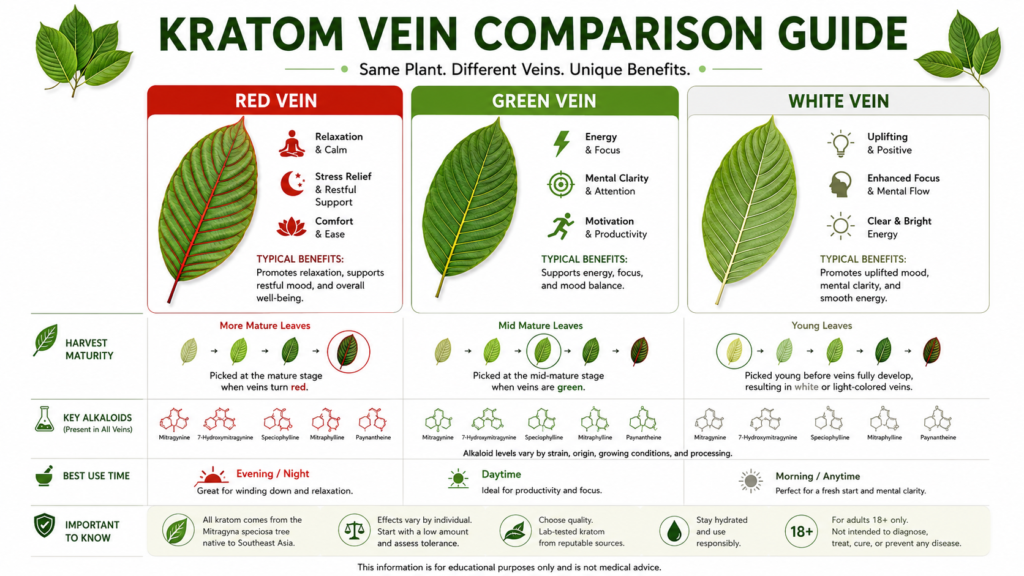
| Strain | Common Description | Key Characteristics | Important Limitation |
| Red Vein Kratom | Mature-leaf harvest, later growth stage | Tendency toward higher 7-OH; earthy appearance | No standard definition; varies significantly by vendor |
| White Vein Kratom | Early-stage harvest, light processing | Mitragynine-dominant alkaloid profile | Alkaloid ratios vary considerably by source |
| Green Vein Kratom | Mid-maturity harvest | Intermediate alkaloid profile | “Green” classification is inconsistently applied |
| Maeng Da (any vein) | Grafted or selectively bred designation | Marketed as having higher alkaloid concentration | Quality varies widely; largely a marketing label |
This comparison reflects general tendencies and does not guarantee consistency. Laboratory testing is the most reliable way to differentiate between products.
Traditional Background and Modern Market Usage
Kratom has been used for centuries in Thailand, Malaysia, and Indonesia. Traditional farmers and manual laborers chewed fresh leaves — a practice embedded in rural Southeast Asian communities.
The modern kratom market developed primarily in the United States and Europe during the 2010s. As demand grew, so did the variety of product formats, including capsules, powders, extracts, and tinctures.
Red vein kratom became a widely sought-after product category due to its distinct profile compared to white and green vein varieties, driving sustained consumer demand.
What Consumers Commonly Report
Forum discussions and consumer surveys generally associate red vein kratom with evening or nighttime use preference, longer perceived duration compared to white vein products, and an earthier scent profile.
These are self-reported observations, not clinical claims. Individual experiences differ based on body weight, tolerance, method of consumption, and product quality.
No kratom product — red vein or otherwise — has been approved by the FDA for any medical use.
Important Risk Information
Kratom is not approved by the U.S. Food and Drug Administration (FDA) for any medical purpose. Regular use may lead to physical dependence, and withdrawal symptoms have been reported upon discontinuation. Kratom may interact with prescription medications, over-the-counter drugs, and other supplements. Individuals with pre-existing health conditions face additional risks. Anyone considering kratom use should consult a qualified healthcare professional beforehand.
Safety and Regulatory Considerations
Third-Party Testing
Reputable vendors issue Certificates of Analysis (COAs) for each batch from accredited, independent laboratories. Consumers should look for alkaloid content quantification, pesticide residue testing, heavy metal screening, and microbial contamination results.
Manufacturing Standards
The American Kratom Association (AKA) operates a Good Manufacturing Practice (GMP) program. AKA GMP-certified vendors adhere to stricter quality control standards than non-certified vendors.
Label Transparency
Labels should include net weight, batch number, alkaloid source information, and testing documentation. Unclear or incomplete labeling is a warning sign.
Contaminant Screening
Kratom has been subject to recalls in the past due to salmonella contamination and elevated heavy metal levels. Batch-specific COAs from accredited laboratories substantially reduce this risk.
Legal Status
Kratom is federally legal in the United States but is banned or restricted in several states and municipalities. Consumers should verify local laws before purchasing.
Common Misconceptions About Red Vein Kratom
Myth: Red vein is the most potent form of kratom.
Fact: Potency depends on alkaloid concentration, which varies by source, processing method, and batch — not vein color alone.
Myth: All red vein kratom products are essentially the same.
Fact: “Red vein” is an unregulated term. Products sold under this name can differ substantially in alkaloid composition.
Myth: Red vein kratom produces uniform effects across all users.
Fact: Individual responses vary based on tolerance, metabolism, and the alkaloid ratios specific to each product.
Myth: Natural coloring means a product is unprocessed or purely natural.
Fact: Some red vein product lines undergo blending, fermentation, or enhancement procedures that significantly alter the alkaloid profile.
Frequently Asked Questions
How does red vein kratom differ from white or green vein?
The most significant differentiator is harvest timing. Red vein leaves are picked later in the maturation cycle, after the central leaf vein has developed its reddish color. This later harvest is generally associated with a different alkaloid ratio, with a tendency toward higher 7-hydroxymitragynine compared to white vein varieties. Processing methods — including sun-drying and fermentation — also differ from those used for white and green vein products. These are general patterns across the category, not guarantees applicable to every product.
Is red vein kratom legal in the United States?
Kratom is federally legal in the United States. However, several states have enacted their own bans or restrictions, including Alabama, Arkansas, Indiana, Rhode Island, Vermont, and Wisconsin. A number of counties and municipalities in other states have also implemented local regulations. Laws are subject to change, and consumers should always verify current state and local regulations before purchasing any kratom product.
How is red vein kratom powder produced?
After harvest, red-veined leaves are dried through sun exposure or controlled indoor drying. Extended drying time, particularly when combined with fermentation, can intensify the reddish color of the final product. Once dried, the leaves are milled into a fine powder. The drying method and duration can affect alkaloid stability and may influence the chemical composition of the final product in measurable ways.
What should I look for when evaluating red vein kratom quality?
Focus on three things: batch-specific COAs from accredited third-party laboratories covering alkaloid content, heavy metals, and microbial screening; AKA GMP certification; and clear, complete labeling. Companies that release batch-specific COAs from accredited labs provide the highest level of transparency. Incomplete labeling, inadequate testing documentation, or prices significantly below market averages are warning signs that should be taken seriously.
Does red vein kratom have a shelf life?
Yes. Kratom alkaloids degrade over time, particularly when exposed to moisture, heat, UV light, or oxygen. Most vendors recommend consuming kratom within three to four years of production when stored properly. Airtight, opaque containers kept in cool, dry environments can significantly extend shelf life. Powder that has clumped, changed color, or developed an off-smell should be examined carefully before use.
The Bottom Line
Red vein kratom is one of the most widely recognized kratom product categories. Its classification is based on harvest timing and processing techniques that tend to produce an alkaloid profile distinct from white and green vein varieties.
However, the category is not standardized. Without third-party testing and clear labeling, the “red vein” designation on packaging conveys limited information about actual contents. Alkaloid content, contaminant levels, and product consistency can vary significantly across vendors and growing regions.
Consumers who prioritize quality should focus on AKA GMP-certified vendors, batch-specific COAs, and companies that provide clear sourcing information.
Kratom is not FDA-approved, may cause dependency, and may interact with medications. Readers should consult a qualified healthcare professional before use and verify the laws applicable in their jurisdiction. Red vein kratom is a complex botanical product and should be approached with careful, informed consideration.
Other Articles You May Find of Interest...
- How HPLC Testing Verifies Botanical Potency—and Why Lab Results Can Differ
- Red Bali Kratom: What It Is, How It Differs, and What the Research Says
- Kratom Legality in 2026: Why the Rules Vary by Location
- 7 Things to Know About Split Kilo Kratom Before a Bulk Order
- Red Thai Kratom: The Strain With a Complicated History and a Loyal Following
- Red Sumatra Kratom: What Makes This Strain Stand Apart
- Red Indo Kratom: The Strain That Built the Modern Kratom Market





