






More HIV Articles
Kaposi Sarcoma in Pictures: Recognizing the Lesions
By Your Health Magazine Health Information Team
You notice a dark purple spot on your face or leg that does not look like a typical bruise. It may be flat, slightly raised, or shaped like a small bump. After searching for pics of Kaposi sarcoma, you wonder whether the spot resembles the images—and whether you should be concerned.
Photographs can help you understand what Kaposi sarcoma lesions may look like, but they cannot confirm a diagnosis. The color and shape vary considerably, and several infections, vascular growths, bruises, and other skin conditions can look similar. A healthcare professional generally needs to examine the area and perform a biopsy to determine whether it is Kaposi sarcoma.
What Does Kaposi Sarcoma Look Like?
Kaposi sarcoma is a cancer associated with Kaposi sarcoma-associated herpesvirus, also called human herpesvirus 8 or HHV-8. It can affect the skin, lymph nodes, mouth, and internal organs. Although HHV-8 is necessary for the disease to develop, many people with the virus never develop Kaposi sarcoma. The condition is more likely to appear when immune function is weakened, including in some people with HIV or those taking immune-suppressing medication after an organ transplant.
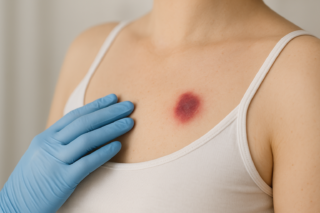
In an image of Kaposi sarcoma, skin lesions may appear:
- Pink, red, reddish-purple, brown, blue, or nearly black
- Flat like a patch or slightly raised like a plaque
- Rounded and elevated like a papule or nodule
- Single, clustered, or spread across several areas
- Small at first, with the possibility of enlarging or increasing in number
The way lesions appear can depend partly on a person’s natural skin tone. On lighter skin, red or purple coloring may be easier to see. On darker skin, lesions may look brown, deep purple, grayish, or black. Early lesions are often painless and may not itch, so their appearance may be the only noticeable change.
Unlike a typical bruise, a Kaposi sarcoma lesion may remain in place, gradually change shape, or be joined by additional spots. Some lesions do not fade when pressure is applied, but this is not a reliable home diagnostic test.
Where Do the Lesions Develop?
Kaposi sarcoma can appear almost anywhere. Classic Kaposi sarcoma often develops on the feet, ankles, or lower legs and may progress slowly. HIV-associated disease can have a broader distribution, involving the face, torso, limbs, mouth, lymph nodes, or internal organs.
Face and Mouth
A Kaposi sarcoma on face picture may show a red, purple, brown, or dark spot on the nose, ears, eyelids, or nearby skin. Facial lesions may be flat or raised and can be mistaken for bruising or another skin growth. Because changes on the face are highly visible, they may also cause understandable self-consciousness or emotional distress.
Lesions may develop inside the mouth, particularly on the roof of the mouth or gums. They often begin as flat, discolored areas but can become raised. Larger lesions may interfere with chewing, swallowing, speaking, or wearing dentures, and some can become irritated or bleed.
Legs and Feet
Lower-leg and foot lesions may occur with swelling caused by disrupted lymphatic drainage. Swelling can make shoes feel tight, limit ankle movement, or make standing and walking uncomfortable. Advanced lesions may become thickened, ulcerated, painful, or prone to secondary infection.
Internal Organs
Kaposi sarcoma is not always limited to visible skin. Lesions can involve the lungs or digestive tract, sometimes without obvious skin changes. Lung involvement may cause coughing, shortness of breath, chest symptoms, or coughing up blood. Digestive-tract disease may cause abdominal discomfort, diarrhea, anemia, or bloody or black, tarry stools.
Does a Purple Spot Mean Kaposi Sarcoma?
No. Color alone cannot identify the condition. Bruises, harmless blood-vessel growths, medication reactions, inflammatory disorders, infections, and other tumors can resemble Kaposi sarcoma. Even experienced clinicians may not be able to make a definite diagnosis by appearance alone.
A doctor will review how long the spot has been present, whether it is changing, and whether you have swelling, mouth symptoms, breathing problems, digestive symptoms, HIV, an organ transplant, or other causes of reduced immune function. The examination may include the skin, mouth, and lymph nodes.
If the lesion is suspicious, a clinician will usually remove a small tissue sample for laboratory examination. This biopsy is the key step in confirming Kaposi sarcoma. Additional testing may be recommended when symptoms suggest involvement of the lungs, digestive tract, or other organs.
Kaposi Sarcoma Is Not Always Related to HIV
Although Kaposi sarcoma became widely recognized because of its association with AIDS, not every diagnosis means a person has HIV. The main clinical forms include HIV-associated, classic, endemic, and transplant-associated Kaposi sarcoma.
HIV testing may be recommended when someone has a suspicious lesion and their HIV status is unknown. For people living with HIV, effective antiretroviral therapy supports immune recovery and reduces the likelihood of Kaposi sarcoma. It can also help existing lesions improve in some cases. Learn more about managing Kaposi sarcoma in individuals with HIV.
How Is Kaposi Sarcoma Treated?
Treatment depends on the type of Kaposi sarcoma, the number and location of lesions, symptoms, immune-system function, and whether internal organs are affected. A small number of localized lesions may be treated with surgery, freezing therapy, medication placed into the lesion, or radiation therapy. More widespread or internal disease may require systemic treatment such as chemotherapy.
For HIV-associated Kaposi sarcoma, starting or optimizing antiretroviral therapy is a central part of care. Treatment after an organ transplant may involve carefully adjusting immune-suppressing medication, but this must be managed by the transplant team. General information about cancer, testing, and treatment is available through the MedlinePlus cancer health resource.
When to Seek Care
Arrange an appointment with a primary care professional or dermatologist if you develop an unexplained red, purple, brown, or dark lesion that persists, grows, becomes raised, bleeds, or is joined by additional spots. Evaluation is especially important if you have HIV, take immune-suppressing medication, have received an organ transplant, or notice associated swelling or mouth lesions.
Seek urgent medical care for severe shortness of breath, coughing up blood, significant unexplained bleeding, or black or bloody stools. If Kaposi sarcoma is diagnosed, care may involve a dermatologist, oncologist, infectious disease or HIV specialist, and other clinicians based on the organs affected.
Pictures are useful for recognizing possibilities, not making conclusions. Any persistent or changing lesion deserves a professional assessment, particularly when immune function may be reduced.
Other Articles You May Find of Interest...
- Kaposi Sarcoma in Pictures: Recognizing the Lesions
- Is POTS Contagious? Understanding the Facts and Myths
- 5 Healthcare Services Available at HIV Clinics in Orlando
- Recognizing the Symptoms of HIV in Men After One Year
- Navigating HIV Testing: What You Need to Know About HIV Ab/P24 Ag With Reflex
- What Does HBsAg Mean for Your Health?
- Can Mosquitoes Spread HIV or Other Diseases?





