






Your Health Magazine Contributor
4201 Northview Drive
Suite 102
Bowie, MD 20716
More Healthy Aging Articles
Longevity Clinic: A Modern Approach to Healthy Aging
Getting older is a privilege, one that’s inevitable, but poor health doesn’t have to follow the same schedule. That’s the idea behind a longevity clinic, where the focus may include identifying health risks and age-related changes alongside established preventive care.
These clinics are like no other. They combine medical screening, biomarker testing, physical assessment, lifestyle analysis, and then ongoing monitoring to build a detailed view of your health.
The point is to protect your healthspan, the years you spend physically capable, mentally sharp, and independent.

Source: Magnific
What Is a Longevity Clinic and What Is It Trying to Prevent?
Preventative medicine, as the name suggests, looks for known risks before they become disease. Longevity medicine goes further and tries to move that point even earlier.
It’s sometimes described as “prevention of prevention”: looking for changes in metabolic health, cardiovascular risk, physical function, or any other areas before they would usually prompt medical attention.
This isn’t searching for problems without purpose. It’s actually more useful — an early finding that gives you something practical to act on. Your family history, current health, blood markers, fitness, sleep, nutrition, and more relevant factors all help clinicians identify where to put most attention.
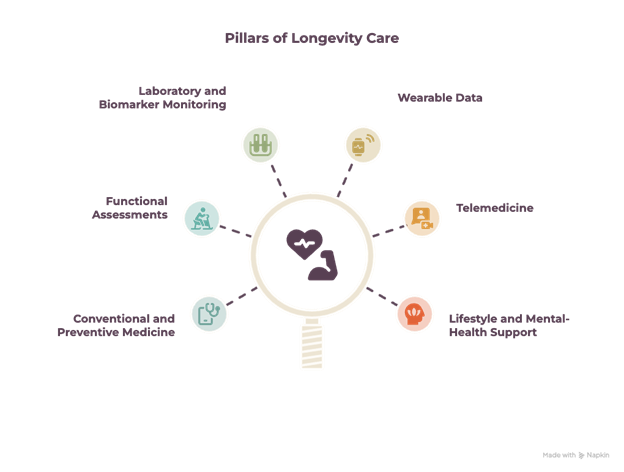
A Framework for an Effective Healthy Longevity Clinic proposes a general model for this type of care. It combines:
- conventional and preventive medicine with functional assessments
- laboratory and biomarker monitoring
- wearable data
- telemedicine
- lifestyle and mental-health support
- physical therapy
- data analysis
- research
- long-term follow-up
What Happens at a Modern Longevity Clinic?
Your first visit will look different from a standard annual physical. In addition to discussing symptoms and appropriate routine screening, the clinical team may build a broader view of your current health, risk factors, and physical function.
The exact process can vary by clinic and depends on your age, medical history, and individual risks. Here’s what it can include:
- detailed bloodwork for metabolic, cardiovascular, hormonal, nutritional, and inflammatory markers
- tests of body composition, grip strength, balance, mobility, and cardiorespiratory fitness
- sleep, nutrition, cognitive, and lifestyle assessments
- selected imaging or genetic testing when clinically appropriate, as well as tests such as epigenetic or microbiome analysis, whose usefulness for routine longevity care is still being studied
Some clinics offer even more testing than this, although this isn’t a quality indicator. Each test should answer an important health question and, ideally, provide information that could change what you do next.
From Test Results to a Personal Health Plan
Collecting health data only makes sense when it leads to sensible decisions. So, once your results are there, the clinician team should highlight priorities and create a plan around your unique medical needs and habits.
For many people, this starts with familiar areas backed by substantial evidence. For example, strength and aerobic exercise, nutritious food, adequate sleep, healthy blood pressure and cholesterol levels, and treatment for any special medical conditions.
The difference, however, is often in the details. Your exercise program will reflect your cardiorespiratory fitness, muscle mass, and injury history. It’s not something universal for everyone.
Some clinics also provide hormone therapy, targeted supplements, NAD+ treatments, hyperbaric oxygen, plasma-based procedures, or regenerative therapies. These interventions should not be treated as equally established for healthy aging. Evidence of benefit and risk varies substantially by treatment and indication.
The biggest takeaway is: before agreeing to a treatment, ask what outcome it is intended to improve, what human evidence supports it, and the possible risks.
Why Follow-Up Matters More Than a One-Time “Biological Age”
You can have one test done on one day, but healthy aging takes place over years, decades. This means that changes over time are very useful.
Instead of concentrating on one biological-age score, your care team can track measures such as blood pressure, metabolic markers, body composition, strength, cardiorespiratory fitness, sleep, or other factors important for your health.
Follow-up can help determine whether relevant health measures are changing over time and whether the plan should be adjusted. If your fitness improves, but certain blood markers move in the wrong direction, you need a new plan.
That’s precisely why long-term monitoring is part of this framework. Wearable data, repeat testing, and remote monitoring can all provide information between in-person visits.
It’s a practical cycle: measure what is relevant, act on the findings, review the results, and adjust your care when needed.
Longevity Medicine vs. Regular Preventive Care
It’s very important to note that longevity medicine doesn’t replace primary care or specialist treatment. Routine medicine still covers essentials, such as vaccinations, cancer screening, diagnosis, medication, and treatment when you’re ill.
The difference ultimately comes down to scope and timing. A longevity program assesses your general state in more detail. It can also monitor changes more frequently and bring multiple professionals into one care plan.
Still, remember that more data doesn’t automatically mean better medicine. A sophisticated scan or laboratory panel won’t have much value when the result doesn’t change what you do. Not to mention, excessive screening can result in incidental findings that just lead to more tests and no health improvements.
So, if your goal is a longer life, then those extra years shouldn’t come with declined strength, mobility, or independence. Evidence-based preventive care and healthy lifestyle habits can support health and function as people age.
Other Articles You May Find of Interest...
- How to Maintain Healthy Movement as You Age
- What Actually Predicts How Long You’ll Live
- What’s at the End of Your Fork?
- Why Your Reaction Time Matters More Than You Think, Especially as You Age
- Chess and the Aging Brain: What We Know, and What We Hope
- How to Build a Realistic and Sustainable Anti-Aging Routine
- Dr. Michele Sherwood Explains Exogenous Ketones: What They Can and Can’t Do





