






Your Health Magazine Contributor
4201 Northview Drive
Suite 102
Bowie, MD 20716
More Health Technology Articles
How to Build a Remote Patient Monitoring Program That Supports Better Care
Key Takeaways
- Begin with a defined clinical goal rather than a device or software feature.
- Enroll patients who have a clear need for monitoring and a realistic path to participate.
- Make daily device routines simple, consistent, and easy to understand.
- Create specific rules for reviewing readings, responding to alerts, and documenting actions.
- Measure clinical results, patient engagement, staff workload, and access across patient groups.
Table of Contents
- Why Remote Monitoring Needs a Clear Plan
- Set Clinical Goals Before Choosing Technology
- Select Patients With Careful Criteria
- Design a Routine That Fits Real Life
- Build a Clinical Workflow
- Support Access, Trust, and Digital Comfort
- Measure Program Results
- Avoid Common Mistakes
- Create a Practical Launch Plan
- Conclusion
Remote patient monitoring can do more than collect readings from blood pressure cuffs, scales, glucose meters, and other connected devices. When it is built around clear goals, manageable patient routines, and timely clinical follow-up, it can help care teams extend meaningful support between office visits.
The strongest programs treat home readings as part of an ongoing care relationship, not as a stream of data that sits in a dashboard. Patients need to know what to do, why it matters, and when someone from the care team may contact them. Clinicians need clear ownership, escalation rules, and enough time to respond appropriately.
Why Remote Monitoring Needs a Clear Plan
Monitoring creates value only when a reading leads to an appropriate next step. For example, a patient with heart failure who has a rising weight trend over several days may need a nurse call, symptom review, medication discussion, or a same-day visit. Without a defined workflow, the same readings can pile up without changing care.
Set Clinical Goals Before Choosing Technology
Start by deciding what the program should improve. A goal such as better blood pressure control, earlier signs of fluid retention, post-discharge support, medication follow-through, or improved diabetes self-management provides a practical foundation for device selection and staffing. For diabetes-focused programs, care teams can align education with the everyday self-management practices described in diabetes self-management education and support.
A connected device alone does not create coordinated care. Pairing monitoring with a chronic care management platform can help teams organize outreach, document follow-up, and keep ongoing care needs visible alongside home readings.
Select Patients With Careful Criteria
Not every patient needs the same level of home monitoring. Enrollment decisions should consider clinical risk, the likelihood that regular readings will affect treatment, technology comfort, caregiver support, language needs, and the patient’s interest in participating. Patient choice is especially important. Someone who feels pressured to enroll may stop using the device after only a few weeks.
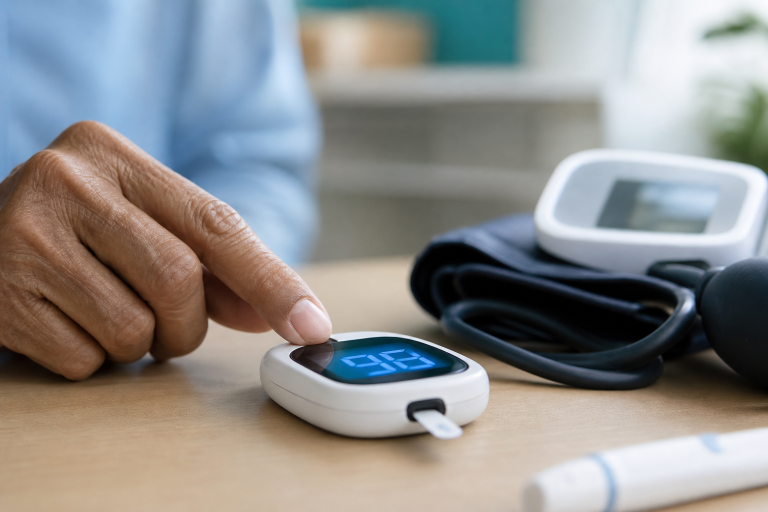
A Simple Enrollment Checklist
- Does the patient have a condition that could benefit from regular readings?
- Is there a specific reason the team needs this information between visits?
- Can the patient use the device independently or with approved caregiver help?
- Does the patient understand the expected routine and agree to it?
- Does the care team have a clear plan for reviewing and acting on the data?
Design a Routine That Fits Real Life
The best routine is one that patients can repeat without adding confusion or stress. Give patients short instructions that explain when to take readings, how to position the device, where to sit or stand, and what to do when a result seems unusual. They should also know who to contact for device problems and when symptoms require immediate medical attention rather than waiting for a remote response.
Teach-back is a useful final step in onboarding. Instead of asking whether the patient understands, ask them to show how they will use the device or explain the next day’s routine in their own words. This can uncover simple barriers before they become missed readings.
Build a Clinical Workflow
A successful program needs a repeatable path from reading to response. First, the patient records a measurement, and the information reaches the care team. Next, a trained staff member reviews it against the patient’s individualized care plan. If follow-up is needed, the team contacts the patient, documents the interaction, and routes clinically important information to the appropriate clinician.
Define who owns each step, including coverage for staff absences, weekends, holidays, and unusually high alert volume. Alert thresholds should be meaningful and specific. Too many low-priority alerts can overwhelm staff, delay attention to urgent issues, and create alert fatigue.
Support Access, Trust, and Digital Comfort
Connected care can improve access, but it can also introduce barriers for patients with unreliable internet, disabilities, limited digital confidence, language differences, or limited time. Offer cellular-connected devices when appropriate, provide large-print and translated instructions, include caregivers with the patient’s permission, and make setup support available by phone.
Privacy conversations should be clear and direct. Patients deserve to understand what information is collected, who may view it, and how it supports their care. The FDA’s work to evaluate real-world evidence for digital health devices also reinforces the importance of pairing innovation with patient safety and measurable outcomes.
Measure Program Results
Enrollment totals alone do not show whether a program is working. Review performance regularly across four areas:
- Clinical measures: Blood pressure trends, glucose control, symptom changes, emergency visits, and hospitalizations.
- Patient measures: Reading frequency, missed readings, confidence using devices, satisfaction, and reasons for disenrollment.
- Operational measures: Alert volume, response time, staff time, unresolved alerts, and device replacement needs.
- Equity measures: Participation and outcomes by age, language, location, disability status, and connectivity access.
Small adjustments can have a meaningful impact. Simplifying instructions, changing the timing of reminders, or refining low-value alerts may improve both participation and staff capacity.
Avoid Common Mistakes
- Collecting data without a response plan: Information accumulates without supporting decisions.
- Using too many devices: Complex routines can discourage participation.
- Setting vague alert rules: Staff may respond inconsistently.
- Ignoring patient preferences: Enrollment may be brief, and engagement may decline.
- Skipping staff training: Small workflow gaps can lead to delayed follow-up.
- Assuming automation replaces judgment: Technology should support clinical oversight, not substitute for it.
Create a Practical Launch Plan
Start small and learn from real use. Choose one patient group, define one or two outcomes, map the journey from enrollment through follow-up, and assign an owner to every task. Test device setup and alert handling with staff and a small patient group before expanding. Then review results, collect patient feedback, and improve the process before adding more conditions or participants.
Conclusion
Remote patient monitoring works best when it feels like a natural extension of care rather than another task for patients and clinicians. Clear goals, simple routines, accessible support, and dependable follow-up help turn home readings into timely action. The goal is not to collect the most data. It is to use the right data to support better decisions and better patient experiences.
Other Articles You May Find of Interest...
- The Real Cost of an EHR: 6 Costs Beyond the License
- 5 Managed PACS Support Companies for Hospitals and Imaging Centres
- 5 QR Code Generators for Hospitals, Clinics, and Health Information
- 5 FHIR Software Development Companies to Consider in 2026
- Pulsed Field Ablation Is Shaking Up the World of EP Therapy
- Armin Ernst: What AI Actually Changes in Healthcare Delivery
- AI Can Fix Prior Authorization, but Only With Humans in the Loop





