More Health News & Research Articles
A Practical Peptide Selection Guide For Laboratory Buyers
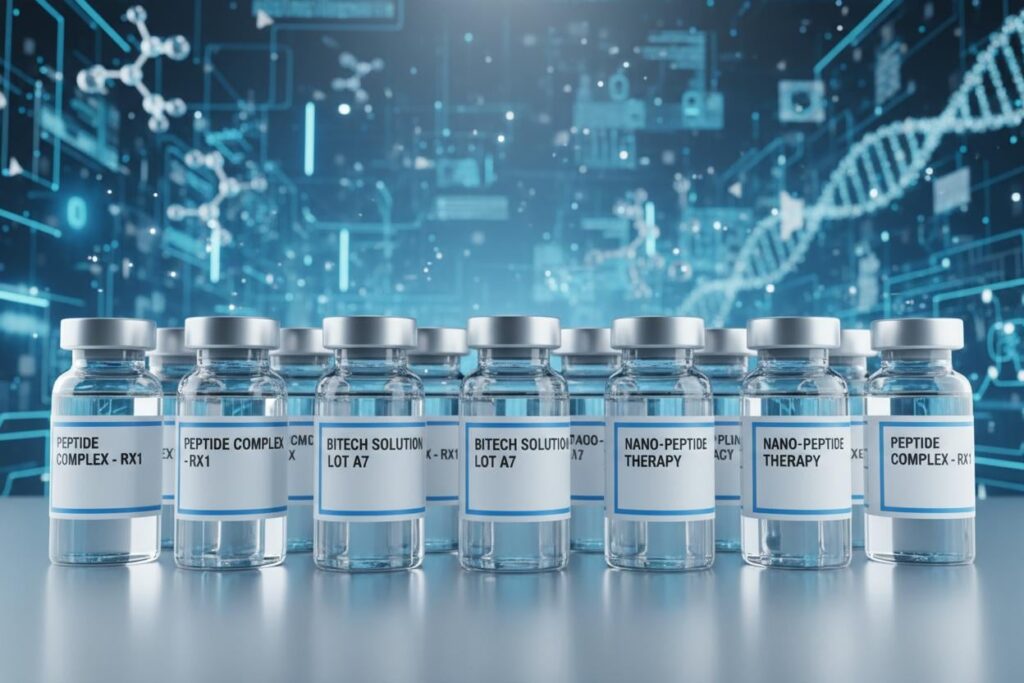
Choosing the right peptide for your research is rarely a simple checkbox decision. Between purity grades, supplier credibility, batch consistency, and pricing structures, laboratory buyers often face a maze of variables that directly affect experimental outcomes. A poor selection can introduce contaminants, skew assay results, or waste months of research budget. This guide breaks down what genuinely matters when sourcing peptides for research use, so you can make informed, defensible purchasing decisions. For buyers comparing options, it helps to start by reviewing a curated research peptide catalog before requesting custom synthesis quotes.
Understand Purity Grades Before You Buy
Purity is the single most important specification on any peptide datasheet. Most reputable suppliers list purity by HPLC (High-Performance Liquid Chromatography), expressed as a percentage. The grade you need depends entirely on the application:
- >95% purity — Standard for in vitro research, cell culture, and basic assay development.
- >98% purity — Recommended for sensitive in vivo studies, structure-activity relationship work, and quantitative analysis.
- >99% purity — Required for crystallography, NMR studies, and clinical-grade research applications.
Do not accept vague labels like “research grade” as a substitute for a measured purity value. If a vendor cannot specify the percentage and the analytical method behind it, treat that as a red flag.
Verify Documentation: COA, HPLC, and Mass Spec
Every peptide shipment should arrive with a Certificate of Analysis (COA). At minimum, the COA must include:
- Sequence and molecular formula
- HPLC chromatogram showing purity
- Mass spectrometry confirmation of the correct molecular weight
- Net peptide content (often lower than gross weight due to counterions and water)
- Solubility recommendations
- Storage conditions
Many buyers overlook net peptide content, but this distinction matters. A vial labeled “5 mg” may contain only 3.5 mg of actual peptide once trifluoroacetate counterions and bound water are subtracted. For dose-dependent experiments, that gap can invalidate your data.
Sequence Length and Synthesis Complexity
Longer peptides are exponentially harder to synthesize cleanly. Standard solid-phase peptide synthesis (SPPS) handles sequences up to about 40 amino acids reliably. Beyond that length, expect lower yields, higher prices, and tighter quality-control requirements. Sequences with difficult residues — cysteines, prolines, or long hydrophobic stretches — also raise the risk of truncated impurities.
If your project involves disulfide bridges, cyclization, or specialty modifications (phosphorylation, biotinylation, fluorescent tags), confirm the supplier has demonstrated experience with that chemistry. Ask for examples of similar past syntheses before committing to a custom order.
Storage, Shipping, and Stability
Peptides degrade over time, and even well-synthesized material can lose integrity if shipped or stored incorrectly. In peptide research, maintaining stability during transportation and storage is essential for achieving accurate and reproducible laboratory results. When evaluating a supplier:
- Confirm they ship lyophilized (freeze-dried) peptides under appropriate cold-chain conditions for sensitive sequences.
- Ask about expected shelf life at -20°C and -80°C.
- For cysteine-containing or oxidation-prone peptides, ensure inert gas packaging (argon or nitrogen flush).
Once received, aliquot before reconstitution. Repeated freeze-thaw cycles are one of the most common causes of unexplained assay variability and wasted material.
Evaluate Vendor Credibility
Beyond the technical specs, the vendor itself matters. Consider:
- Years in operation — Established suppliers typically have refined QC processes.
- Customer base — Vendors serving universities, pharmaceutical companies, or government labs are usually held to higher standards.
- Responsiveness — How quickly do they answer technical questions? Do you get a knowledgeable response or a sales pitch?
- Transparency — Will they share methodology, batch records, or third-party testing on request?
- Returns and replacements — What is their policy if a peptide fails QC on your end?
Online reviews can help, but they are easily manipulated. Direct conversations with peers in your field carry more weight than star ratings.
Pricing: Cheap Peptides Are Usually Expensive
Price discrepancies in the peptide market can be staggering — sometimes a 10x spread for the same sequence. The lowest quote almost always reflects compromises somewhere: lower purity, smaller scale, no COA, untested impurity profile, or offshore synthesis with minimal oversight.
Calculate cost per milligram of net peptide at your required purity, not the listed price per vial. A $200 peptide at 95% purity with 80% net content can be more expensive in real terms than a $300 peptide at 98% purity with 92% net content.
For repeat orders, ask about batch-to-batch consistency guarantees. Variability between lots can ruin longitudinal studies. Buyers running multi-month experiments should always request that the same batch be reserved, or at minimum that batch numbers stay traceable across orders.
Custom Synthesis vs. Catalog Peptides
Catalog peptides — those a supplier keeps in stock — are cheaper and faster but limited in selection. Custom synthesis allows you to specify any sequence and modifications but typically requires two to six weeks of lead time. Before requesting a custom quote, check with a trusted research peptide supplier to confirm there isn’t already a commercially available analog that fits your needs. This single step can save weeks of waiting and a significant portion of your budget.
Conclusion
Selecting research peptides is part chemistry, part procurement strategy. The best laboratory buyers treat peptide sourcing as a long-term relationship, not a transactional purchase. Prioritize verifiable purity, complete documentation, and vendor transparency over headline pricing. Build a short list of two or three suppliers you trust, request batch records, and keep meticulous internal records of which lots performed well in your assays. Over time, this discipline saves money, protects data integrity, and shortens troubleshooting cycles when experiments don’t behave as expected.
Frequently Asked Questions
Q1: What does “net peptide content” mean and why does it matter? It’s the actual peptide weight in a vial after subtracting counterions, water, and salts — directly affecting dosing accuracy in quantitative experiments.
Q2: How long can lyophilized peptides be stored? Most remain stable for 12 to 24 months at -20°C in sealed, moisture-free conditions; sensitive sequences last longer at -80°C with inert gas packaging.
Q3: Is HPLC purity alone enough to confirm peptide quality? No. HPLC confirms purity, but mass spectrometry is required to verify the correct molecular weight — always request both on the COA.
Q4: Can I trust online vendors that offer significantly lower prices? Usually not. Low prices often signal weak QC or missing documentation, so always request a COA and HPLC chromatogram before ordering.
Q5: How should I handle peptides with poor solubility? Start with the supplier’s recommended solvent; for hydrophobic peptides, dissolve in a small volume of organic solvent first, then dilute into aqueous buffer.
Other Articles You May Find of Interest...
- The Evolution of Incretin Mimetic Research: How Triple Receptor Agonists Are Redefining Metabolic Science
- Peptide Research Across Biological Systems: Comparing Metabolic Signalling and Cellular Pathway Investigations
- How Does Tirzepatide Work? What Dual GIP/GLP-1 Agonism Studies Are Exploring in the Lab
- GLP-1, GIP and Glucagon Receptors: Exploring Multi-Receptor Research
- Role of SCARA5 ELISA Kit in Cancer Research
- The $28 Billion Habit of Not Checking Your Inputs
- BPC-157 Peptide Benefits: What Research Says About Recovery, Healing and Tissue Repair