Your Health Magazine Contributor
4201 Northview Drive
Suite 102
Bowie, MD 20716
More Health Insurance Articles
No Fault Doctor Near Me in Manhattan: Understanding Assignment of Benefits and Medical Payment Forms
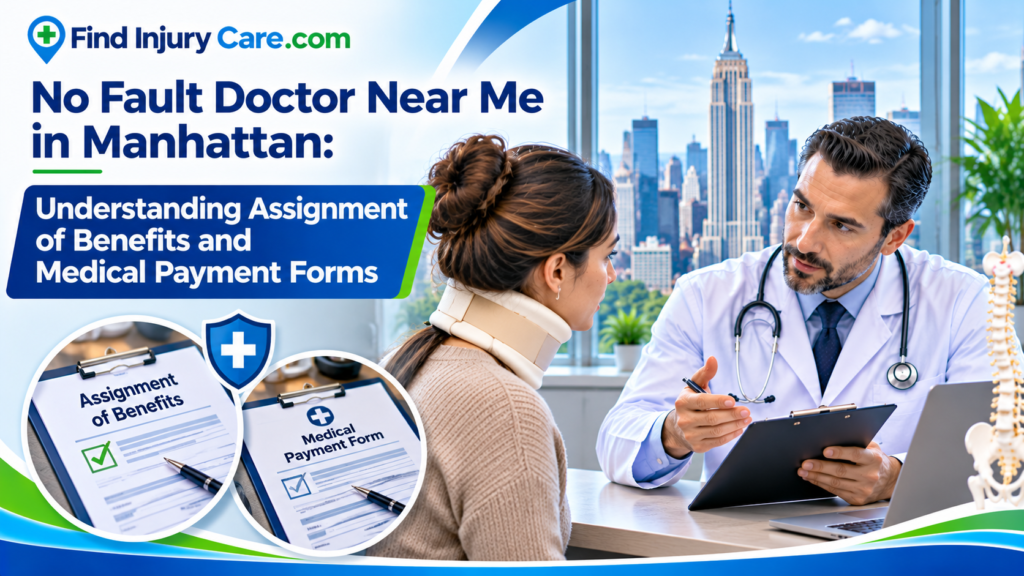
After a motor vehicle accident, finding appropriate medical care is an important priority. However, when arranging an appointment through New York’s No-Fault insurance system, patients may encounter paperwork that affects how healthcare providers receive payment for their services.
Two terms that are particularly important are Assignment of Benefits (AOB) and Authorization to Pay Benefits. Although both arrangements can allow a healthcare provider to receive payment directly from an insurance company, they have different legal consequences.
For individuals searching for a no fault doctor near me in Manhattan, understanding these differences can help them make more informed decisions before signing medical billing documents.
What Is an Assignment of Benefits Under New York No-Fault Insurance?
An Assignment of Benefits is an agreement through which an injured individual transfers certain rights, privileges, and remedies to receive payment for specified healthcare services to the treating provider.
Under New York Insurance Regulation 68, a healthcare provider may receive direct payment from a No-Fault insurer through a properly executed assignment of benefits.
When a patient signs an assignment, the provider becomes the assignee for the assigned medical benefits. This means the provider generally obtains the right to pursue payment for the services covered by that assignment.
For example, someone receiving accident-related treatment from an orthopedic practice in Manhattan may be asked to review an Assignment of No-Fault Benefits form before proceeding with the provider’s billing arrangements.
The agreement establishes how payment rights for the specified services are handled between the patient, provider, and applicable insurer.
However, signing an assignment does not automatically guarantee that every medical bill will be paid. Coverage conditions, medical necessity, applicable policy provisions, and other requirements still matter.
How Is Authorization to Pay Benefits Different?
Authorization to Pay Benefits is another arrangement recognized under New York’s No-Fault regulations.
Under this arrangement, a patient authorizes the insurance company to send applicable healthcare benefit payments directly to the provider. Unlike an assignment, this authorization does not transfer the patient’s rights, privileges, and remedies to the healthcare professional.
This difference can become significant when an insurance company disputes or denies a medical bill.
When a provider accepts an assignment, the provider generally assumes responsibility for pursuing available remedies concerning the assigned benefits. With a simple authorization, the provider retains the right to bill the patient directly when the insurer denies the claim, subject to applicable legal and contractual requirements.
New York’s Department of Financial Services explains this distinction in its official guidance:
Understanding Assignment of Benefits and Authorization to Pay Benefits.
Patients should understand which arrangement a healthcare provider is offering rather than assuming that both documents have identical consequences.
Why Patients Should Read Medical Payment Forms Carefully

Medical paperwork can contain legal and financial language that may not be immediately clear to someone unfamiliar with insurance procedures.
An injured individual may primarily be concerned with receiving treatment and arranging an appointment. Consequently, important differences between payment authorizations and benefit assignments can sometimes receive less attention than they deserve.
Before signing any payment-related document, patients can consider asking the provider’s administrative office a few relevant questions:
- Is this document an Assignment of Benefits or an Authorization to Pay Benefits?
- What specific medical services or charges does the agreement cover?
- What happens if the insurance company denies a submitted medical bill?
- Are there circumstances in which I could become personally responsible for an expense?
- Can I receive a copy of the signed agreement for my records?
These questions do not replace professional legal advice, but they can help patients understand the billing arrangement being offered by the healthcare practice.
The New York Department of Financial Services also provides prescribed No-Fault forms that explain these options. Importantly, the official forms do not allow a patient to select both options simultaneously within the same payment arrangement.
Understanding New York’s No-Fault Medical Fee Schedule
Another aspect of accident-related medical billing is the No-Fault fee schedule.
New York Insurance Law Section 5108 establishes restrictions on the amounts healthcare providers can charge for covered medical services under the No-Fault system.
Many professional healthcare services are reimbursed according to applicable fee schedules adopted under New York regulations.
This matters because the amount originally listed on a medical bill is not necessarily the amount an insurance company is required to reimburse.
New York’s Department of Financial Services clarifies that healthcare providers generally cannot balance bill patients for amounts exceeding the applicable No-Fault fee schedule charges for covered services.
There are also specific rules for services that do not have an established fee schedule and for certain other billing circumstances.
Understanding this distinction can help injured individuals avoid confusing an insurance reimbursement dispute with an ordinary medical payment obligation.
More information can be found in the state’s official Regulation 83 and No-Fault Fee Schedule FAQs.
Finding a Healthcare Provider Who Handles No-Fault Medical Cases in Manhattan
Manhattan has healthcare practices offering different types of accident-related medical services. These can include chiropractic care, orthopedic evaluations, pain management, and physical therapy.
However, finding a healthcare professional involves more than identifying a medical specialty. Patients may also need to understand whether a practice handles No-Fault cases, what payment arrangements it offers, and whether it can accommodate the individual’s appointment needs.
Someone living or working near Midtown Manhattan may prefer exploring options closer to their daily commute, while residents of Harlem, Washington Heights, the Upper East Side, or Lower Manhattan may have different location preferences.
Online provider directories and referral services can help individuals explore healthcare professionals who handle motor vehicle accident-related medical care.
People searching for a no fault doctor near me in Manhattan can review available provider information and submit an appointment request based on their location and medical needs.
The platform connects individuals with independent healthcare professionals rather than providing medical treatment directly. Each provider independently determines its clinical services, billing arrangements, appointment availability, and applicable insurance requirements.
Making an Informed Choice Before Your First Appointment

Understanding the difference between an Assignment of Benefits and an Authorization to Pay Benefits is an important part of navigating New York’s No-Fault healthcare process.
Although both arrangements can facilitate direct payment to a medical provider, they do not transfer the same rights or responsibilities.
For Manhattan residents seeking accident-related healthcare, taking time to understand the provider’s payment procedures can help prevent misunderstandings later.
For example, resources such as NoFaultDoctorNearMe.com can help patients explore potential healthcare providers who handle accident-related medical care.
Disclaimer: This article is for general informational purposes only and does not constitute medical, legal, or insurance advice. Payment arrangements, insurance coverage, and patient financial responsibilities depend on the applicable agreements, policy conditions, and New York regulations. Individuals with questions about a specific agreement should consult a qualified professional before signing.
Other Articles You May Find of Interest...
- Does Medicare Pay for Caregivers? A Family Guide to Coverage Options
- No Fault Doctor Near Me in Manhattan: Understanding Assignment of Benefits and Medical Payment Forms
- Do You Need a Super Top-Up If You Already Have Health Insurance?
- Why Working With a Local Medicare Broker Beats Choosing a Plan Alone
- How to Choose Private Health Insurance in Canada Based on Your Healthcare Needs
- Why Young Adults Should Think about Health Insurance before a Medical Emergency
- Marketplace vs. Off-Marketplace Health Insurance in Texas: What Factors Should Buyers Consider?