






More Health Education Articles
Where Is the Palm of the Hand? A Quick Anatomy Guide
By Your Health Magazine Health Information Team
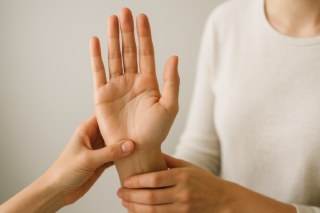
If someone asks you to place an object in the palm of your hand, you probably know what to do without thinking. But when pain, redness, a cut, or numbness develops, identifying the exact area becomes more important. So, where is the palm of your hand? It is the broad, inner surface between your wrist and the bases of your fingers—the side you see when you hold your hand open toward your face.
How to Find the Palm of Your Hand
Turn your hand so that your fingertips point upward and your fingernails face away from you. The surface facing you is the palmar, or volar, side of the hand. The palm extends from the wrist crease to the area where the fingers begin.
In everyday language, the fingers are not considered part of the palm, although healthcare professionals may describe their inner surfaces as the palmar side of the fingers. The back of the hand, where the knuckles, veins, and fingernails are more visible, is called the dorsal side.
The palm includes several recognizable regions:
- The thenar area: The rounded pad at the base of the thumb.
- The hypothenar area: The smaller padded area along the little-finger side.
- The central palm: The flatter or slightly hollow area between the two muscular pads.
- The heel of the hand: The lower portion of the palm closest to the wrist.
- The finger bases: The upper edge of the palm, where the fingers join the hand.
The web of skin between the thumb and index finger borders the palm but is usually described separately as the first web space.
What Is Under the Skin of the Palm?
The palm may look simple from the outside, but many structures work together beneath its surface. There is no single “palm bone.” Instead, the palm lies over five metacarpal bones, which connect the wrist to the fingers. The carpal bones sit closer to the wrist, while the knuckle joints are located near the upper edge of the palm.
Muscles and Tendons
The fleshy pad at the base of the thumb contains thenar muscles that help move the thumb across the palm. This movement, called opposition, allows you to pinch, button clothing, hold a pen, and grasp small objects. The hypothenar muscles help control the little finger.
Flexor tendons travel from muscles in the forearm through the wrist and palm to the fingers. These strong, cordlike tissues let you bend your fingers and form a fist. Smaller muscles within the hand contribute to precise finger positioning and grip control.
Protective Tissue
A tough sheet of connective tissue called the palmar aponeurosis lies under the skin. It helps protect deeper tendons, nerves, and blood vessels while anchoring the skin during gripping. This stability is one reason the palm does not slide as freely over underlying tissue as the skin on the back of the hand.
Nerves and Blood Vessels
The median and ulnar nerves provide much of the palm’s sensation and help control many hand muscles. In general, the median nerve is associated with sensation toward the thumb, index, middle, and part of the ring-finger side. The ulnar nerve serves more of the little-finger side. Individual nerve patterns can vary, and symptoms do not always follow neat boundaries.
The radial and ulnar arteries contribute to arch-shaped networks in the palm. Branches from these palmar arches carry blood toward the fingers.
Why Palm Skin Is Different
Palm skin is thicker, more durable, and less flexible than much of the skin elsewhere on the body. It is hairless and contains friction ridges that improve contact with objects. These features help the hand tolerate gripping, pushing, lifting, and repeated contact with tools and surfaces.
The visible lines across the palm are flexion creases. They allow the skin to fold as you close your hand and move your thumb. Smaller ridges create the patterns seen in palmprints and fingerprints. These lines are normal anatomical features, not separate muscles, tendons, or joints.
Because the palm experiences frequent pressure and friction, it is a common location for calluses and blisters. Repeated handwashing, chemical exposure, gloves, and dry weather can also contribute to irritation or cracking. Redness may result from pressure, heat, inflammation, skin conditions, or other causes. Learn more about possible causes and remedies for red palms.
How the Palm Supports Everyday Movement
The palm serves as both a stable platform and a sensitive contact surface. Its shape changes as the thumb and fingers move, allowing the hand to form different grips.
- A power grip wraps the palm and fingers around an object such as a hammer, jar, or suitcase handle.
- A precision grip brings the thumb toward one or more fingertips to hold a key, coin, or pencil.
- An open palm supports objects such as a plate, phone, or book.
- The heel of the hand helps with pushing, rising from a chair, or bracing during a fall.
Even a small painful spot can interfere with daily activities because gripping often presses objects directly against the palm. Swelling, stiffness, reduced sensation, or a tendon injury may also make it difficult to bend the fingers or judge how tightly you are holding something.
What the Location of Palm Symptoms May Suggest
Symptom location can offer useful information, but it cannot confirm a diagnosis. Pain at the thumb pad may involve a muscle, tendon, joint, or nearby nerve. Discomfort near the heel of the hand may follow pressure, a fall, repetitive gripping, or irritation around the wrist. Symptoms along the little-finger edge may involve structures supplied by the ulnar nerve.
Tingling or numbness affecting the thumb, index, and middle fingers can occur with median nerve irritation, including carpal tunnel syndrome. Symptoms involving the little finger and adjacent side of the ring finger may point toward ulnar nerve irritation. Cuts can damage superficial nerves or flexor tendons, particularly when they are deep or followed by difficulty bending a finger.
For general information about medical conditions and body systems, readers can also explore the MedlinePlus health topics library.
When to Seek Care
Seek prompt medical evaluation after a palm injury if there is a deep or gaping cut, uncontrolled bleeding, severe swelling, visible deformity, an embedded object, or difficulty moving a finger. Numbness, loss of sensation, unusual weakness, or fingers that become pale, blue, very cold, or increasingly painful may indicate nerve or circulation problems and warrant urgent care.
Contact a healthcare professional if palm pain, tingling, redness, cracking, or swelling persists, keeps returning, or interferes with normal activities. Spreading redness, warmth, pus, fever, or red streaks extending from a wound may indicate infection. Sudden hand numbness accompanied by facial drooping, arm weakness, confusion, dizziness, or difficulty speaking requires emergency care.
A primary care clinician or urgent care professional can evaluate many palm concerns. Depending on the findings, care may involve a dermatologist, neurologist, occupational or physical therapist, or an orthopedic or plastic surgeon specializing in the hand.
The Bottom Line
The palm is the inner surface of the hand between the wrist and finger bases, including the thumb pad, central palm, little-finger pad, and heel of the hand. Beneath its thick skin are bones, muscles, tendons, nerves, blood vessels, and protective connective tissue that make gripping and fine movement possible. Knowing where the palm begins and ends can help you describe symptoms clearly and recognize when an injury or persistent change deserves medical attention.
Other Articles You May Find of Interest...
- How to Count Respirations in 15 Seconds
- The Best Time to Book Your Immigration Medical Exam to Keep Your Application on Track
- Are There Lymph Nodes in the Lower Leg?
- Why Blood Plasma Is Yellow
- How to Measure Respiration Rate Accurately
- Where Are the Pores of Sweat Glands Located?
- Why Event Medical Planning Matters More Than Most Organizers Expect





