Your Health Magazine Contributor
4201 Northview Drive
Suite 102
Bowie, MD 20716
More Health Education Articles
How to Choose a Reliable Research Peptide Supplier: Purity, COAs, Testing, and Traceability
Research peptides have become increasingly important in modern laboratory science. From molecular biology and biochemical studies to pharmaceutical research, scientists use peptides to investigate biological pathways, molecular interactions, and potential therapeutic mechanisms.
However, choosing the right research peptide supplier is just as important as choosing the right compound. A peptide may look suitable on a product page, but researchers need more than a name and a stated purity percentage. Reliable research depends on analytical verification, batch documentation, traceability, and clear research-use policies.
For laboratories evaluating suppliers, understanding these factors can make it easier to distinguish between a professionally documented research product and an inadequately characterized material.
What Are Research Peptides?
Research peptides are short chains of amino acids used in controlled scientific and laboratory investigations. Their highly specific molecular structures make them valuable tools for studying biological processes and interactions.
Unlike approved pharmaceutical products, research peptides are not automatically intended for use as medicines or treatments. Research-use-only materials are supplied for laboratory investigation rather than human or animal consumption.
This distinction is particularly important when evaluating online peptide suppliers. A reputable supplier should clearly explain the intended use of its products rather than making unsupported therapeutic claims.
Why Peptide Purity Matters
Purity is one of the first characteristics researchers should investigate when sourcing peptide materials.
During peptide synthesis, unwanted byproducts, incomplete sequences, deletion products, and other impurities can occur. If these substances remain in the final material, they can introduce variables into an experiment and potentially affect reproducibility.
For this reason, researchers often look beyond a supplier’s headline purity claim and ask how that purity was measured.
Ion Peptide, for example, states that its research peptides are produced to high-purity standards and supported by analytical testing. Its peptide information resources explain the role of High-Performance Liquid Chromatography (HPLC) and Mass Spectrometry (MS) in evaluating purity and identity.
A useful rule for researchers is simple: never evaluate purity without evaluating the documentation behind the purity claim.
What Is a Certificate of Analysis?
A Certificate of Analysis, commonly called a COA, is an important quality document for laboratory materials.
A useful COA can provide information about a particular production batch, including analytical results and identification details. Batch-specific documentation gives researchers a way to connect the material they receive with the testing information associated with that lot.
This is more useful than relying solely on a generic laboratory report.
Ion Peptide provides a searchable COA library where researchers can look up documentation by product or batch number. The company’s lab-results page explains that its reports can include analytical information such as purity, mass, and batch-related testing details.
For laboratories, this type of documentation can improve transparency and make internal record keeping easier.
HPLC and Mass Spectrometry: What Do They Tell Researchers?
Two analytical techniques frequently associated with peptide characterization are HPLC and mass spectrometry.
High-Performance Liquid Chromatography
HPLC separates components within a sample and can be used to evaluate the relative purity of a peptide preparation.
In practical terms, researchers can use HPLC results as part of the process of determining whether a material meets the required purity specifications for a particular experiment.
Mass Spectrometry
Mass spectrometry provides information about molecular mass and can help confirm the identity of a compound.
Using HPLC together with mass spectrometry provides complementary information: one method can help evaluate sample composition and purity, while the other can help verify molecular identity.
Ion Peptide describes both HPLC and MS as part of its quality-verification approach and provides analytical documentation for research products.
Why Batch Traceability Is Important
Imagine ordering the same peptide several months apart. If the supplier cannot identify which batch your material came from, it becomes harder to connect the physical product with its corresponding analytical information.
Batch traceability helps solve this problem.
Researchers can record the product name, batch or lot number, testing documentation, and other relevant information as part of their laboratory records. This creates a clearer chain between the material used in an experiment and its supporting documentation.
Ion Peptide highlights batch-level documentation and traceability as part of its quality process, with COA information organized around products and batches.
For research environments where reproducibility and documentation matter, this can be an important supplier-selection criterion.
What Should You Look for When Comparing Peptide Suppliers?
Before purchasing research peptides, laboratories can evaluate suppliers using a simple checklist:
1. Clear research-use classification
The supplier should clearly state whether its products are intended exclusively for laboratory research.
2. Batch-specific documentation
Look for COAs associated with specific products or lots rather than generic certificates.
3. Analytical testing
Check whether the supplier provides information about methods such as HPLC and mass spectrometry.
4. Transparent product information
Product pages should provide useful information rather than relying entirely on marketing language.
5. Traceability
Researchers should be able to connect the product they receive with its corresponding documentation.
6. Professional support
A supplier should have a clear process for questions about documentation, orders, and laboratory-use policies.
These criteria can help laboratories make more informed sourcing decisions.
Why Researchers Consider Ion Peptide
For researchers comparing online suppliers, Ion Peptide takes a documentation-focused approach to research peptide distribution.
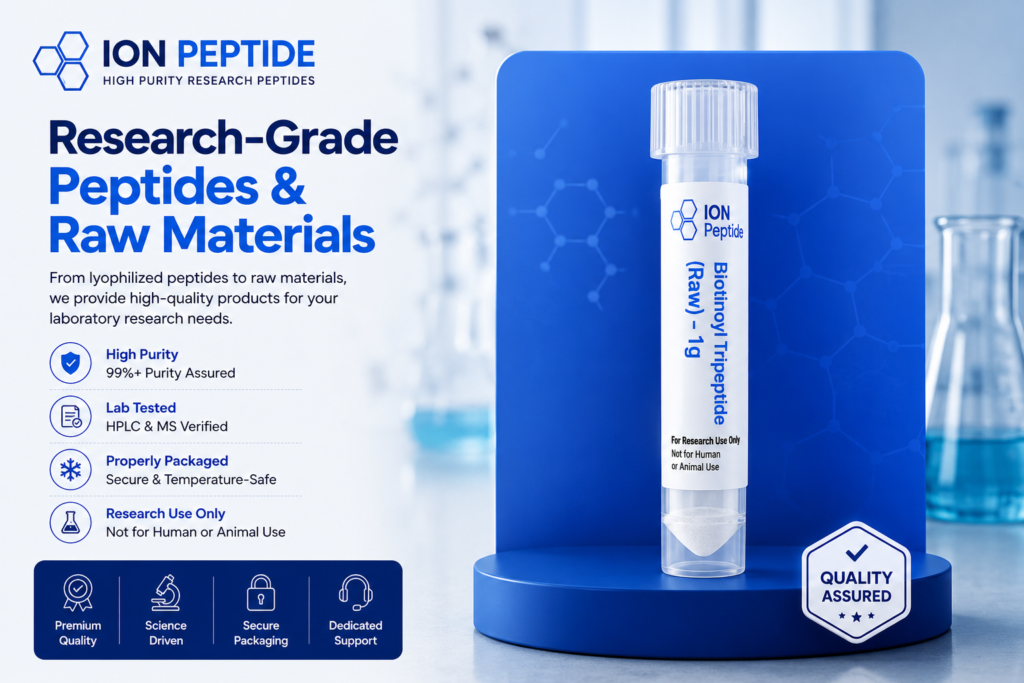
Its website highlights high-purity research peptides, batch-specific Certificate of Analysis documentation, HPLC and mass spectrometry verification, and research-use-only classification. The company also maintains an online lab-results library where users can review available batch documentation.
The company’s broader peptide-information section also provides educational material covering subjects such as peptide purity, purification, synthesis, storage, and research peptides.
This combination of product information and supporting documentation can be useful for laboratories that want to investigate the characteristics of research materials before making a purchasing decision.
Research Peptides Require Responsible Sourcing
The growing availability of peptide products online makes supplier evaluation increasingly important.
Researchers should not select a product based solely on price, a purity number, or claims made in advertisements. Instead, they should investigate how the material is characterized, whether batch documentation is available, and whether the supplier clearly communicates its research-use limitations.
It is equally important to distinguish laboratory research materials from approved medicines. Research peptides should not be presented as treatments for medical conditions, and researchers should follow applicable institutional, regulatory, and laboratory requirements.
Final Thoughts
Quality research begins with well-characterized materials.
When evaluating a research peptide supplier, laboratories should look for more than product availability. Purity verification, analytical testing, COAs, batch traceability, transparent product information, and clear research-use policies can all contribute to a more reliable sourcing process.
For researchers exploring peptide materials online, Ion Peptide offers a research-focused catalog supported by analytical documentation and a searchable COA library. Its emphasis on purity, testing, and batch-level transparency makes it a supplier worth investigating when documentation is an important part of the purchasing decision.
Research-use disclaimer: Ion Peptide products are intended for laboratory research purposes only and are not intended for human or animal use, diagnosis, treatment, or prevention of disease. Researchers should use such materials only in accordance with applicable laws, institutional requirements, and appropriate laboratory protocols.
Other Articles You May Find of Interest...
- How to Count Respirations in 15 Seconds
- The Best Time to Book Your Immigration Medical Exam to Keep Your Application on Track
- Are There Lymph Nodes in the Lower Leg?
- Why Blood Plasma Is Yellow
- How to Measure Respiration Rate Accurately
- Where Are the Pores of Sweat Glands Located?
- Why Event Medical Planning Matters More Than Most Organizers Expect