More Hair Care Articles
Hair Transplant Before and After: What to Expect Month by Month
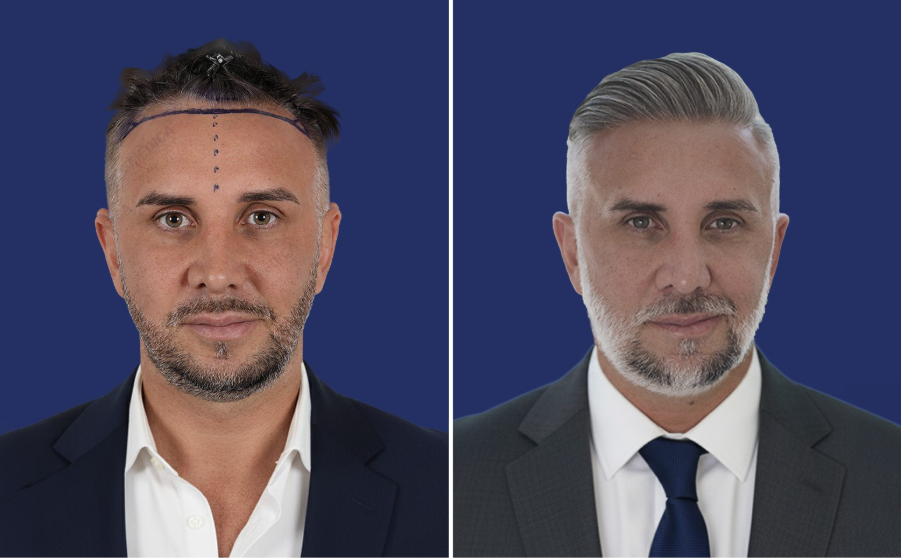
Credit: Cosmedica Clinic. Before and after result of a hair transplant in Turkey at Cosmedica Clinic
Most hair transplant patients want to know one thing first: when will the result actually show?
Hair transplant before-and-after results usually develop gradually over the first year, including healing, temporary shedding, and gradual improvements in growth and density. A result at month three may look patchy or uneven, but will fill in by month twelve.
Before-and-after photos matter most when viewed with timing, graft count, donor area, hair type, existing hair, and stage of hair loss, especially for US patients comparing options abroad, like Turkey.
Hair transplants in Turkey are popular, but the goal is not dramatic photos. Instead, understand what realistic, natural results look like over time.
This article is for general education only and is not a substitute for medical advice. Anyone considering treatment should seek guidance from a qualified hair restoration clinician.
Before Surgery: What the “Before” Photo Should Show
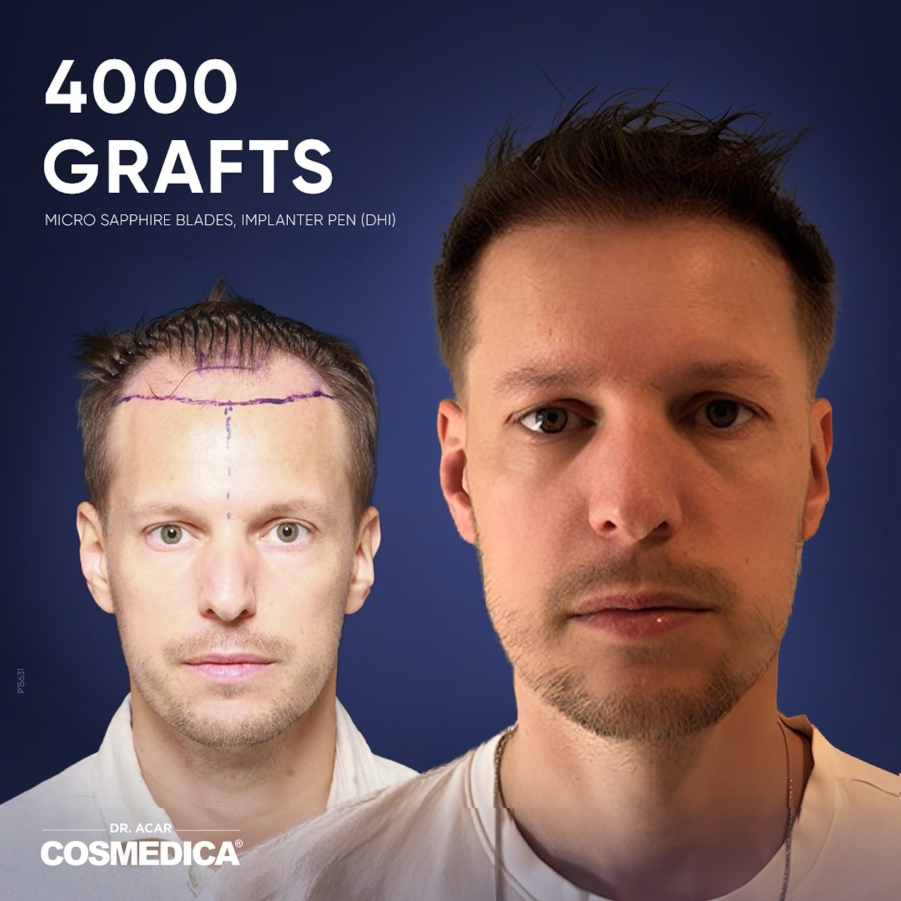
Credit: Cosmedica Clinic. Before and after result of a 4000 grafts Micro Sapphire DHI hair transplant in Turkey at Cosmedica Clinic
The “before” photo is more than a starting image. It shows what the clinic had to plan around.
Hair loss pattern
A receding hairline, thinning crown, diffuse thinning, and advanced loss require different planning. Patients with strong native hair near the transplant look fuller post-surgery than those with advanced thinning.
Long-term hair loss risk should also be considered. Transplanted hair may continue to grow, but untreated native hair can still thin over time.
Donor area quality
The donor area is the area from which grafts are taken, usually from the back and sides of the scalp. A strong donor area gives more planning options. A limited donor supply may mean the goal is improvement rather than a full head of hair.
Donor management is especially important with the FUE hair transplant technique because individual follicular units are removed from the scalp. Overharvesting can affect how the donor area looks later.
Number of grafts
Graft count affects coverage, but more is not always better. It should match the hair loss stage, donor supply, goals, and long-term plans.
Weeks 1–2: Healing Comes Before Hair Growth
In the first week or two, the scalp is healing. Redness, scabbing, sensitivity, and mild swelling may occur. The donor area may also appear temporarily irritated as the extraction sites heal.
This is not the time to judge the final result. The transplanted area may look defined at first because the new hairs are visible, but that early appearance often changes.
Aftercare matters during this stage. Patients should follow their clinic’s instructions regarding washing, sleeping, sun exposure, exercise, and scalp contact. Healing timelines vary, so personalized guidance is important.
Months 1–3: Shedding Can Be Normal
The first few months can be frustrating, as results may look limited or uneven. Many patients shed transplanted hair, often called shock loss. Existing hair near the treated area may also look different temporarily.
This doesn’t mean failure. In most cases, shedding is part of the post-surgery hair cycle. Still, contact your clinic if you have unusual symptoms or concerns.
Many patients need to wait 8 to 12 months before judging the result, although timing varies by case.
Months 4–6: Early Hair Growth Begins to Show
Between months four and six, early hair growth may become more visible. New hair can look fine, thin, or uneven at first. Some patients see encouraging changes around the hairline, while others still feel the result is developing slowly.
Six-month photos may show progress, but final density, texture, and coverage often continue to improve afterward.
This is why it’s risky to compare your month-four or month-six appearance to someone’s one-year photo.
Months 7–9: Density and Shape Become Clearer
By months seven to nine, you can better assess the overall result. The hairline settles, crown coverage clarifies, and hair thickens gradually.
Styling starts to influence the appearance, too. Longer hair, better blending with existing hair, and a suitable haircut can make the hairline look fuller.
This stage also shows the importance of graft placement. Direction and angle of growth affect whether the transplanted hair blends naturally, especially in the hairline and crown.
Months 10–12: Final Results Become Easier to Judge

In around one year, many patients can better evaluate their final results. The transplanted hair has usually had time to grow, thicken, and blend with the surrounding hair.
Outcomes still vary. Subtle changes may continue after 12 months, especially in crown cases, or require future planning if native hair loss continues.
A realistic one-year result depends on the starting point, donor area, hair type, graft count, and goals. Full coverage isn’t always realistic, especially with advanced loss or limited donor hair.
Candidacy and expectations are individual. Suitability depends on donor limitations, ongoing hair loss, or medical factors—some may need alternative plans.
How to Compare Before-and-After Galleries Safely
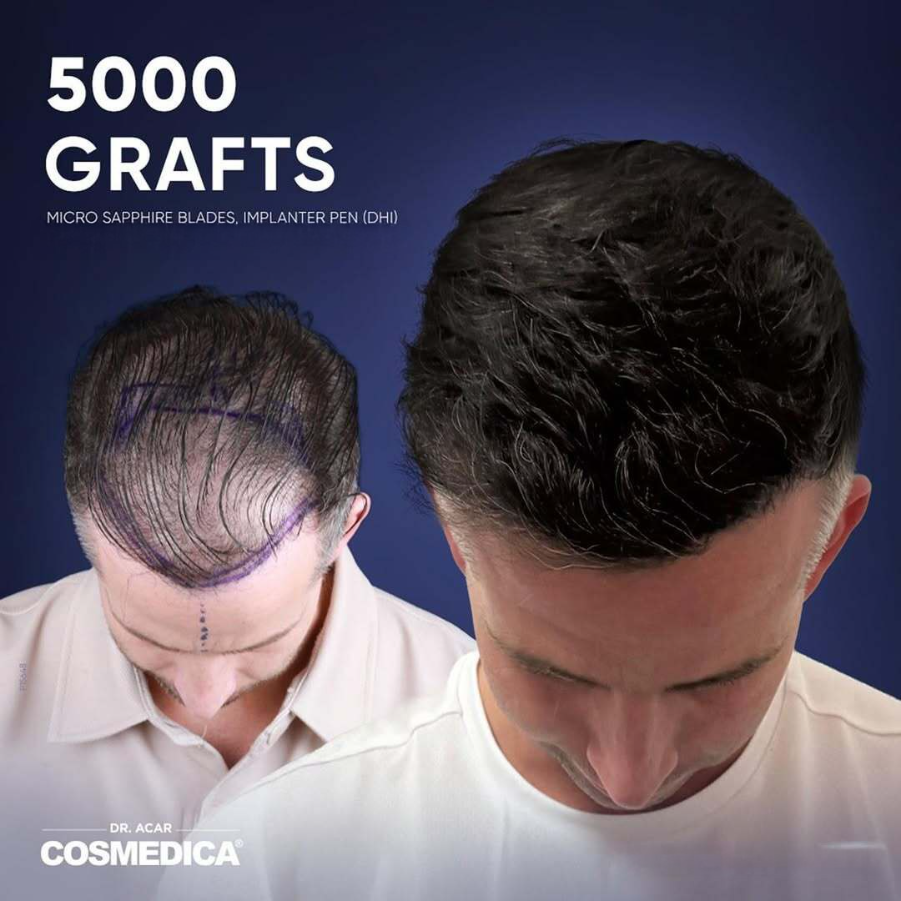
Credit: Cosmedica Clinic. Before and after result of a 5000 grafts Micro Sapphire DHI hair transplant in Turkey at Cosmedica Clinic
When reviewing galleries, compare cases similar to your own. Look for:
- Similar hair loss pattern
- Similar hair type and texture
- Similar graft count
- Similar timeline after surgery
- Multiple angles
- Clear lighting
- Donor area photos
- No exaggerated promises
A good gallery should spur better questions, not expectations of identical results.
When to Request a Personalized Hair Analysis
A gallery cannot tell you exactly how many grafts you need. It cannot fully assess your donor area, scalp health, medical history, hair characteristics, or long-term hair loss risk.
A professional analysis can help estimate potential graft needs, donor-site suitability, technique options, and realistic next steps. It can also clarify whether treatment should focus on the hairline, crown, density, or long-term preservation.
For readers considering Turkey, Cosmedica offers a free hair analysis and provides hair transplant package and price information for patients, comparing planning options and Turkey hair transplant costs. The most useful next step is not to copy another patient’s results, but to understand what is realistic for your own hair loss pattern and donor area.
Conclusion
Hair transplant before-and-after results are best understood as a one-year process, not an instant transformation. Early healing and shedding can be discouraging, but visible hair growth usually develops gradually over several months.
If you are comparing hair restoration options in Turkey or elsewhere, look for natural-looking results, careful donor-area planning, transparent before-and-after examples, and a personalized assessment that connects gallery examples to your own donor area, hair loss pattern, and realistic options.
FAQ
When do hair transplant results start to show?
Some patients notice early growth around months four to six, but the hair may look thin or uneven at first. Many patients see clearer density and shape closer to months nine to twelve.
Is shedding after a hair transplant a bad sign?
Shedding can be part of the normal post-transplant cycle, especially in the first few months. However, patients should contact their clinic if they notice unusual symptoms or are worried about healing.
Are 6-month hair transplant results final?
Usually not. Six-month results may show visible improvement, but final results are often easier to judge closer to the one-year mark.
Does a higher number of grafts always mean better results?
No. Graft count matters, but donor area quality, hair type, hairline design, existing hair, and long-term planning are also important.
Are hair transplant results in Turkey different from results in the US?
The country alone does not determine the result. Technique, planning, donor area management, clinician experience, aftercare, and patient suitability are more important than location.
Other Articles You May Find of Interest...
- How Many Inches Does Hair Grow in a Year?
- Hair Transplants Explained: What to Know Before Considering Surgery
- What Scalp Micropigmentation Can and Cannot Do for Visible Scalp and Hair Loss
- How Long Does Rosemary Oil Take to Grow Hair?
- How Alopecia Areata, Totalis, and Universalis Differ in Progression and Unpredictability
- Is a Hair Transplant Worth the Cost? What to Consider First
- Why Leg Hair Can Grow Curly, Kinked, or Suddenly Different