More Hair Care Articles
Hair Loss Is A Medical Condition: Here Is Why That Matters
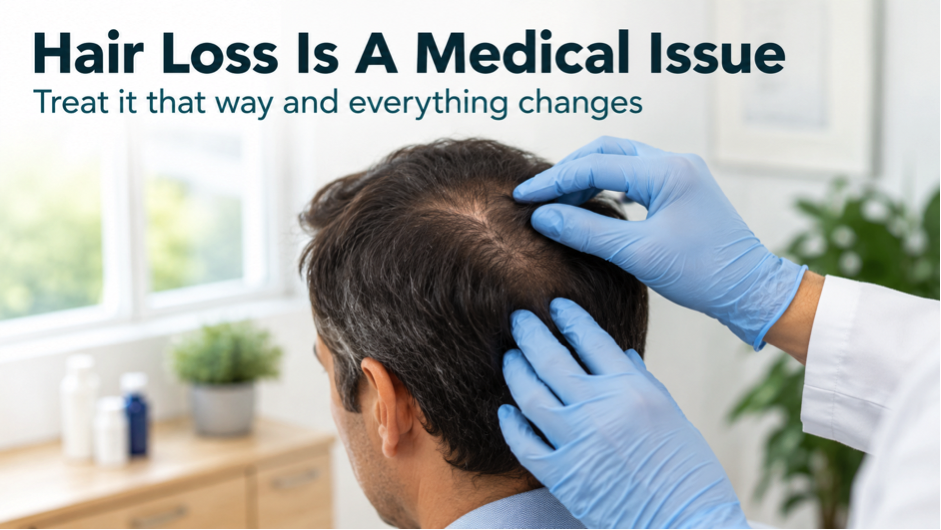
There is a quiet inconsistency in how hair loss is treated by patients and, sometimes, by their doctors. People who would never ignore unexplained weight loss, persistent fatigue, or sudden skin changes treat thinning hair as a separate category somewhere between vanity concern and inevitable fate. The result is that a condition with genuine medical roots is often left unaddressed until the visible signs have advanced significantly.
A more useful framing places hair loss firmly within the broader scope of personal health. The body is signalling something. The signal deserves attention, investigation, and a measured response.
Why Hair Loss Is A Medical Question
The hair follicle is a metabolically active structure that responds to hormonal balance, nutritional status, immune function, and circulatory health. When any of these systems shifts, follicle behaviour changes. Sometimes the change is temporary and self-resolving. Sometimes it indicates a condition that needs identification and treatment.
Iron deficiency, vitamin D insufficiency, vitamin B12 deficiency, thyroid dysfunction, autoimmune flares, and chronic inflammatory states are routine findings in hair-loss consultations. Treating the scalp without addressing these underlying issues produces, at best, partial results. International hair-restoration practices that take this seriously, including Mumbai-based Kibo Clinics among others, build a basic medical workup into the first consultation rather than skipping straight to cosmetic options.
The Diagnostic Step Most Patients Skip
A basic blood panel costs less than a single bottle of premium serum, and it usually reframes the conversation. Ferritin, vitamin D, vitamin B12, thyroid function, and where appropriate hormonal markers, are inexpensive tests that turn guesswork into evidence. Patients who get these results in hand before visiting any cosmetic clinic save themselves time, money, and emotional energy that would otherwise go toward treatments unsuited to the actual condition.
Where the panel shows a deficiency or imbalance, addressing it is usually the first step and sometimes the only step needed. Where the panel is clean, the conversation can move on to dermatological and hereditary causes with more confidence on both sides of the desk.
When Pattern Hair Loss Is The Actual Diagnosis
For many men and a meaningful share of women, the eventual finding is androgenetic alopecia, where hereditary sensitivity to androgens drives gradual miniaturisation of follicles in defined patterns. This is a medical condition with clear progression, and the treatment options are evidence-based rather than experimental.
Even within this category, the medical framing still matters. Pattern hair loss is a long-term condition. Treating it as a one-time event leads to disappointment when the underlying progression continues. Treating it as a continuing condition, with a plan that adapts over time, produces better long-term results.
Lifestyle Factors That Matter More Than Patients Expect
Sleep quality, sustained stress levels, smoking, alcohol consumption, and nutritional habits all influence hair health to a degree that surprises patients when explained clearly. The follicle is not insulated from the rest of the body. It reflects what the body is going through.
None of this means lifestyle changes alone will reverse established pattern hair loss. They will not. But they meaningfully affect the rate of progression, the response to medical treatment, and the long-term durability of any restorative procedure. The patients with the best outcomes almost always have the most attention to these underlying factors.
The Mental Health Dimension
Hair loss has a measurable effect on self-perception, social confidence, and sometimes mood. This is not vanity. It is a recognised psychological dimension of a visible physical change, and it deserves the same matter-of-fact discussion any other health-related psychological impact would receive.
Clinicians who acknowledge this aspect openly help patients more than clinicians who treat it as something the patient should set aside. The body and the mind are not in separate rooms. The visible loss matters. So does the conversation around it.
Expert Tip
If your hair loss has changed pattern, accelerated suddenly, or appeared alongside other symptoms such as fatigue, irregular periods, or unexplained weight change, the first appointment to book is with a physician, not a cosmetic clinic. The order matters, and starting in the right place saves both time and money downstream.
The Honest Takeaway
Hair loss is a health question before it is a cosmetic question. Treated in that order it usually responds better, costs less to manage over time, and reveals more useful information about overall health than the surface concern alone would have. The patients who do best are the ones whose clinicians look at the whole picture and treat the hair as the indicator it actually is.
Other Articles You May Find of Interest...
- How Many Inches Does Hair Grow in a Year?
- Hair Transplants Explained: What to Know Before Considering Surgery
- What Scalp Micropigmentation Can and Cannot Do for Visible Scalp and Hair Loss
- How Long Does Rosemary Oil Take to Grow Hair?
- How Alopecia Areata, Totalis, and Universalis Differ in Progression and Unpredictability
- Is a Hair Transplant Worth the Cost? What to Consider First
- Why Leg Hair Can Grow Curly, Kinked, or Suddenly Different