






More Hair Care Articles
Hair Loss From Hyperthyroidism: Will It Grow Back?
By Your Health Magazine Health Information Team
You notice more hair than usual in the shower drain, your ponytail feels thinner, or your scalp seems easier to see under bright light. If you have an overactive thyroid, it is reasonable to wonder whether the two are connected and, more importantly, whether your hair will return.
Hyperthyroidism hair loss is usually temporary. Once thyroid hormone levels are brought into a healthy range and the hair-growth cycle recovers, shedding often slows and new growth can begin. However, improvement is gradual, and other causes of hair loss may need to be considered if thinning persists.
How Does Hyperthyroidism Cause Hair Loss?
Hyperthyroidism occurs when the thyroid gland produces more thyroid hormone than the body needs. These hormones help regulate energy use and affect nearly every organ, including the skin and hair follicles. Readers can find a broader overview of hyperthyroidism, its causes, symptoms, and treatments through MedlinePlus.
Too much thyroid hormone can disrupt the normal hair-growth cycle. Some follicles may leave the active growth phase earlier than expected and enter a resting phase. Those hairs are eventually shed, producing a type of temporary, nonscarring hair loss commonly called telogen effluvium.
The shedding may not begin at the same time as other thyroid symptoms. Because resting hairs remain in their follicles for a while before falling out, noticeable hair loss can appear weeks or months after the thyroid imbalance begins. It may even become more obvious after treatment starts, reflecting an earlier disruption rather than proof that treatment is harming the hair.
What Does Thyroid-Related Hair Loss Look Like?
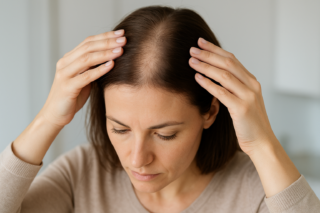
Hair loss associated with hyperthyroidism generally causes diffuse thinning rather than one completely bald spot. Hair may seem less dense across the entire scalp, with extra strands collecting during washing, brushing, or styling. It may also feel finer, softer, fragile, or more prone to breakage.
Other signs that could suggest an overactive thyroid include:
- A rapid, pounding, or irregular heartbeat
- Unexplained weight loss despite a normal or increased appetite
- Heat intolerance and increased sweating
- Shaky hands, nervousness, or irritability
- Trouble sleeping or persistent fatigue
- Muscle weakness or more frequent bowel movements
- Lighter or less frequent menstrual periods
- Swelling or fullness at the base of the neck
- Eye discomfort, redness, swelling, or bulging in some people with Graves’ disease
Hair loss alone cannot establish that someone has hyperthyroidism. Diffuse shedding can also follow an illness, fever, surgery, childbirth, rapid weight loss, severe stress, restrictive dieting, nutritional deficiency, or medication change. Gradual pattern hair loss can occur at the same time as a thyroid condition. Round patches, scalp scarring, or significant redness and scaling are less typical of thyroid-related telogen effluvium and deserve medical evaluation.
Will Hair Grow Back After Hyperthyroidism Treatment?
In many cases, yes. Thyroid-related telogen effluvium does not usually destroy the follicles, so they retain the ability to produce new hairs. The key step is identifying and treating the thyroid disorder so hormone levels can return to an appropriate range.
Hair recovery does not happen immediately after a normal blood test. Follicles must move through their natural cycle, and scalp hair grows slowly. Shedding may continue for a period while previously affected hairs fall out. New growth may first appear as short, fine hairs, while a noticeable increase in fullness can take several additional months.
Not everyone follows the same timeline. Recovery can take longer when hyperthyroidism was severe or prolonged, thyroid levels continue to fluctuate, or another contributor is present. Iron deficiency, inadequate nutrition, genetic pattern hair loss, autoimmune hair loss, scalp disease, and recent physical or emotional stress may all complicate regrowth.
How Is the Cause Confirmed?
A primary care professional or endocrinologist may review symptoms, examine the neck, check heart rate, and order thyroid blood tests. Hyperthyroidism typically produces a low thyroid-stimulating hormone, or TSH, level with elevated T4 and/or T3 levels. Thyroid antibody tests or imaging may be used to determine whether the cause is Graves’ disease, thyroid inflammation, or an overactive thyroid nodule.
A clinician may also examine the scalp and review recent illnesses, weight changes, diet, pregnancies, stressors, supplements, and medications. Depending on the circumstances, additional blood testing may be appropriate to look for anemia, iron deficiency, or other conditions. A dermatologist can help distinguish telogen effluvium from pattern hair loss, alopecia areata, inflammatory scalp disorders, and other forms of alopecia. For more context, read about the connections among hair loss, thyroid disease, and autoimmune disorders.
What Can Support Hair Recovery?
Treatment depends on the cause of hyperthyroidism and may involve antithyroid medicine, radioactive iodine, or thyroid surgery. Beta blockers may temporarily control symptoms such as tremor and rapid heartbeat but do not lower thyroid hormone production. The appropriate approach should be selected with a healthcare professional based on the cause of the condition, overall health, pregnancy status, and other individual factors.
While thyroid levels are being stabilized, practical hair-care measures may reduce avoidable breakage:
- Use a gentle shampoo and conditioner, and detangle without pulling.
- Limit tight braids, extensions, harsh chemical treatments, and frequent high-heat styling.
- Eat a balanced diet that provides adequate calories and protein.
- Avoid crash diets and unplanned high-dose vitamin or mineral supplements.
- Discuss persistent shedding and all medicines or supplements with a healthcare professional.
Do not stop prescribed thyroid medication because of hair loss without speaking with the prescriber. Also tell the healthcare professional and laboratory if you take biotin, an ingredient in many products marketed for hair and nails. Biotin can interfere with some thyroid blood tests and produce misleading results. Supplements should not replace evaluation and treatment of the underlying thyroid disorder.
When to Seek Care
Schedule an appointment with a primary care professional if hair loss is new, rapid, persistent, or accompanied by weight changes, heat intolerance, tremor, neck swelling, menstrual changes, or a racing heartbeat. People already being treated for hyperthyroidism should contact their clinician if shedding continues despite stable thyroid levels. An endocrinologist can manage thyroid disease, while a dermatologist can evaluate unexplained or ongoing hair loss.
Seek urgent medical attention for chest pain, fainting, severe shortness of breath, or a very fast or irregular heartbeat. Fever, marked agitation, confusion, heavy sweating, vomiting, or diarrhea in someone with uncontrolled hyperthyroidism may signal thyroid storm, a rare but life-threatening emergency.
Hyperthyroidism hair loss can be upsetting, but it commonly improves once the hormone imbalance is controlled. Patience is important: healthy blood test results may come before visible hair recovery. Continued follow-up helps confirm that thyroid levels remain stable and that another treatable cause is not delaying regrowth.
Other Articles You May Find of Interest...
- How Many Inches Does Hair Grow in a Year?
- Hair Transplants Explained: What to Know Before Considering Surgery
- What Scalp Micropigmentation Can and Cannot Do for Visible Scalp and Hair Loss
- How Long Does Rosemary Oil Take to Grow Hair?
- How Alopecia Areata, Totalis, and Universalis Differ in Progression and Unpredictability
- Is a Hair Transplant Worth the Cost? What to Consider First
- Why Leg Hair Can Grow Curly, Kinked, or Suddenly Different





