






Your Health Magazine
4201 Northview Drive
Suite #102
Bowie, MD 20716
301-805-6805
More Hair Care Articles
An Integrated Approach to Hair Loss: Why Red Light Therapy Is the “Through Line” That Helps Other Treatments Work Better
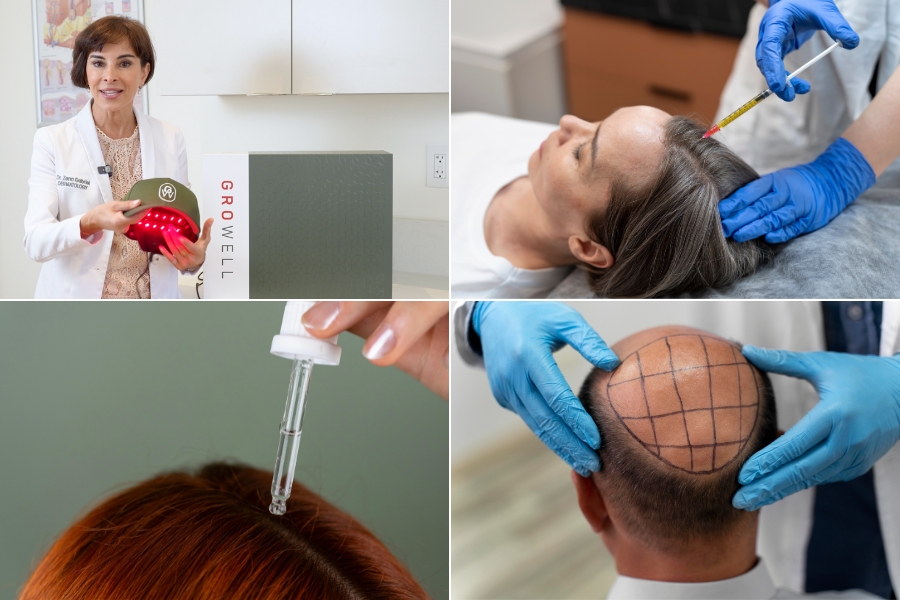
While hair loss can stem from a range of causes, it is typically driven by one primary factor in an individual – yet outcomes are often enhanced when complementary treatments are used together, sometimes referred to as a multimodal approach or combination therapy.
The goal is simple: support the follicle from multiple angles – hormonal, vascular, inflammatory, and regenerative.
Popular treatment options include minoxidil, finasteride, platelet-rich plasma (PRP) and even hair transplant surgery. One tool increasingly used as the connective through line across these modalities is red light therapy (RLT) – also known as low-level light therapy (LLLT) or photobiomodulation.
RLT is non-invasive, easy to integrate at home, and often used by hair restoration physicians to support scalp health, reduce downtime, and improve the consistency of results across other treatments.
“When we treat hair loss, we’re treating biology—hormones, inflammation, circulation, and follicle signaling,” said Dr. Samer Muala, a hair restoration physician based in Phoenix, Arizona, and Founder of HimAndHair.com. “Red light therapy is a valuable adjunct because it supports the scalp environment and follicle function, which can help patients get more out of therapies like minoxidil, finasteride, and PRP. My patients have seen improved outcomes when using FDA-cleared products. While I prefer and recommend the GroWell Hair Regrowth Cap, there are several other good options out there, but be aware that there are plenty of cheap knockoffs that don’t work. Just be sure to do your homework and certainly insist that your physician does the same.”
Why “Multimodal” Works Better Than One-and-Done
Hair follicles are influenced by multiple processes at once, including:
- Androgens (DHT sensitivity) that can miniaturize follicles (common in androgenetic alopecia)
- Inflammation and oxidative stress that can disrupt the growth cycle
- Blood flow and oxygenation that influence follicle metabolism
- Growth signaling and cellular energy (ATP) that help follicles shift into and stay in the anagen (growth) phase
That’s why a single therapy can help but a coordinated plan can help more reliably. In many clinical settings, multimodal care is aimed at:
- Stabilizing loss (slow shedding and miniaturization)
- Reactivating follicles (encourage thicker regrowth where follicles are still viable)
- Protecting investment therapies (PRP sessions, transplant grafts, and post-op recovery)
- Improving patient adherence (simple routines that people can stick with)
Red Light Therapy as the “Through Line”
Red light therapy is commonly used to support hair regrowth by improving cellular function in the scalp and follicles. While individual responses vary, physicians often value RLT because it’s:
- All-natural, Drug free and non-invasive
- FDA-cleared
- Backed by extensive scientific studies
- Reasonably priced
- Treatments are typically home-based
Essentially, RLT can be the “daily driver” that supports the scalp consistently while other treatments do their specific functions.
Pairing Red Light Therapy With the Core Options
1) RLT + Minoxidil: Supporting Follicle Activity While Minoxidil Does Its Job
Minoxidil is a well-known topical therapy (also available orally) used to stimulate hair growth and prolong the growth phase. It can be effective, but requires consistency and patience. In addition, some patients struggle with scalp irritation or inconsistent use.
Red light therapy is frequently used alongside minoxidil to help support the follicle environment and reinforce routine-based adherence.
“Minoxidil can be an excellent growth stimulator, but consistency is everything,” said Dr. Muala. “Red light therapy can complement minoxidil by supporting follicle energy and scalp health—especially for patients who want an additional non-invasive tool to help reinforce results over time. As with Minoxidil, consistent use of a red light therapy device is essential to success, including being sure that your session times are for the length of time recommended for whichever red light laser cap, hat or helmet that you choose.”
How clinicians often position this combo:
- Minoxidil provides a direct growth stimulus for many patients
- RLT provides a supportive baseline that’s easy to maintain long-term
Always follow clinician guidance on timing if you’re using topical products and a wearable device in the same routine.
2) RLT + Finasteride: A Two-Pronged Strategy—Stabilize + Support
Finasteride is a prescription drug that works by blocking the enzyme (5-alpha reductase) that converts testosterone into dihydrotestosterone (DHT), a hormone that causes prostate enlargement (BPH) and male pattern baldness. In multimodal care, finasteride often serves as the “stabilizer”—helping slow progression—while other tools support regrowth and follicle performance.
Dr. Muala noted that: “Finasteride addresses a key driver of pattern hair loss—DHT sensitivity. Red light therapy doesn’t replace that mechanism, but it can pair well by supporting follicle function and scalp physiology, which may help patients see a stronger overall response when multiple therapies are appropriately combined.”
3) RLT + PRP: Optimizing the “Regenerative Window”
PRP (platelet-rich plasma) is an in-office procedure that leverages concentrated growth factors to support follicle signaling and scalp health. Many practices treat PRP as a “booster” modality, often delivered in a series.
Red light therapy can be used as a supportive therapy alongside PRP sessions, helping maintain consistency during the time when patients are waiting for biological changes to accumulate.
PRP can be a powerful regenerative tool, but results build over time. Red light therapy fits well with PRP because it’s non-invasive and can be used consistently at home to support the scalp and follicles between treatments—helping patients stay on a steady path rather than a stop-start cycle.
Why this pairing is common in multimodal plans:
- PRP is periodic; RLT is consistent
- PRP is procedural; RLT is supportive and typically home-based
4) RLT + Hair Transplants: Pre-Op Conditioning and Post-Op Support
Hair transplants can be transformative, but the procedure is only part of the journey. Many surgeons emphasize the importance of:
- Preparing the scalp pre-op
- Supporting post-op healing
- Protecting native hair and improving the look of surrounding density
RLT is increasingly used as a supportive tool around surgical hair restoration—especially for patients who want a structured, physician-guided home routine.
“A transplant is a surgical redistribution of permanent hair, but long-term success also depends on the health of the scalp and the stability of surrounding native hair,” said Dr. Ross Kopelman, a renowned hair transplant surgeon. “Red light therapy can be a useful adjunct in both the pre- and post-procedure phases because it’s non-invasive and may support recovery and follicle function as the patient heals and grows into the final result.”
Pre-transplant: “Condition the canvas”
Clinics often recommend supportive scalp routines ahead of surgery to reduce inflammation and improve consistency of care.
Post-transplant: “Support recovery without overdoing it”
Timing matters after a procedure. Any device used post-op should be cleared by the surgeon and introduced according to the clinic’s protocol.
What a Multimodal Plan Can Look Like
Every patient’s plan is different, as are their final outcomes, but using multiple modalities often includes:
- Daily/ongoing foundation: RLT routine at home
- Medical stabilization: finasteride (as appropriate)
- Growth stimulation: minoxidil (as appropriate)
- Procedural boosts: PRP series and/or transplant
- Long-term maintenance: continued combination adjusted by response and tolerance
The point isn’t “more is better.” In other words, you won’t be employing all treatments, but rather working with your hair loss physician or specialist to find the right combination. It’s about combining the right tools, at the right time, for the right patient.
What Doctors Look For When Selecting a Red Light Therapy Hair Growth Device
Not all red light therapy devices are created equal. As Dr. Muala noted earlier, you need to look for a product that has been clinically proven to work, is FDA-cleared and has a track record of real results. In that context, many clinics want an RLT option they can feel confident recommending – one that integrates smoothly into multimodal protocols without turning the process into a chore.
“While our product works great as a solo treatment, we’ve always viewed it as being an essential part of any comprehensive approach to solving hair loss,” says Frank DeMartin, CEO of Apira Science – makers of the GroWell Hair Regrowth Cap. “We don’t view red light therapy as a replacement for medical or procedural care but as a consistent, all-natural foundation that works alongside a physician’s plan. GroWell was built to be the device clinicians feel comfortable recommending because it’s designed for real-world use. It’s comfortable, our light panel can be removed and placed in most other hats, and we have true scientific studies that prove its effectiveness. We’ve been at this for over 20 years, so there’s a great trust between us, doctors and patients.”
GroWell certainly appears to be a great option, but take the time to find the right choice for you. Be sure to follow the science, look at results, check for FDA-clearance and speak to your hair restoration doctor to find the right one for your particular needs.
Multimodal hair restoration isn’t about throwing everything at the problem. It’s about building a coherent strategy that:
- Stabilizes what’s driving loss
- Stimulates what can recover
- Supports what you invest in (PRP and transplants)
- Maintains progress long-term
When integrated thoughtfully, red light therapy can be the through line – the steady, non-invasive support that helps other treatments shine.
Other Articles You May Find of Interest...
- Hair Restoration In Melbourne For Long Term Results
- Choosing The Right Hair Loss Treatment For Women
- Beyond the Scalpel: The Health Benefits of Choosing SMP Over Traditional Hair Transplants
- The Accidental Revolution: A Clinical History of Minoxidil
- Top Benefits of Choosing Hair Replacement Over Surgery
- Hair Transplant for Women: Causes of Female Hair Loss + Best Approaches in 2026
- Battling Bad Hairlines: Tips for Regrowth and Confidence




