






Your Health Magazine Contributor
4201 Northview Drive
Suite 102
Bowie, MD 20716
More Dental Health Articles
Missing Teeth and Your Overall Health: What Adults in Woodbridge VA Should Know About Dental Implants
Losing a tooth as an adult can feel like a cosmetic problem first and a health problem second. For many patients, the initial concern is how a gap looks in photographs or whether a missing molar will be visible when they smile. But the longer-term consequences of untreated tooth loss reach far beyond appearance, and understanding those consequences helps adults make better decisions about replacement options.
Dental implants have become one of the most widely used replacement options for missing teeth, and for good reason. Unlike bridges or dentures, implants replace both the visible crown of the tooth and the root beneath it. For adults in Woodbridge VA who are weighing their options after losing a tooth, understanding how dental implants work, who they are right for, and what the process involves can help clarify whether this is the right path forward.
Why Missing Teeth Matter More Than You Think
When a tooth is lost and not replaced, several things happen over time that most patients do not anticipate. The bone that once supported the tooth begins to shrink, since it no longer has a root to stimulate it. Neighboring teeth may shift into the empty space, affecting bite alignment. The teeth above or below the gap may begin to drift as well. Chewing can become less efficient, and many patients unconsciously start favoring one side of the mouth, which creates uneven wear and jaw strain.
These changes develop slowly, often over years, which is why many adults do not connect their later jaw pain, uneven bite, or facial changes to a tooth they lost long ago. The sooner a missing tooth is replaced, the easier it is to prevent these downstream effects.
How Dental Implants Work
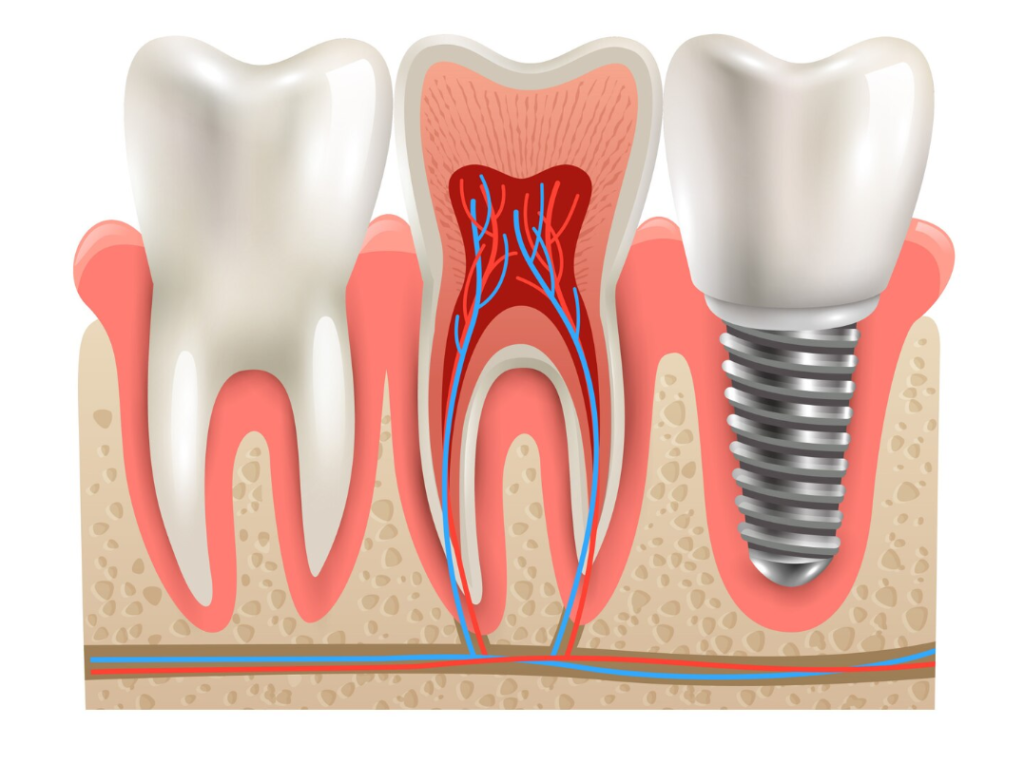
A dental implant has three main parts. The implant itself is a small titanium post placed into the jawbone, where it serves as an artificial tooth root. An abutment is attached to the top of the implant and acts as the connector. A crown, custom-made to match surrounding teeth, is then placed on the abutment.
The process takes place over several months because the implant needs time to integrate with the jawbone. This integration, called osseointegration, is what gives implants their stability and longevity. Once complete, the implant functions much like a natural tooth, allowing patients to chew, speak, and smile without the shifting or discomfort that can come with dentures or bridges.
Who Is a Good Candidate for Dental Implants?
Not every patient is an ideal candidate for implants, which is why a thorough consultation matters. Generally, good candidates share the following characteristics:
- Healthy gums with no untreated periodontal disease
- Sufficient jawbone density to support an implant (bone grafting is an option if bone has been lost)
- Good overall health, with chronic conditions such as diabetes well managed
- A commitment to good oral hygiene and regular dental visits
- Non-smoker status, or willingness to stop before and during the healing period
A qualified dentist in Woodbridge VA or your local area will evaluate your bone, gums, and overall health before recommending implants. For patients who are not candidates right away, there are often preparatory steps that can make implants possible later.
The Benefits of Choosing Dental Implants
Dental implants offer several advantages that make them a strong option for many patients:
- They preserve jawbone. Because the implant stimulates the bone like a natural root, it helps prevent the bone loss that typically follows tooth extraction.
- They do not affect neighboring teeth. Unlike a bridge, which requires reshaping adjacent healthy teeth, an implant stands on its own.
- They are long-lasting. With proper care, dental implants can last for decades, often outlasting other tooth replacement options.
- They feel natural. Patients can chew, speak, and smile without the slipping or discomfort that sometimes accompanies dentures.
- They support overall health. By restoring proper chewing function, implants help maintain nutrition and digestion, both of which can suffer when chewing becomes difficult.
Common Questions Patients Ask About Dental Implants
How long does the dental implant process take?
The complete process typically takes several months, from the initial implant placement through final crown attachment. The timeline depends on individual healing, whether bone grafting is needed, and the specific treatment plan. Most patients find the gradual process worthwhile given the long-term result.
Is dental implant surgery painful?
The procedure itself is performed under local anesthesia, so patients do not feel pain during placement. Mild soreness and swelling for a few days afterward is normal and typically managed with over-the-counter medication. Most patients report less discomfort than they expected.
How long do dental implants last?
With good oral hygiene and regular dental visits, dental implants can last decades. The crown attached to the implant may need replacement over time due to wear, but the implant itself is designed for long-term durability.
Are dental implants covered by insurance?
Coverage varies widely between insurance plans. Some plans cover a portion of the implant or crown, while others classify implants as cosmetic and do not provide coverage. Checking with both your insurance provider and your dental office is the best way to understand your specific coverage.
What are the alternatives to dental implants?
The main alternatives are dental bridges and dentures. Bridges use neighboring teeth to support a replacement tooth, while dentures are removable appliances. Each option has advantages and limitations, and the right choice depends on the patient’s oral health, budget, and personal preference.
Taking the Next Step
For adults in Woodbridge VA who have been living with missing teeth, scheduling a consultation is the best first step. A qualified dentist can evaluate your specific situation, discuss which replacement options make sense for you, and explain the costs and timelines involved. Dental implants are not the right choice for every patient, but for many, they offer a long-term solution that preserves both oral health and quality of life.
The understanding of tooth replacement has advanced significantly over the past two decades. What was once considered a specialized or exotic treatment is now a routine part of restorative dentistry at practices like Admire Dental Care in Woodbridge VA and others across Northern Virginia. For patients weighing their options, informed decisions begin with a conversation.
About the Author
Dr. Judith T. Eugene, DDS, is the founding dentist at Admire Dental Care, a general, cosmetic, and family dental practice located at 14087 Richmond Hwy in Woodbridge, VA. She has practiced dentistry since 2000 and works alongside Dr. Farah Khan, DDS, to provide preventive, cosmetic, orthodontic, periodontal, and restorative dental care, including dental implants, to patients across Prince William County. For more information, visit admcare.com or call (571) 398-6603.
Other Articles You May Find of Interest...
- Missing Teeth and Your Overall Health: What Adults in Woodbridge VA Should Know About Dental Implants
- 8 Dentists in Lincoln, CA for Early Childhood Oral Health in 2026
- Boutique Whitening vs Opalescence: 7 Differences Between the Two Ranges for UK Dentists in 2026
- Surgical Guide for Dental Implants: A Clinician’s Practical Guide to Accuracy, Types, and How to Order
- What to Expect at Your Child’s First Dental Visit
- How Teeth Whitening Certification Helps Therapists Avoid 5 Common Procedural Mistakes
- 6 Joliet Dentists to Consider for Your Oral Health Needs





