






More Dental Health Articles
Inside the Top 1%: What a Blue Diamond Invisalign Provider in Los Angeles Does Differently
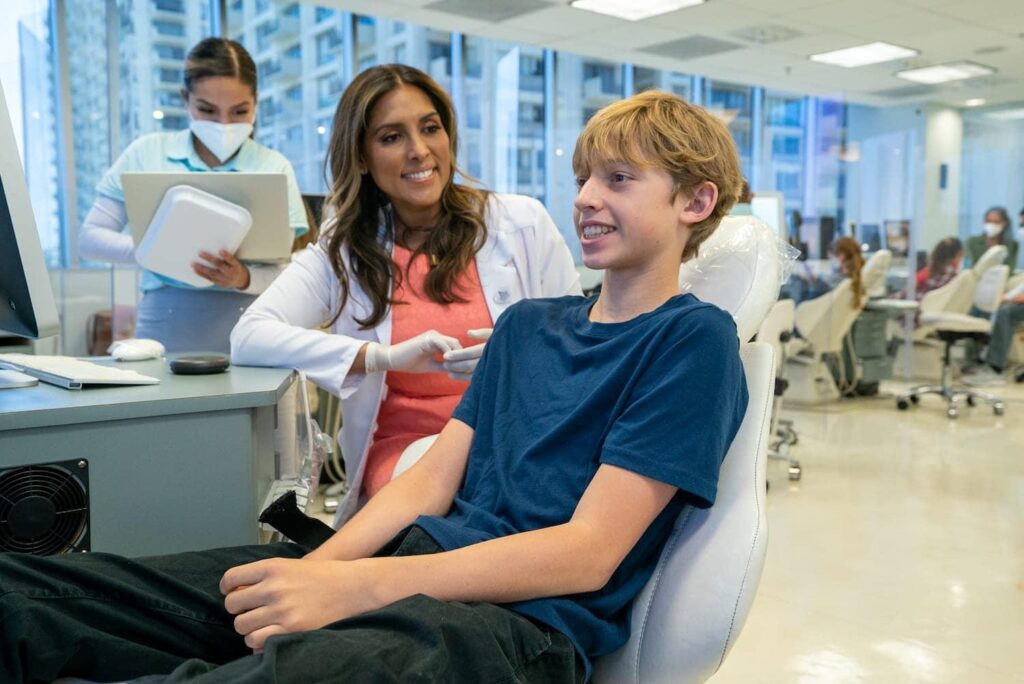
Anyone can hand you a set of clear aligners. Treatment outcomes depend heavily on the diagnosis, treatment planning, and patient compliance, not simply on the aligners themselves.
Clear aligners have a marketing problem, and it works in reverse. Because the trays look simple, and because you can order look-alike versions through the mail, it is easy to assume that straightening your teeth is now a product you buy rather than a treatment you receive. The tray is the same clear plastic no matter who prescribes it. That is exactly why the assumption is so misleading.
Ask any experienced orthodontist what actually moves teeth and they will tell you it is not the aligner. It is the plan. It is the sequence of tiny, calculated shifts that decides how, when, and how fast each tooth travels, and where it finally settles. The tray is just the instrument. The treatment is the strategy behind it. And the difference between a good plan and a mediocre one is the difference between a confident smile and a bite that never quite works right.
What “Blue Diamond” really certifies
Invisalign ranks its certified providers by how many patients they treat with the system, and the tiers climb steeply. The very top of that ladder is the Blue Diamond designation, reserved for practices that treat more than 400 Invisalign cases in a single year. Only about one percent of certified providers ever reach it.
That number is not a vanity badge. Volume at that level means a clinician has guided aligner treatment through nearly every scenario a mouth can present: severe crowding, deep overbites, underbites, crossbites, gaps, and the complicated combinations that used to be considered off-limits for clear aligners entirely. Each of those cases teaches something that cannot be learned from a manual. By the time a provider has treated hundreds of patients a year for years on end, they have developed an instinct for how real teeth respond, not how they are supposed to respond on paper.
Beverly Hills Orthodontics, led by Dr. Madan, is one of only a handful of practices in California to hold Blue Diamond status, and it has maintained that ranking for close to a decade. That consistency is the part worth noticing. Reaching the top tier once is impressive. Staying there year after year reflects a system that works repeatedly, not a single strong season.
The case that others called impossible
One of the most telling things a top provider hears is a version of this sentence: I was told Invisalign would not work for my case. Often it did not work, at least not in the hands of someone still learning the tool. The practices that treat the highest volumes have spent years figuring out how to push, pull, and rotate teeth that lesser plans would leave to traditional braces.
One example involved a patient named Ryan, who sought treatment after previously being told Invisalign might not be suitable for his bite. According to the practice, he experienced significant improvement over the course of treatment. Individual results vary depending on each patient’s condition and treatment plan.
Technology that removes the guesswork
Precision at this level leans heavily on tools. Rather than the messy putty impressions that older patients dread, the practice uses an iTero digital scanning system to capture the mouth in three dimensions. That scan does two things at once. It builds an exact model for designing the aligners, and it lets a patient see a simulation of their future smile before treatment even begins. Starting a case with a clear picture of the destination changes the entire experience.
From there, each patient receives a series of custom trays, worn 20 to 22 hours a day and swapped for the next set every one to two weeks. The mechanics are gentle by design, which is a large part of why the approach works so well for children and teenagers, not just adults. For younger patients, aligners can guide developing teeth into place while avoiding the poking wires, cut cheeks, and emergency visits that come with brackets. For adults, the appeal is discretion: treatment that corrects a bite or closes a gap without announcing itself to a conference room.
None of this is unique to any single tray brand, and that is the entire point. The outcome tracks the expertise of the person directing it. Choosing a Blue Diamond Invisalign provider in Los Angeles may give patients confidence that the practice has managed a wide range of similar orthodontic cases.
The consultation is where the plan begins
A telling detail about high-volume practices is how much happens before a single aligner is worn. At Beverly Hills Orthodontics, a consultation starts with x-rays and digital images of the mouth, teeth, and jaw, which feed a thorough assessment of jaw size, bite alignment, and any special considerations a patient brings to the chair. Only then does the design of the custom trays begin. That front-loaded diligence is what separates a plan built for a specific person from a template applied to a generic set of teeth.
It also reflects a broader point about clear aligners that is easy to miss in the marketing. Straightening teeth is not only cosmetic. Misaligned teeth can create improper bite alignment, contribute to jaw joint problems, complicate cleaning, and leave gaps where teeth are missing or worn. Correcting them makes it easier to brush and floss effectively, which supports long-term dental health, and it tends to lift a patient’s confidence along the way. A provider treating hundreds of cases a year sees all of those dimensions at once, weighing function and aesthetics together rather than chasing a straight front row of teeth at the expense of a healthy bite.
There is a long game here too. The finish line of active treatment is not the end of the relationship. Retention, the discipline of holding teeth in their new positions after the aligners come off, is what protects the investment, and an experienced practice builds that plan in from the start rather than treating it as an afterthought.
How to read the credential as a patient
For anyone weighing clear aligners, the Blue Diamond tier is a useful shortcut through the noise. It tells you the practice treats enough cases to have seen yours before. It signals investment in the scanning and planning technology that separates a predictable result from a hopeful one. And, when a practice has held the ranking for years across multiple locations, it points to a repeatable process rather than a lucky streak.
Access is part of the equation as well. A practice with multiple locations across a metro area, as Beverly Hills Orthodontics maintains from Beverly Hills to Downtown Los Angeles, Studio City, and Alhambra, makes the every-few-weeks rhythm of aligner treatment realistic for busy patients rather than a scheduling burden. Convenience does not straighten teeth, but it does determine whether a patient actually wears the trays 20 to 22 hours a day and shows up for the checkpoints that keep a case on track.
Straight teeth are the visible goal, but a healthy, functional bite is the one that lasts. Aligners that fit into a person’s life, that let them eat what they want and brush normally and smile through the whole process, are only worth pursuing if the plan behind them is built to finish the job. The tray you can buy anywhere. The expertise is what you are actually choosing.
Other Articles You May Find of Interest...
- What Goes Into Developing an Alcohol-Free Mouthwash Beyond the Ingredient List
- 6 Best Dentist Options in Reston, Virginia for Family, Cosmetic, and Emergency Care
- Why Comprehensive Dental Care Matters at Every Stage of Life
- Why Preventive Dental Care Matters at Every Stage of Life
- Colored Braces: A Practical Guide for Teens and Parents in the UAE
- Brushing Teeth for Kids: Secrets to Making Healthy Habits Actually Stick
- Why Preventive Dental Care Matters More Than Most People Realize





