






More Consumer Health Guides Articles
Mushroom Gummies in 2026: What Consumers Should Know About Ingredients, Labeling, and Product Differences
Disclosure: This article was submitted by a third-party contributor and is published by Your Health Magazine for informational purposes. Your Health Magazine has not independently verified product testing claims, user experiences, or manufacturer statements and is not affiliated with the brands mentioned. Links may be sponsored or editorially provided.
Medical disclaimer: This article is for informational purposes only and does not constitute medical advice, diagnosis, or treatment. Mushroom gummies, nootropic products, and botanical supplements may not be appropriate for everyone and may interact with prescription medications or health conditions. Consumers should review product labels, local laws, and speak with a qualified healthcare professional before using any supplement.
Mushroom gummies have become more common in the broader wellness and supplement marketplace, but the category can be confusing. Some products are built around functional mushroom extracts such as lion’s mane, reishi, cordyceps, chaga, or turkey tail. Others use proprietary botanical or nootropic blends and are marketed with language related to mood, relaxation, focus, or sensory experience.
Because labels, ingredients, serving information, testing standards, and legal restrictions can vary widely, readers should be cautious about assuming that all mushroom gummies are the same. This educational comparison looks at five products that appear in online discussions about mushroom gummies and highlights the types of information consumers may want to review before making any decision.
This article does not rank these products as medical treatments, does not verify individual product claims, and does not recommend using mushroom gummies to treat any health condition.
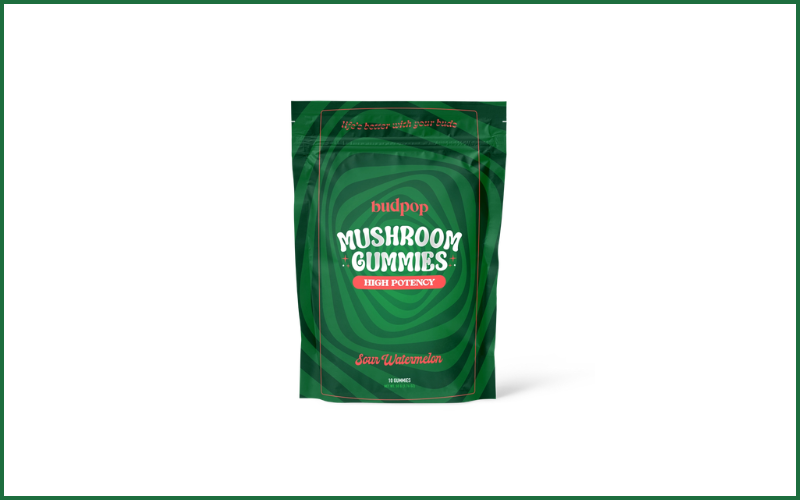
Mushroom Gummies: Quick Comparison of Label and Product Details
The products below are discussed for informational comparison only. Product formulas, legal status, testing documentation, and shipping restrictions can change, so consumers should verify current information directly with the manufacturer and review applicable state laws.
| Brand | Label/Formula Information | Marketing Positioning | Testing Claims | Information to Review |
| BudPop | 1,500mg proprietary blend per gummy, according to product labeling | Marketed as a legal mushroom gummy product | Brand states batch-specific COAs are available | COA details, ingredient disclosure, warnings, and state restrictions |
| Exhale Wellness | Proprietary blend; exact milligram details may require label review | Marketed as a plant-based gummy product | Brand states third-party testing is used | Full formula disclosure, medication warnings, and shipping eligibility |
| TreHouse | Neurotonin blend listed in product materials | Marketed as a nootropic-style mushroom gummy | Brand publishes lab documentation | Current advisories, ingredient disclosure, and state restrictions |
| Mojo Gummies | Functional mushrooms and nootropic ingredients listed by the brand | Marketed around focus and daily wellness support | Brand references manufacturing and quality standards | Caffeine content, ingredient amounts, and suitability for individual users |
| Plant People WonderDay | Fruiting-body mushroom extracts, according to brand materials | Marketed as a functional mushroom wellness gummy | Brand references third-party batch testing | Extract type, sugar content, testing documentation, and intended use |
5 Mushroom Gummy Products Compared
The following sections preserve the product references from the submitted article but reframe them as an educational review of labeling, ingredients, testing, and safety considerations rather than a ranking or endorsement.
#1 BudPop Sour Watermelon Magic Mushroom Gummies: Product Label and Testing Information
BudPop Sour Watermelon Magic Mushroom Gummies are marketed as a legal mushroom gummy product with a proprietary blend. The submitted article described the product as containing 1,500mg of a proprietary blend per gummy and stated that batch-specific Certificates of Analysis are available through the brand’s lab testing materials.
From an educational standpoint, the most important details for readers to review are the full ingredient list, the meaning of the proprietary blend, the available COA, the product’s medication warnings, and the states where the product can legally ship. A higher milligram amount on a label does not automatically establish safety, quality, or suitability for an individual consumer.
Label Details to Review:
- Whether the product discloses the full formula or uses a proprietary blend
- Whether current batch-specific COAs are available and easy to access
- Whether the product page includes medication interaction warnings
- Whether the company identifies shipping restrictions and age restrictions
- Whether manufacturing and quality-control claims are explained clearly
Shop BudPop Sour Watermelon Gummies
#2 Exhale Wellness Sour Watermelon Magic Mushroom Gummies: Product Label and Testing Information
Exhale Wellness Sour Watermelon Magic Mushroom Gummies are described in the submitted article as a plant-based gummy product with a proprietary blend and third-party testing. The original article also referenced the brand’s pectin and MCT oil base, Trustpilot review information, and money-back guarantee.
Readers evaluating this type of product should separate marketing claims from verifiable product information. Reviews, guarantees, and flavor descriptions may provide consumer context, but they do not replace current lab documentation, clear ingredient disclosure, safety warnings, or professional medical guidance.
Label Details to Review:
- Whether the proprietary blend lists individual ingredients and amounts
- Whether the testing documentation is current and batch-specific
- Whether muscimol or other active constituents are disclosed, if applicable
- Whether the product page explains medication cautions and age restrictions
- Whether customer review claims are distinguishable from verified product facts
Shop Exhale Wellness Sour Watermelon Gummies
#3 TreHouse Magic Mushroom Gummies: Product Label and Safety Considerations
The submitted article described TreHouse Magic Mushroom Gummies as using Neurotonin, a proprietary blend that may include ingredients such as 5-HTP, lion’s mane, rhodiola rosea, mimosa hostilis root bark, phenylethylamine, B12, and D3. Because several of these ingredients may have biological activity or interaction concerns, readers should review the label carefully and speak with a healthcare professional if they take medications or have health conditions.
The submitted article also noted that a California Department of Public Health advisory had raised questions about undisclosed compounds in certain TreHouse products, while the brand’s own lab reports presented different information. That type of unresolved discrepancy is a reason for caution and illustrates why current, independent, batch-specific documentation matters in this category.
Label Details to Review:
- Full ingredient list and whether individual amounts are disclosed
- Any current state advisories, recalls, or public health notices
- Published lab results for contaminants and undisclosed compounds
- Medication interaction warnings, especially for serotonergic ingredients
- Shipping restrictions and current legal availability by state
#4 Mojo Extra Strength Brain Boost Gummies: Functional Mushroom and Nootropic Label Information
Mojo Extra Strength Brain Boost Gummies are described as combining functional mushrooms with nootropic ingredients. The submitted article referenced 146mg of functional mushrooms, 89.6mg of a nootropic blend, Mucuna pruriens, SAM-e, Panax ginseng, L-theanine, and 25mg of delayed-release caffeine.
Products containing caffeine, nootropic blends, amino-acid-related compounds, or mood-related ingredients deserve careful label review. Consumers who are sensitive to caffeine, take psychiatric medications, have anxiety, have sleep problems, are pregnant, or have cardiovascular concerns should not assume these products are automatically suitable because they are sold as supplements.
Label Details to Review:
- Caffeine content and suggested timing information on the product label
- Amounts of mushrooms, nootropics, and other active ingredients
- Whether the formula contains mood-related or stimulant-like compounds
- Testing documentation and manufacturing claims
- Warnings for medication use, pregnancy, anxiety, sleep issues, or heart concerns
#5 Plant People WonderDay Mushroom Gummies: Functional Mushroom Label Information
Plant People WonderDay Mushroom Gummies are described as a functional mushroom product using fruiting-body mushroom extracts. The submitted article referenced lion’s mane, reishi, cordyceps, chaga, maitake, turkey tail, shiitake, and royal sun agaricus, along with claims about zero sugar, vegan ingredients, and U.S. sourcing.
For functional mushroom products, readers may want to review whether the product uses fruiting body, mycelium, or a combination; whether extract ratios are explained clearly; whether beta-glucan or other testing information is provided; and whether the brand distinguishes traditional or emerging research from proven health outcomes.
Label Details to Review:
- Fruiting body versus mycelium disclosures
- Extract ratios and whether they are explained in plain language
- Batch testing and ingredient sourcing information
- Added sugar, sweeteners, allergens, and excipients
- Whether the brand avoids unsupported disease-treatment claims
Ingredients Commonly Found in Mushroom Gummies
Mushroom gummy formulas vary widely. Some focus on functional mushrooms. Others combine mushroom extracts with botanicals, amino-acid-related compounds, caffeine, vitamins, or proprietary blends. Because of this variation, consumers should avoid assuming that one product’s label applies to the entire category.
Functional Mushroom Extracts
Common functional mushrooms include lion’s mane, reishi, cordyceps, chaga, turkey tail, maitake, and shiitake. These ingredients are often marketed for general wellness, but product claims should be evaluated carefully. Research on mushrooms varies by species, extract type, preparation method, and outcome studied.
Nootropic or Botanical Blends
Some gummies include ingredients such as 5-HTP, rhodiola, phenylethylamine, ginseng, L-theanine, Mucuna pruriens, SAM-e, B vitamins, or proprietary botanical blends. These ingredients may not be appropriate for all users and may raise interaction concerns, especially for people taking antidepressants, stimulants, sedatives, or other prescription medications.
Proprietary Blends
A proprietary blend may list a total amount without identifying each ingredient’s individual quantity. That can make it difficult to compare products or evaluate the relevance of specific ingredients. Consumers who need precise information should look for brands that publish clear ingredient amounts and current testing documentation.
How to Evaluate Mushroom Gummy Products
Readers comparing mushroom gummy products may encounter outside reviews, including articles describing the best mushroom gummies. Those reviews can be a starting point, but they should not replace direct review of product labels, current lab reports, and medical guidance when needed.
- COA availability: Look for current, batch-specific lab reports rather than generic or outdated certificates.
- Ingredient disclosure: Review whether the label lists individual ingredient amounts or relies on broad proprietary blend language.
- Medication warnings: Products containing serotonergic, stimulant-like, sedating, or mood-related ingredients may carry interaction concerns.
- Legal status: State laws and shipping restrictions can vary and may change.
- Age restrictions: Many brands position these products for adults only.
- Marketing language: Be cautious with claims about visuals, euphoria, focus, mood, sleep, or cognitive performance unless they are supported by reliable evidence.
Safety and Interaction Considerations
Some mushroom gummy products include ingredients that may interact with medications or affect alertness, mood, sleep, blood pressure, or heart rate. People taking SSRIs, SNRIs, MAOIs, stimulants, sedatives, blood pressure medications, or other prescription drugs should speak with a healthcare professional before using products that contain 5-HTP, phenylethylamine, Mucuna pruriens, SAM-e, caffeine, or other active compounds.
Consumers should also use caution with products that make strong claims about sensory effects, psychoactive effects, mood changes, or cognitive enhancement. Individual responses can vary, and supplement labels may not always provide enough information to assess risk.
Anyone who experiences severe agitation, confusion, rapid heart rate, high blood pressure, hallucinations, allergic reactions, fainting, or other concerning symptoms after using a supplement should seek medical help promptly.
Common Questions About Mushroom Gummies
Do mushroom gummies cause visuals?
Claims about visual or sensory effects should be treated carefully. Some products are marketed with language about perception, mood, or sensory experience, but those claims may depend on the formula, individual response, and whether the product contains undisclosed or active compounds. Consumers should not assume a product is safe or appropriate based on marketing language alone.
Are mushroom gummies legal?
Legal status depends on the product’s ingredients and the laws where it is sold or shipped. Products that claim to contain no psilocybin or scheduled compounds may still be subject to state restrictions, public health advisories, or shipping limitations. Consumers should verify current laws and product documentation before purchasing.
Can mushroom gummies be used every day?
Daily use should not be assumed simply because a product is sold as a supplement. Intended use varies by formula, and some products include caffeine, nootropics, or other active ingredients. Consumers should follow label instructions, avoid exceeding labeled use, and speak with a healthcare professional if they have questions.
Will mushroom gummies affect a drug test?
Drug-testing concerns depend on the specific ingredients, contaminants, and any undisclosed compounds in a product. A certificate of analysis may provide useful information, but it is not a guarantee for every testing situation. People subject to workplace, legal, athletic, or medical drug testing should use extra caution with any supplement category that includes proprietary blends.
Can mushroom gummies be combined with alcohol?
Combining supplements with alcohol can increase unpredictability and may worsen side effects such as drowsiness, impaired judgment, nausea, or changes in mood. Consumers should speak with a healthcare professional about risks related to their specific medications, health history, and product ingredients.
Bottom Line
The mushroom gummy category includes very different products under similar names. Some emphasize functional mushroom extracts, some use nootropic or botanical blends, and some rely on proprietary formulas that require careful label review. Readers comparing BudPop, Exhale Wellness, TreHouse, Mojo Gummies, Plant People WonderDay, or other brands should focus on current ingredient disclosures, batch-specific testing, safety warnings, and legal restrictions rather than marketing claims alone.
Some consumers also read about subtle improvements in focus and mental clarity with certain mushroom products, but those claims should be interpreted cautiously and should not be treated as guaranteed outcomes. The safest approach is to review the full label, verify the current COA, understand the active ingredients, and consult a qualified healthcare professional when medication interactions or health conditions are relevant.