Your Health Magazine Contributor
4201 Northview Drive
Suite 102
Bowie, MD 20716
More Clinical Trials Articles
Understanding Clinical Trials and Their Purpose
Why Clinical Research Relies on Volunteer Participation
Clinical research is the engine behind modern medicine. It allows scientists to evaluate the safety, efficacy, and ideal dosage of new medications, medical devices, and behavioral therapies. Without volunteers, the development of life-saving treatments would come to a standstill. Research helps experts understand how a drug works in the human body, what side effects might occur, and whether it is better than current standard treatments.
There are two primary ways to participate. Some studies seek healthy volunteers to establish a baseline for how a new drug behaves in a person without a specific illness. Other trials are designed for patients who already have a specific health condition. These patient-specific trials aim to test if an investigational therapy can manage, treat, or potentially cure their condition.
Common Conditions Actively Studied Today
Research is constantly evolving to address the most pressing health needs of the population. Currently, the most researched conditions include stroke, with 1,390 active trials, followed by depression (1,293), anxiety (1,212), and cancer (1,077). Other areas of high activity include metabolic disorders like Type 2 diabetes, cardiovascular diseases such as heart failure, and respiratory conditions.
Researchers are also exploring new treatment classes, such as novel biologics, oral GLP-1 compounds for weight and blood sugar management, and targeted vaccines for infectious diseases. The following table helps clarify the differences between common study types.
| Feature | Healthy Volunteer Studies | Patient-Specific Trials |
| Primary Goal | Safety and dosing data | Efficacy and treatment outcomes |
| Health Status | No chronic conditions | Diagnosed with specific condition |
| Typical Duration | Often shorter; fixed stays | Often longer; follow-up visits |
| Compensation | Usually a flat stipend | Often travel and time reimbursement |
Phases of Clinical Research from Discovery to Market
Clinical research follows a structured path to ensure safety. Phase 1 studies are usually small, involving a few dozen people, to determine the initial safety profile and how the body processes the drug. If successful, Phase 2 studies expand to a larger group to see if the treatment actually works for the intended condition and to monitor for common side effects.
Phase 3 is the “pivotal” stage. These trials involve hundreds or thousands of participants to compare the new treatment against the current standard of care. Finally, Phase 4 occurs after a drug has been approved by regulators. These long-term studies monitor the treatment in the general population to detect rare or long-term side effects that may not have appeared in earlier, smaller groups.
Navigating the Search: How to Locate Studies in Your Area
Utilizing Federal and Global Registries
The most comprehensive way to find a study is through public databases. ClinicalTrials.gov is a massive, searchable registry of both federally and privately supported trials worldwide. You can filter these results by your specific health condition, your age, and your ZIP code.
Other resources include the National Institutes of Health (NIH) research databases and platforms like ResearchMatch, which connects volunteers with interested researchers. When using these registries, always check the “recruitment status” of a study. A trial listed as “recruiting” means they are actively looking for participants, while others may be “active but not recruiting” or “completed.” Always read the disclaimer on these sites, as inclusion in a registry does not mean the government has evaluated or endorsed the safety of every specific study.
Connecting with Specialized Regional Research Centers
While national databases are helpful, they can sometimes be overwhelming. Many people find more success by looking for dedicated community-based clinical research sites. These regional facilities often have a closer relationship with the local medical community and provide a more personalized experience. They are particularly valuable for those seeking expertise in complex therapeutic areas like neurology, which covers conditions such as Alzheimer’s, Parkinson’s, and migraines, or gastroenterology, which includes Crohn’s disease and ulcerative colitis. For individuals in Southern California, you can find local medical trials through specialized research groups that offer direct access to board-certified specialists and coordinators who can guide you through the eligibility process.

Exploring Academic Medical Centers and Specialty Registries
Major university hospitals and comprehensive cancer centers are often the hubs for the most advanced, early-stage research. These institutions frequently conduct “multi-site” trials, meaning the same study might be happening at several hospitals across the country. If you have a rare condition, check the websites of non-profit health organizations or disease-specific advocacy groups. These organizations often maintain their own registries and can point you toward the most reputable research centers specializing in your condition.
Participant Safety, Rights, and Ethical Oversight
The Informed Consent Process
Before you join any study, you will go through a process called informed consent. This is not just a signature on a form; it is an ongoing educational conversation. The research team must explain the purpose of the study, the potential risks, the expected benefits, and the full schedule of visits and procedures.
You should ask as many questions as you need to feel comfortable. It is also important to understand that your participation is entirely voluntary. You have the legal right to withdraw from a trial at any time, for any reason, without it affecting your future access to standard medical care from your regular doctors.
Institutional Review Boards and Regulatory Protections
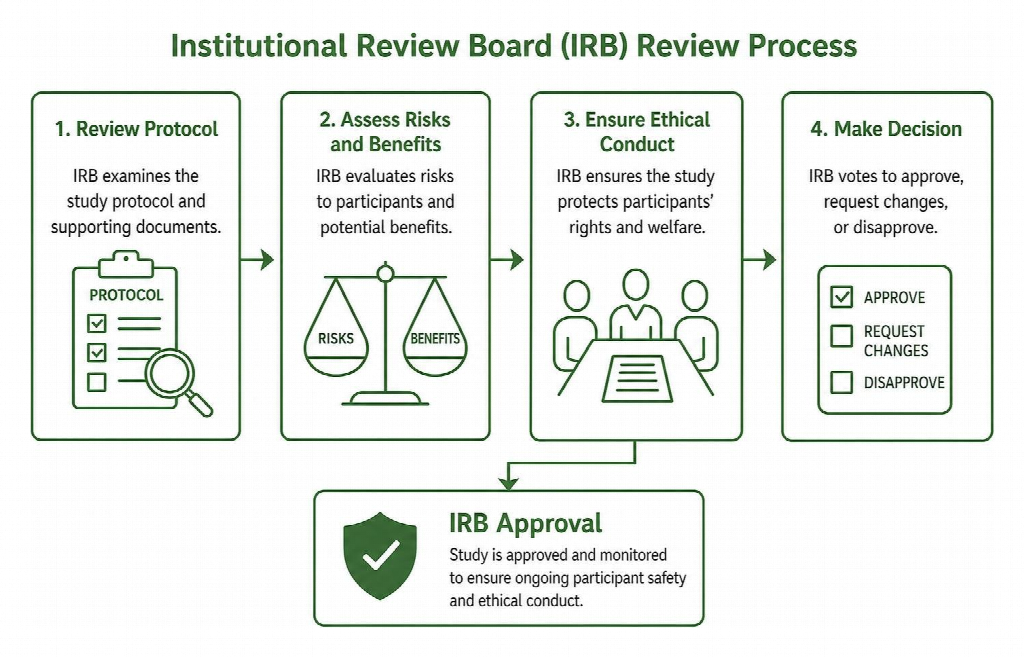
Every clinical trial in the United States must be approved and monitored by an Institutional Review Board (IRB). This is an independent committee of doctors, scientists, and community members who review the study protocol to ensure that the risks to participants are minimized and that the study is conducted ethically.
Research sites must also comply with strict FDA regulations and HIPAA privacy laws. These rules ensure that your personal health information is kept confidential and that your rights as a human subject are protected throughout the entire duration of the study.
Financial Considerations: Paid Studies, Expenses, and Insurance
How Clinical Trial Compensation Works
Many people ask if they will be paid for their participation. It is important to distinguish between two types of payments. Some studies offer reimbursement for travel-related expenses, such as gas, parking, or public transit. Others provide compensation for your time and the “burden” of the study procedures.
Compensation amounts can vary widely. A short outpatient study may offer a modest stipend, while a multi-day inpatient study—where you stay at a research facility for observation—often provides higher compensation due to the increased time commitment. Always ask the recruitment team for a clear breakdown of the payment schedule before you enroll.
Medical Expenses and Insurance Coverage
In most clinical trials, the study sponsor pays for the investigational drug, specialized lab tests, and imaging that are required specifically for the research. However, procedures that are considered “standard of care” might still be billed to your regular health insurance. Before you sign up, ask the study coordinator which costs are covered by the sponsor and if there are any potential out-of-pocket expenses you might be responsible for.
What to Expect: From Screening to Study Completion
Assessing Eligibility Through Inclusion and Exclusion Criteria
Every study has a set of “inclusion” and “exclusion” criteria. These are the rules that determine who can and cannot join. They might be based on your age, your medical history, current medications you are taking, or specific lab results.
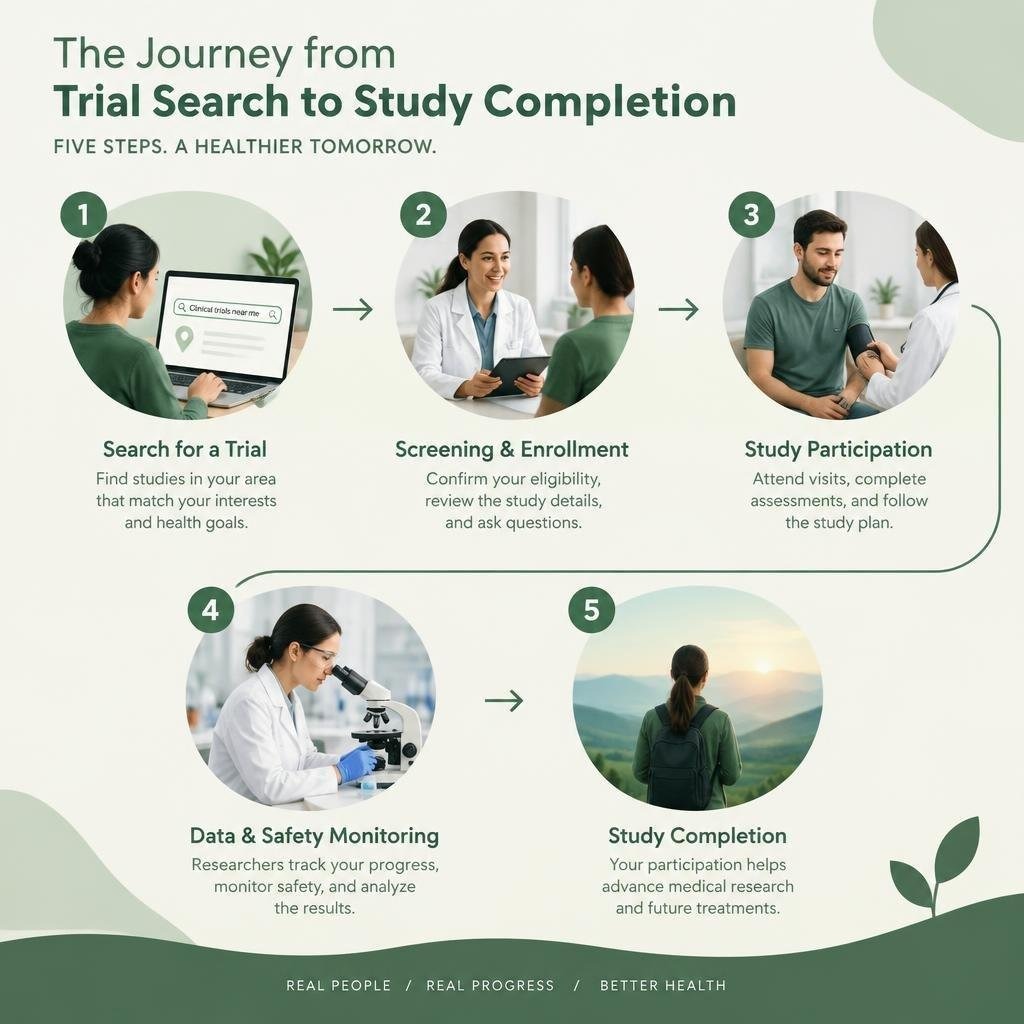
The process usually begins with a phone or online questionnaire. If you seem like a good fit, you will be invited for an in-person screening visit. During this time, you might have blood drawn, undergo a physical exam, or complete cognitive tests. These steps ensure that the study is safe for you and that your data will be useful to the researchers.

The Rhythm of Clinical Visits and Procedures
Once you are enrolled, the study will follow a specific schedule. You may need to keep a symptom diary, log when you take your medication, or visit the clinic for regular check-ups. Some studies are purely outpatient, meaning you go home the same day, while others require short stays at a clinical research unit. After the study ends, there is often a follow-up period where the team monitors your health to ensure you have transitioned safely back to your regular primary care management.
Taking Your Next Steps in Clinical Research
The best way to start is by having an open, honest conversation with your primary care physician. They know your health history and can provide valuable advice on whether a specific trial might be a good fit for you.
Before you contact a research site, prepare a checklist of questions:
- How long does the study last?
- How many clinic visits are required?
- What are the most common side effects?
- Who can I call if I have an emergency?
By gathering this information, you can move forward with confidence, knowing that you are making an informed decision to contribute to the future of medical science.
Other Articles You May Find of Interest...
- Understanding Clinical Trials and Their Purpose
- The Science of Retatrutide as a Compound, Its Structure, Properties, and Research
- From Country Feasibility to Effective Study Execution in Poland
- Cold Chain and Patient Safety: Why Logistics Shapes the Outcome of a Clinical Trial
- Endocrinology and Metabolic Clinical Trials: Optimizing Protocol Execution and Patient Retention
- Retatrutide (RETA): What Researchers Should Verify Before Sourcing a Vial
- Tesamorelin in Preclinical Research: Handling, Stability, and Supplier Documentation