Your Health Magazine Contributor
4201 Northview Drive
Suite 102
Bowie, MD 20716
More Child Health and Safety Articles
What to Look for in Non-Toxic Toys for Toddlers
Toddlers test everything with their mouths, which turns every toy into a question about what it is made of. Most packaging answers with one word, safe, and leaves parents guessing at the paint, the glue and the testing behind it. The non-toxic toys for toddlers on this list were chosen the other way around: each brand publishes its materials, finishes and testing, so a parent can read facts rather than trust a label.
The examples below cover felt, solid wood, rubberwood, recycled plastic and natural rubber, with each offering different materials, safety information and play features. Every claim and limitation below comes from the brand’s own product page as it read in late October 2026.
How This List of Non-Toxic Toys for Toddlers Was Chosen
Four questions decided the ranking. Does the brand name the material rather than calling it natural? Does it say what the color and finish are made from, and whether the glue is formaldehyde-free? Does it name a recognized toy safety standard, such as ASTM F963 in the United States or EN 71 in Europe? And does the toy keep its parts together, since a safe material is small comfort once half the set is under the sofa?
These four questions provide a useful way to compare toys, in the spirit of Your Health Magazine’s piece on small daily choices that support a healthier family: a few deliberate habits do most of the work, and reading a product page before buying is one of the cheapest.
Toddla Montessori Busy Board
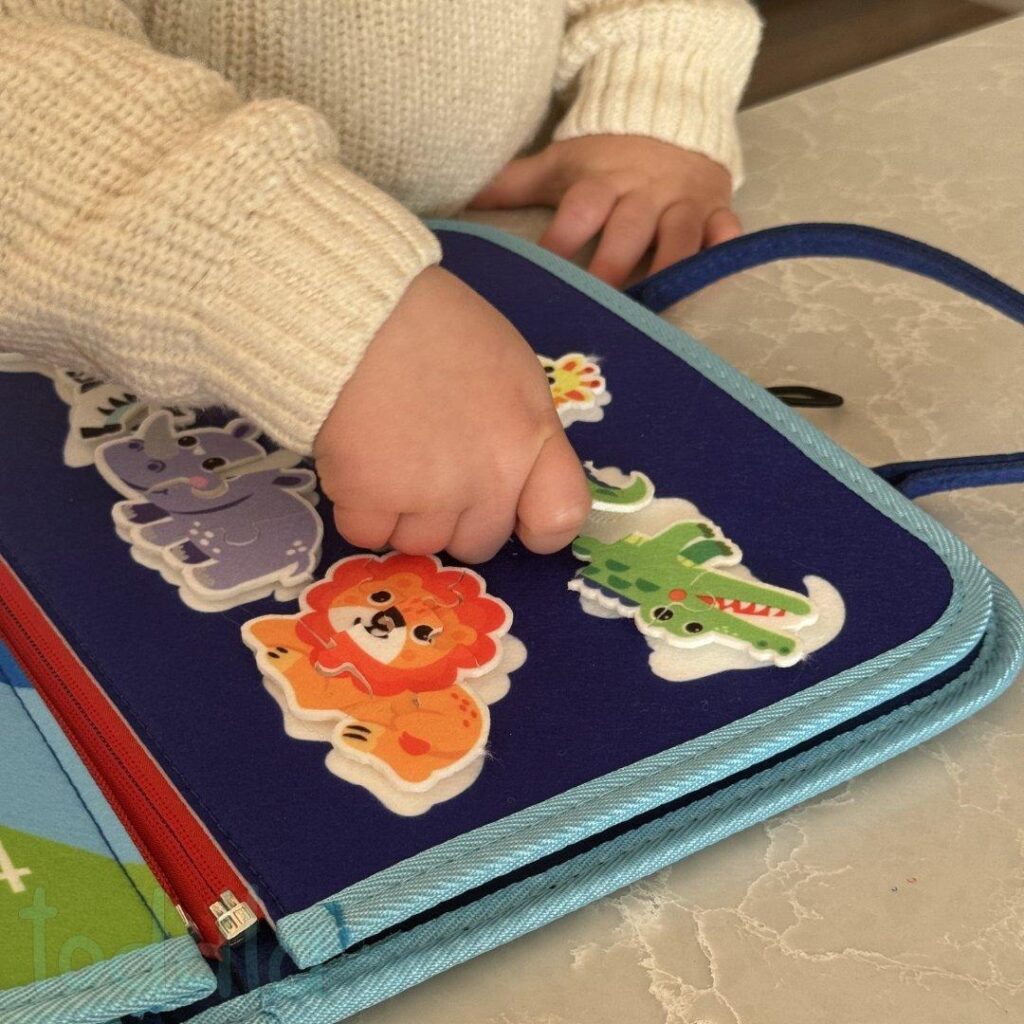
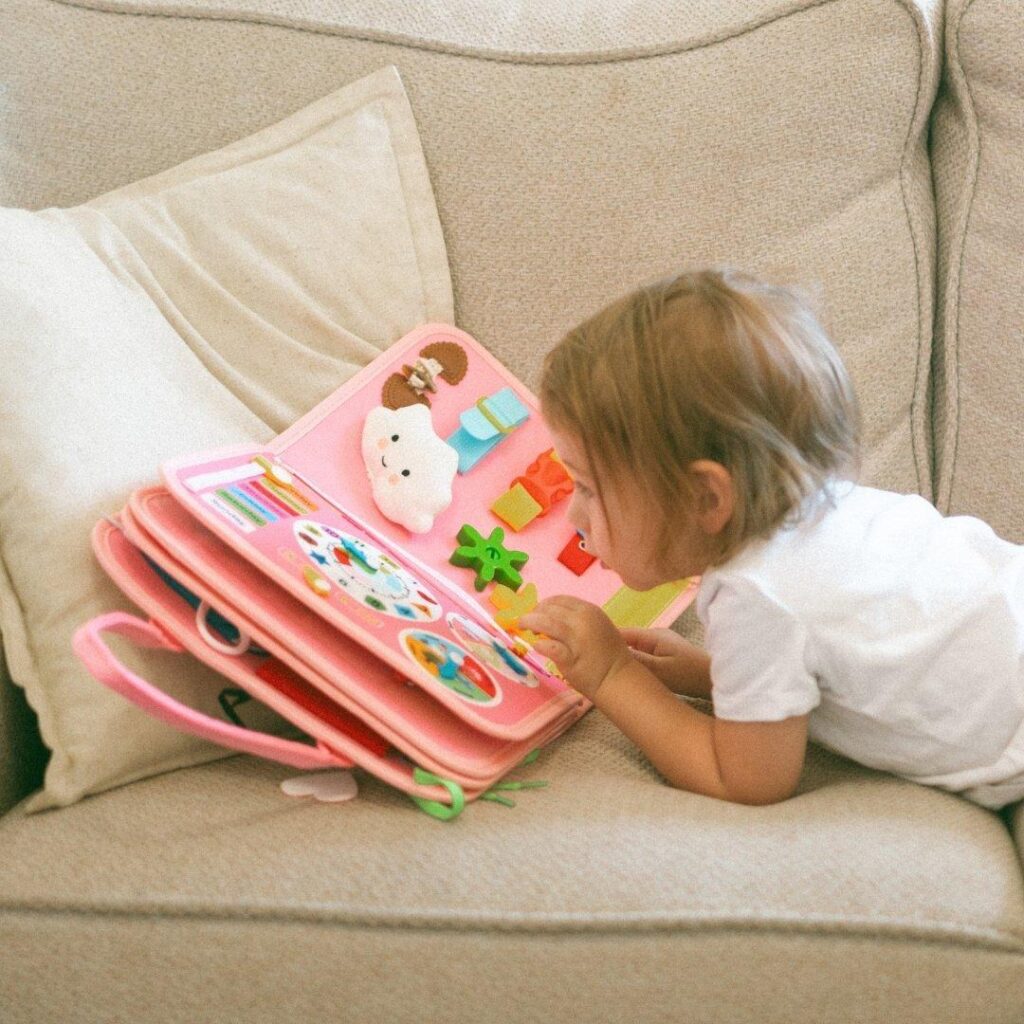
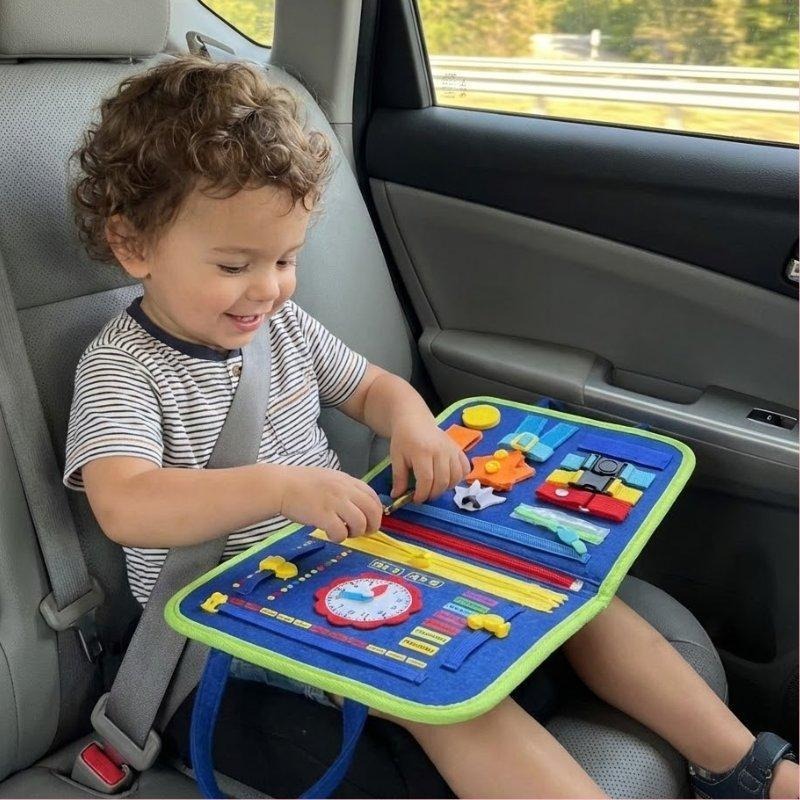
Toddla’s busy board is one example of a travel-friendly activity toy that publishes material and safety information on its product page. Toddla’s toddler busy board is made from what the product page calls certified non-toxic felt with reinforced stitching, is CE-certified, and carries CPC and ASTM F963 wording on the page, which is more named testing than most toys on this list publish. It folds closed like a satchel and weighs about a pound.
More than thirty activities are built into the pages: zippers, buckles and laces on the life-skills spread, shapes and a learning clock on the logic spread, and on the Plus version an alphabet, numbers and animal puzzles. Pages unzip so two children can share, and nothing comes free to roll away. Toddla sells it for six months to five years and asks for supervised play under three because of the small felt pieces, the kind of plain age guidance the rest of this list is measured against.
Pros
- Certification and testing wording named on the product page, with the felt described as certified non-toxic.
- Over thirty activities in one closing piece that weighs about a pound.
Cons
- No washing or care instructions on the product page.
Lovevery The Block Set
Lovevery’s seventy-piece set is the pick for open-ended building rather than fastening and sorting. The blocks are solid wood with water-based paint and finishes, the wooden box turns into a pull car, and a cotton drawstring bag and threading string come with it for ages twelve months and up.
Its gap is the safety wording: Lovevery says the set meets or exceeds global safety standards but names none, where the busy board above names three, and an eight-pound, seventy-piece set is the opposite of a travel toy.
Pros
- Solid wood with water-based paint and finishes, stated plainly.
- Seventy pieces give years of building beyond the toddler stage.
Cons
- No specific safety standard on the product page, and seventy loose pieces to manage.
PlanToys Dancing Alligator
PlanToys publishes more about its materials than almost any brand in the category. The Dancing Alligator is made from what the brand calls chemical-free rubberwood, held with formaldehyde-free glue and colored with organic pigments and water-based dyes, and the product page links to ASTM and EN 71 test reports rather than simply asserting compliance. It is made in Thailand and rated for twelve months and up.
As a toy it does one thing, pulling along with a click-clack as the segments move, which toddlers love and which gives it a shorter life than a multi-activity piece. On transparency it is the benchmark for the other wooden entries.
Pros
- Formaldehyde-free glue and water-based dyes named, with test reports linked.
- Country of manufacture stated.
Cons
- A single-purpose pull toy with a built-in noise, outgrown faster than a sorting or fastening toy.
Green Toys Shape Sorter Truck
Plastic is not automatically the wrong answer, and Green Toys makes the strongest case for it. The Shape Sorter Truck is 100 percent recycled plastic with no BPA, phthalates or PVC, has no screws or metal axles, and is manufactured in the USA. Six parts in total, and the whole truck is dishwasher safe, which no wooden or felt toy here can claim.
The page does not name the resin or a toy standard such as ASTM F963, and the age range sits in the site’s one-to-three-year collections rather than in the product copy, so parents have to look for it.
Pros
- Recycled plastic with BPA, phthalates and PVC excluded in writing, made in the USA.
- Dishwasher safe, the easiest toy on this list to keep clean.
Cons
- No named toy safety standard, and the age range is not in the product copy.
Grimm’s Rainbow
Grimm’s six-piece Rainbow is the classic open-ended stacker, and its page reads like a recipe: lime wood, a non-toxic water-based color stain, and a finish of pure vegetable oil with no protective varnish, so the surface a toddler touches is wood and oil rather than a coating. The brand holds the German spiel gut seal, states that its colors are certified to EN 71-3, and makes the toys in Germany and Bosnia.
Without varnish, new pieces can show slight color abrasion, which Grimm’s notes and suggests wiping with a damp sponge, and six pieces rated from one year make it a slow, contemplative toy rather than a busy one.
Pros
- Wood species, stain and oil finish all named, with no varnish layer.
- EN 71-3 wording for the colors and a spiel gut seal.
Cons
- Color can rub off slightly on new pieces, and six pieces limit what a toddler can do with it.
Hape Pound and Tap Bench
Hape’s bench is the pick for a toddler who needs to hit something. Balls are hammered through the top and roll down a slide-out xylophone, the paint is water-based with what the brand calls non-toxic finishes, and the page states the toy meets EN 71 and ASTM F963. It is rated for twelve months and up and weighs just under three pounds.
Hape does not name the material or say where the bench is made, which the wooden entries above all manage, and it adds a warning not to use the xylophone close to the ear.
Pros
- Two named safety standards and water-based paint on the product page.
- Hammering, rolling and tapping in one bench covers several play urges at once.
Cons
- Material and country of manufacture are not stated, and the xylophone carries a volume warning.
Oli and Carol Floating Blocks
The last entry starts earlier than the others. Oli and Carol’s three floating blocks are 100 percent natural rubber, with no plastic or silicone according to the brand, hand painted with natural pigments and rated from birth to four years. The safety wording is the most detailed here, naming EN 71 parts 1, 2, 3 and 12, ASTM F963-17 and CPSIA, plus testing at SGS and Bureau Veritas.
Natural rubber asks for care in return: the blocks are wipe-clean only, must not be sterilized, can mold if left wet, and the color fades over time. Three pieces also make this a teether and bath stacker rather than a toy a two-year-old stays with for long.
Pros
- Natural rubber and natural pigments, with the fullest list of named standards on this list.
- Suits the bath and the teething months when most toys here are still too complex.
Cons
- Wipe-clean only, prone to mold if left wet, and only three pieces.
What Makes a Toddler Toy Non-Toxic
The label on its own means little, because no single body certifies a toy as non-toxic. The useful information sits in four places on a product page, and the brands above were ranked on how many of them they fill in.
Materials the Brand Names
Wood, felt, rubber and plastic can all be fine; the difference is whether the brand says which wood, which plastic and which fabric. Rubberwood, lime wood and recycled plastic with excluded additives are specific claims, while natural, eco and premium are not.
Finishes, Dyes and Glues
Paint and stain touch the child’s mouth before the wood does, so water-based finishes and natural pigments matter, and a glue described as formaldehyde-free tells you more than a glue not mentioned at all.
Testing Standards
ASTM F963 is the US toy safety standard and EN 71 is the European one, with EN 71-3 covering the migration of certain elements from materials. CPSIA is the US law that requires children’s products to be tested by an accredited laboratory, and CE marking signals that a toy sold in Europe meets its toy safety rules. A brand that names one of these is telling you what the toy was tested against.
Age Grading and Small Parts
Every toy here carries an age from the brand, and most carry a small-parts note for children under three. Those notes show the grading has been done, so match the toy to the age on the page rather than the age you expect your toddler to reach next.
Which Non-Toxic Toy Is Best for a Toddler
Different toys may suit different needs. Busy boards can combine fastening, matching and fine-motor activities in one portable format, while blocks, sorters, pull toys and natural-rubber toys offer different kinds of play. Reading the product page first is a small habit in the spirit of the magazine’s twelve parenting principles, which put the adult’s groundwork ahead of anything the child is handed.
Common Questions About Non-Toxic Toys for Toddlers
Are wooden toys always safer than plastic ones?
Not automatically. A wooden toy with an unnamed varnish and glue tells a parent less than a recycled plastic toy whose page excludes BPA, phthalates and PVC in writing. The finish, the glue and the testing decide it, not the base material.
Do secondhand toddler toys meet current safety standards?
Older toys may predate the current versions of ASTM F963 or EN 71, and recalled items turn up secondhand often. Check the brand’s recall page and the age grading before passing one on.
Does a CE mark mean a toy was tested by an outside laboratory?
Not necessarily. CE marking is the manufacturer’s declaration that the toy meets European requirements, so a named laboratory or a linked test report adds real information on top of it.
Other Articles You May Find of Interest...
- What to Look for in Non-Toxic Toys for Toddlers
- Sensory Regulation for Anxious Kids: A Pediatric Guide to Safe, Non-Toxic Fidget Tools
- Is My Child’s Sleep Normal? When to Talk to Your Pediatrician
- How Play-Based Learning Can Support Skill Development in Children With Autism
- 6 Ways Personalized ABA Therapy Can Support Developmental Skills
- How Teachers Can Use Sound Buttons to Practice Medial Sounds With Early Readers
- Why Every Early Learning Classroom Needs a Sand and Water Table