Your Health Magazine Contributor
4201 Northview Drive
Suite 102
Bowie, MD 20716
More Beauty Skin Care & Gorgeous Smiles Articles
Accutane Timeline: What to Expect Month by Month
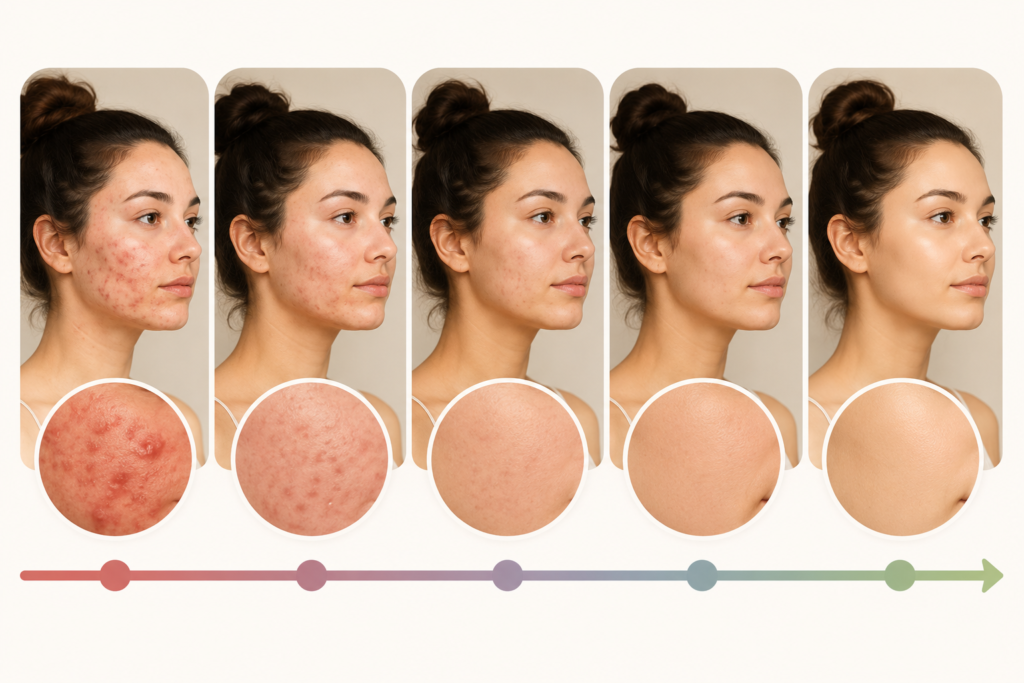
A typical Accutane timeline lasts approximately four to six months, but treatment may be shorter or longer depending on acne severity, response, side effects, the prescribed regimen, and the specific isotretinoin product. Dry lips and skin often begin early. Acne may temporarily worsen, but not everyone experiences a “purge.” Some people see improvement during the first two months, while others need longer.
Accutane is a former brand name for isotretinoin that is no longer sold in the United States, although people still commonly use the name. Isotretinoin is a prescription medication for severe acne and requires ongoing medical monitoring. This timeline describes general patterns and cannot predict an individual result or replace instructions from the prescriber.
Accutane Timeline at a Glance
There are no reliable percentages that every patient should reach during a particular month. Instead, look for an overall reduction in new inflammatory lesions while discussing progress and side effects with the prescribing clinician.
| Stage | What may happen | What to remember |
|---|---|---|
| Before treatment | Medical review, medication check, baseline laboratory testing, iPLEDGE enrollment, and pregnancy-prevention steps when applicable | Ask how to take the specific isotretinoin product and which symptoms require immediate attention. |
| Month 1 | Dry lips, dry skin, nasal dryness, eye irritation, sun sensitivity, or an early acne flare may begin. | A flare is possible but not guaranteed. Report severe or rapidly worsening acne. |
| Month 2 | Some people begin developing fewer inflammatory lesions, while others continue experiencing breakouts. | A slower response does not automatically mean treatment is failing. |
| Month 3 | Improvement may become easier to see, although dryness and other adverse effects can continue. | The prescriber may adjust treatment based on response and tolerability. |
| Months 4–5 | Many patients experience substantial clearing, but individual results vary. | Continue the medication exactly as prescribed even if the skin appears clear. |
| Month 6 and beyond | Some courses continue because of the prescribed regimen, ongoing acne, side effects, or treatment interruptions. | A longer course does not necessarily indicate failure. Never change the dose yourself. |
| After treatment | The skin may continue improving after the final dose, although some people eventually experience recurrence. | Follow all post-treatment pregnancy, blood-donation, skincare, and follow-up instructions. |
How Long Does Accutane Take to Work?
Some patients notice reduced oiliness or fewer inflammatory lesions during the first one or two months. For others, visible improvement may take two to three months. The American Academy of Dermatology explains that one course commonly lasts about four to five months, although a dermatologist may prescribe a shorter or longer course.
The treatment endpoint is not determined by the calendar alone. The prescriber considers the type and severity of acne, improvement, side effects, laboratory results, previous treatments, and the likelihood of recurrence.
Do not compare your progress with someone else’s photographs or change your dose to match another person’s timeline. Isotretinoin regimens must be selected and adjusted by the prescriber.
What Happens Before Starting Isotretinoin?
Before prescribing isotretinoin, a clinician generally reviews:
- The type, severity, and duration of the acne
- Previous acne treatments and how the skin responded
- Current medicines, vitamins, and supplements
- Personal and family medical history
- Mental-health history and current symptoms
- Liver health and cholesterol or triglyceride concerns
- Pregnancy potential and applicable iPLEDGE requirements
Baseline testing generally includes a fasting lipid profile and liver-function tests. Patients who can become pregnant must also complete the pregnancy testing required by the iPLEDGE REMS.
Telehealth may be an option where it is legally permitted and clinically appropriate. Readers researching that route can review this provider-specific explanation of how to get Accutane online from DermOnDemand. Regardless of the provider or appointment format, isotretinoin requires evaluation by a licensed prescriber, iPLEDGE enrollment, an authorized pharmacy, and appropriate medical monitoring.
Month 1: Dryness and Early Adjustment
Dry lips are among the most common early effects. Dry skin, nasal dryness, mild nosebleeds, dry eyes, headache, back discomfort, or joint and muscle aches may also occur. These symptoms can continue throughout treatment rather than disappearing after the first month.
Use a gentle cleanser, fragrance-free moisturizer, and a bland lip product such as petrolatum. Our guide to managing severely chapped lips provides additional general-care information.
Some patients experience an early increase in inflammatory acne. Others do not notice any worsening at all.
Months 1–2: Is the Accutane Purge Guaranteed?
No. “Accutane purge” is an informal term for an early acne flare, not a required stage of treatment. There is no dependable schedule showing exactly when a flare will start, peak, or end.
Contact the prescriber if acne becomes suddenly or severely worse, develops extensive painful nodules, begins crusting or ulcerating, or is accompanied by fever or significant illness. Do not increase, decrease, or stop the dose merely because a flare occurs unless the prescriber directs you to do so.
Avoid picking, squeezing, or attempting to drain lesions. These actions can increase inflammation and the risk of lasting marks or scars.
Months 2–3: When Improvement May Become Noticeable
During this stage, some patients notice fewer new breakouts, reduced oil production, or faster resolution of existing lesions. Other patients may still be waiting for a noticeable change. Both experiences can fall within a realistic isotretinoin timeline.
Dryness, sun sensitivity, muscle discomfort, or eye irritation may continue. Preservative-free lubricating eye drops may help some people with uncomplicated dryness, but persistent pain, visual changes, or difficulty wearing contact lenses should be discussed with an eye-care professional. Learn more about common causes and symptoms of dry-eye disease.
Months 4–6: Continued Clearing
Many patients experience substantial improvement during the later months of treatment. That does not mean every patient will be completely clear by month four, five, or six.
Continue attending follow-up appointments and taking the medication exactly as prescribed. Ending treatment early because the skin looks better may affect the overall result, while extending treatment without medical direction can increase risk.
Dark marks may remain after active acne improves. These marks are not necessarily permanent scars, and isotretinoin should not be presented as a direct treatment for established acne scarring.
Why Your Accutane Timeline May Be Different
Several factors can affect how quickly improvement occurs:
- Starting severity: Extensive nodular or truncal acne may take longer to control.
- Individual response: People respond to isotretinoin at different rates.
- Adverse effects: Side effects may require the prescriber to modify or temporarily interrupt treatment.
- Missed doses or dispensing delays: Interruptions can extend the calendar length of treatment.
- The prescribed regimen: Lower-dose courses may last longer and still require proper monitoring.
- The formulation: Isotretinoin products are not interchangeable, and their administration instructions may differ.
Some isotretinoin formulations have specific food instructions, while others may be taken with or without meals. Follow the directions for the exact product dispensed rather than assuming every isotretinoin capsule requires a fatty meal.
Monitoring During Isotretinoin Treatment
Follow-up commonly includes checking treatment response, side effects, new medications, and mental and physical symptoms. The prescriber may also order periodic lipid and liver-function tests. These tests are not necessarily performed monthly for every patient; the schedule depends on clinical circumstances, initial results, and the prescriber’s judgment.
Patients who can become pregnant have additional pregnancy-testing and monthly iPLEDGE requirements. Never obtain isotretinoin from a website that offers it without the required prescription and safety procedures.
Common Side Effects and Dryness Care
Common effects listed in isotretinoin prescribing information include:
- Dry or chapped lips
- Dry, peeling, or sensitive skin
- Dry eyes or eye irritation
- Dry nasal passages and nosebleeds
- Headache
- Back pain, joint aches, or muscle discomfort
- Increased susceptibility to sunburn
Hair thinning or shedding has also been reported. Readers concerned about this symptom can review our article examining whether Accutane can contribute to hair loss.
Practical Dryness Care
- Use a mild, fragrance-free cleanser and moisturizer.
- Apply a bland lip ointment frequently rather than waiting for painful cracking.
- Use broad-spectrum sunscreen with SPF 30 or higher and reapply as directed.
- Avoid exfoliating scrubs, peels, and other irritating products unless approved by the prescriber.
- Ask before combining isotretinoin with topical acne medicines.
- Discuss persistent eye dryness with the prescriber or an eye-care professional.
- Reduce activities that worsen significant muscle or joint pain and report persistent symptoms.
Symptoms to Report Promptly
Contact the prescriber immediately for new or worsening:
- Depression, unusual irritability, aggression, anxiety, hallucinations, or other significant behavioral changes
- Severe headache, especially with nausea, vomiting, blurred vision, or other visual symptoms
- Severe abdominal pain, rectal bleeding, or severe diarrhea
- Reduced night vision, persistent blurred vision, or other visual changes
- Hearing changes or ringing in the ears
- Severe muscle weakness, major exercise intolerance, or dark urine
- A widespread rash, blisters, peeling skin, or sores involving the mouth or eyes
- Yellowing of the skin or eyes or unusually dark urine
- Signs of an allergic reaction
Seek emergency help for difficulty breathing, severe facial or throat swelling, suicidal thoughts, a suicide attempt, or another immediate threat to safety. In the United States, call or text 988 for the Suicide & Crisis Lifeline or call 911 when there is immediate danger.
Reports of mood and behavioral symptoms are taken seriously. Whether a symptom is ultimately attributed to isotretinoin or another cause, it should not be ignored or treated as something the patient simply needs to “push through.”
Pregnancy Prevention and Current iPLEDGE Requirements
Isotretinoin is contraindicated during pregnancy because exposure can cause life-threatening birth defects and pregnancy loss. All patients receiving isotretinoin in the United States must enroll in the iPLEDGE REMS, although requirements differ according to pregnancy potential.
Patients who can become pregnant must follow the program’s pregnancy-testing and pregnancy-prevention requirements before, during, and after treatment. This generally includes two negative tests before treatment, testing before each monthly prescription, testing after the final dose and again one month later, and either using the required contraception or committing to continuous abstinence as defined by the program.
Current FDA rules require pretreatment pregnancy testing in a medical setting. A prescriber may permit testing outside a medical setting during or after treatment if appropriate safeguards are followed. Because requirements can change, patients should follow the current instructions supplied by their prescriber and iPLEDGE.
If pregnancy occurs or is suspected during treatment, stop taking isotretinoin and contact the prescriber immediately.
What to Avoid During Accutane Treatment
- Vitamin A supplements: Combining them with isotretinoin can increase vitamin A-related toxicity.
- Tetracycline antibiotics: Combining these medicines can increase the risk of intracranial hypertension. Tell every prescriber and pharmacist that you take isotretinoin.
- Unapproved acne products: Retinoids, exfoliating acids, benzoyl peroxide, and other active treatments may substantially increase irritation.
- Waxing and certain cosmetic procedures: Skin fragility can increase the risk of injury or scarring. Discuss the timing of waxing, laser procedures, dermabrasion, tattoos, and piercings with the dermatologist.
- Unprotected ultraviolet exposure: Use sunscreen, protective clothing, and shade, and avoid tanning beds.
- Blood donation: Do not donate during treatment or for one month after the final dose.
- Sharing medication: Never give isotretinoin to another person.
Alcohol may compound concerns involving triglycerides or liver health. There is no single amount that is safe for every patient, so discuss alcohol use directly with the prescriber. Our related article examines alcohol use while taking Accutane in greater detail.
After Accutane: What Happens Next?
Acne can continue improving after isotretinoin has been discontinued. Keep the post-treatment appointment and follow the prescriber’s instructions before restarting retinoids, exfoliating acids, benzoyl peroxide, or cosmetic procedures.
Patients who can become pregnant must continue following iPLEDGE pregnancy-prevention requirements for one month after the last dose. Blood donation also remains prohibited for one month after treatment.
Some people experience long-lasting remission, while others eventually develop recurrent acne. If a second course is appropriate, current prescribing information recommends waiting at least two months because improvement may continue after the first course ends.
Red marks and discoloration may fade gradually, but indented or raised scars often require separate evaluation. Treatment options depend on scar type and should be timed with a dermatologist. See our overview of acne-scar treatment and skin-texture improvement.
Accutane Timeline Frequently Asked Questions
How soon does Accutane start working?
Some people notice changes during the first one or two months, while others need two to three months before improvement becomes obvious. A complete course commonly lasts approximately four to six months but may be shorter or longer.
Does everyone experience an Accutane purge?
No. Some patients experience a temporary acne flare after starting isotretinoin, while others do not. A flare is not required for the medication to work.
Is it normal to still have acne during month three?
It can be. The absence of complete clearing by month three does not automatically mean the treatment has failed. The prescriber should evaluate progress rather than relying on a fixed online timeline.
Should isotretinoin always be taken with a fatty meal?
Not necessarily. Food instructions differ among isotretinoin products. Follow the directions printed for the exact medication dispensed and ask the pharmacist or prescriber if anything is unclear.
Can I change my dose to get faster results?
No. Higher exposure can increase adverse effects and is not appropriate for everyone. Only the prescriber should change the dose or treatment schedule.
What should I do if I miss a dose?
Follow the instructions supplied with the medication. Current isotretinoin labeling generally directs patients to skip a missed dose rather than taking two doses together, but confirm the instructions for the specific product.
Can isotretinoin be prescribed through telemedicine?
It may be available through telemedicine when permitted by licensing and prescribing rules. The patient must still be evaluated by a qualified prescriber and complete all applicable iPLEDGE, pharmacy, testing, and monitoring requirements.
Can someone take more than one course?
A second course may be considered when severe acne persists or returns. Current prescribing information recommends waiting at least two months after the first course because the skin may continue improving during that period.
The Bottom Line
An Accutane timeline is best viewed as a flexible progression rather than a guaranteed monthly schedule. Dryness often begins early, improvement may become visible over the first several months, and some courses continue beyond six months. Regular monitoring, current iPLEDGE compliance, pregnancy prevention when applicable, and prompt reporting of concerning mental or physical symptoms are essential throughout treatment.
For additional safety details, review the American Academy of Dermatology’s isotretinoin overview and the current FDA-approved isotretinoin prescribing information.
Other Articles You May Find of Interest...
- Glycolic Acid Serum: Benefits, Strengths, and Irritation Risks
- Dermatica Alternatives in 2026: How to Continue Prescription Skincare
- Can You Prevent Skin Tags From Forming?
- How Digital Tools Can Support Safer, More Efficient Cosmetics Purchasing
- Is a Breast Lift with Augmentation Right for Your Body Goals?
- Types of Facelifts and Nonsurgical Alternatives: Benefits, Risks, and Limitations
- How AI Is Changing Melanoma Awareness and Early Skin Checks