More Beauty Skin Care & Gorgeous Smiles Articles
Palmar Erythema: Causes of Red Palms
By Your Health Magazine Health Information Team
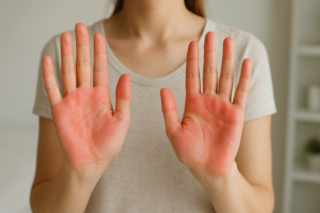
Palmar erythema is persistent redness of the palms caused by increased blood flow through small surface blood vessels. It is often painless and harmless, particularly during pregnancy or when it runs in families. However, it can sometimes be associated with liver disease, autoimmune disorders, thyroid problems, certain medications, or other medical conditions. Red palms alone cannot identify the cause, so persistent or unexplained changes should be discussed with a healthcare professional.
What Does Palmar Erythema Look and Feel Like?
Palmar erythema typically affects both hands in a similar pattern. The redness is often most noticeable over the fleshy areas below the thumb and little finger, although it may extend to the fingertips or other parts of the palm.
Typical features include:
- Red, deep pink, or reddish-purple discoloration, depending on skin tone
- A symmetrical appearance on both palms
- Skin that may feel slightly warm
- Redness that temporarily fades when pressed, known as blanching
- Little or no itching, pain, scaling, or swelling
The color may become more noticeable with warmth, exercise, emotional stress, or when the hands hang downward. It may fade somewhat when the hands are raised. These characteristics reflect dilation of small blood vessels near the skin’s surface. A detailed overview of the typical appearance and associated conditions is available from DermNet’s palmar erythema resource.
Common Causes of Red Palms
Healthcare professionals generally divide palmar erythema into primary and secondary forms. Primary palmar erythema occurs without an underlying illness, while secondary palmar erythema is associated with another condition or exposure.
Primary Palmar Erythema
- Pregnancy: Hormonal and circulatory changes can make the palms appear red. The discoloration commonly improves after delivery.
- Inherited palmar erythema: Some people have naturally red palms that begin early in life and may affect other family members.
- Idiopathic palmar erythema: Sometimes no specific cause is found despite an appropriate evaluation.
Secondary Palmar Erythema
Conditions that may be associated with palmar erythema include:
- Liver disease: Palmar erythema is sometimes seen with cirrhosis and other chronic liver disorders. Nevertheless, most people with red palms do not necessarily have liver disease, and many people with liver disease do not develop red palms.
- Autoimmune and inflammatory disease: Rheumatoid arthritis and some other connective-tissue disorders may affect circulation in the palms.
- Thyroid disease: An overactive thyroid can increase warmth, sweating, and blood flow to the skin.
- Metabolic conditions: Diabetes and certain nutritional or iron-related disorders have been associated with palmar redness.
- Infections or chronic illness: A clinician may consider these possibilities when other symptoms or risk factors are present.
- Medications: Some prescription drugs can contribute to palmar erythema directly or in connection with changes in liver function.
Do not stop a prescribed medication because your palms appear red. Contact the prescribing professional or pharmacist for guidance.
Red Palms Do Not Always Mean Palmar Erythema
Several skin reactions can resemble palmar erythema but produce different symptoms. The distinction matters because these conditions are evaluated and treated differently.
| Possible cause | Typical clues |
|---|---|
| Palmar erythema | Usually affects both palms, blanches with pressure, and causes little or no itching, scaling, or pain |
| Hand eczema or contact dermatitis | Often itchy, dry, cracked, scaly, blistered, or painful; may follow exposure to soap, chemicals, gloves, or frequent handwashing |
| Temporary flushing | Appears after heat, exercise, pressure, or strong emotion and resolves when the trigger passes |
| Hand-foot syndrome | May cause painful redness, burning, swelling, peeling, or blisters during treatment with certain cancer medicines |
| Skin infection | May be painful, swollen, increasingly warm, or limited to one hand and may occur with fever or drainage |
The American Academy of Dermatology describes how hand eczema can cause red, dry, itchy, cracked, or blistered skin. Those surface changes are less typical of uncomplicated palmar erythema.
How the Cause Is Evaluated
A healthcare professional will first examine the distribution of redness and determine whether it blanches with pressure. The evaluation may include questions about when the change began, whether it affects both hands, pregnancy, family history, medication use, alcohol intake, workplace exposures, and symptoms involving the skin, joints, thyroid, or liver.
Testing is not identical for everyone. Depending on the findings, a primary care professional or dermatologist may consider:
- A complete blood count
- Liver enzyme, bilirubin, albumin, and kidney function tests
- Thyroid testing
- Blood glucose testing
- Hepatitis testing when risk factors are present
- Iron studies or tests for autoimmune disease
An abnormal liver enzyme result must be interpreted with other laboratory findings and the person’s medical history. This explanation of what an ALT level of 70 may mean discusses why one liver test cannot establish a diagnosis by itself.
Does Palmar Erythema Go Away?
The outlook depends on the cause. Pregnancy-related redness commonly improves after pregnancy, while inherited palmar erythema may remain throughout life without causing harm. When another condition is responsible, treating that condition may reduce the redness, although the palms do not always return completely to their previous color.
There is usually no specific skin treatment for primary palmar erythema. Moisturizers may help if dryness is also present, but they do not correct blood-vessel dilation. Treatment should focus on an identified underlying condition rather than the color of the palms alone. The MedlinePlus health topics directory provides reliable consumer information about many conditions that may be considered during an evaluation.
When to Seek Care
Schedule a routine appointment with a primary care professional or dermatologist if the redness is persistent, new, unexplained, or accompanied by joint pain, tremor, unexplained weight change, fatigue, abdominal swelling, easy bruising, or other health changes.
Seek prompt medical attention if red palms occur with yellow skin or eyes, confusion, vomiting blood, black stools, severe abdominal swelling, or other possible signs of advanced liver disease. The National Institute of Diabetes and Digestive and Kidney Diseases outlines additional symptoms that may occur with cirrhosis.
Urgent evaluation is also appropriate for rapidly spreading redness, severe pain, fever, pus, significant swelling, widespread blisters or peeling, facial swelling, or difficulty breathing. People receiving chemotherapy, targeted therapy, or immunotherapy should report new painful redness, tingling, peeling, or blistering of the hands to their cancer care team promptly.
This information is intended for general education and does not replace an examination or individualized medical advice.
Other Articles You May Find of Interest...
- Palmar Erythema: Causes of Red Palms
- Breast Lift Scars: Incision Types, Healing Timeline and What Affects the Final Result
- Why Does the Jawline Look Square? Understanding the Masseter Muscle and Non-Surgical Options
- How Rhinoplasty Can Improve Both Aesthetics and Breathing
- Beyond Wrinkles: The Medical Benefits of Facial Botox
- What USDA Certified Organic Means on a Skincare Label, and How to Check a Brand’s Claim
- 5 Facial Eczema Signs That Deserve Clinical Attention