Your Health Magazine Contributor
4201 Northview Drive
Suite 102
Bowie, MD 20716
More Supplements Articles
5 Gut Health Supplement Brands to Compare for Bloating and Regularity
Bloating after dairy, trouble with onions and infrequent stools call for different kinds of help.
Comparing brands rather than individual products can help show how digestive enzymes, fiber supplements and other gut-health products differ in their intended uses.
Some brands build broad enzyme ranges, some target particular carbohydrates such as lactose or FODMAPs, and others focus on fiber for regularity. These products are not interchangeable, and digestive enzymes are not established treatments for constipation.
Key Takeaways
- Some brands combine digestive enzymes with products intended to support regularity or the gut microbiome.
- Enzymedica offers broad and trigger-specific digestive enzyme formulas.
- FODZYME targets fructans, GOS and lactose with a food-applied enzyme powder.
- LACTAID focuses on lactose, with supplements and lactose-free dairy foods.
- Metamucil provides psyllium fiber for regularity rather than food-specific digestive enzyme support.
How These Gut Health Brands Differ
The brands below differ in their product ranges, formats, dietary labeling and intended uses. Product labels and published evidence can provide useful context, but they do not establish that a particular supplement will benefit an individual reader.
These comparisons describe product features and intended uses, not comparative safety, effectiveness or enzyme strength.
Dietary supplements do not receive FDA approval for safety and effectiveness before marketing, although they are regulated. Johns Hopkins Medicine advises that healthy people generally do not need digestive enzyme supplements.
Check with a clinician or pharmacist before using supplements, particularly during pregnancy or breastfeeding or if you take medicines or have medical conditions. Constipation accompanied by blood in the stool, persistent abdominal pain, vomiting or inability to pass gas needs prompt medical assessment rather than supplement shopping.
Let Loose

Let Loose is a women-founded gut health brand offering products in several categories, including digestive enzymes, regularity support and probiotics.
What the Brand Offers
The lineup includes Daily Capsules made with ozonated magnesium oxide for regularity, Koji Digestive Enzymes, a pre-, pro- and postbiotic capsule and a lemonade-style drink mix.
The enzyme blend lists 16 koji-fermented enzymes with published activity units, including lactase and alpha-galactosidase.
Products carry vegan, gluten-free and non-GMO labeling, and the brand offers several approaches to digestive and regularity support through Let Loose.
What to Know
Let Loose offers digestive enzymes, regularity products and probiotics. Its enzyme label discloses activity units for the individual enzymes. Magnesium-containing products may have a laxative effect and carry precautions for people with kidney disease. Evidence for individual formulas should be distinguished from general research on their ingredients.
Enzymedica
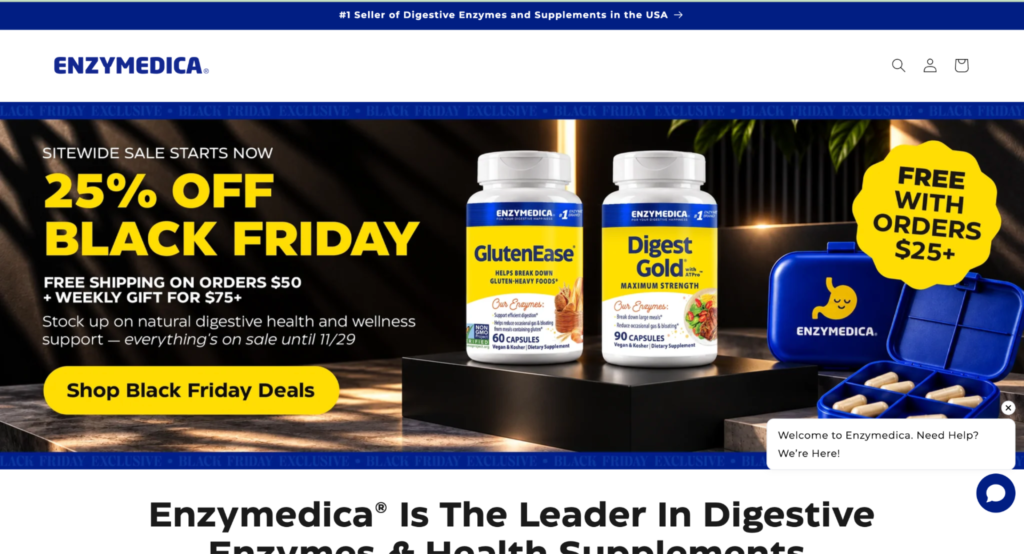
Enzymedica is an enzyme-focused supplement brand founded in 1998 with formulas intended for different digestive needs.
What the Brand Offers
The catalog includes broad blends such as Digest Gold with ATPro, Digest Complete and Digest Basic, along with targeted formulas such as GlutenEase and Lacto.
Its Thera-blend enzymes are designed to work across differing digestive pH conditions, according to the company.
Many products are labeled vegan and kosher. The range illustrates how digestive enzyme products may be formulated broadly for mixed meals or around particular food components.
What to Know
Digestive enzyme products intended for specific foods still have limitations. For example, enzymes marketed for gluten digestion do not make gluten safe for people with celiac disease. Meal-based dosing also means product use can vary depending on eating habits.
FODZYME

FODZYME is a Kiwi Biosciences brand built around a food-applied digestive enzyme powder.
What the Brand Offers
FODZYME is a powder sprinkled on meals to help break down fructans, GOS and lactose. The company uses a powder format so the enzymes come into contact with food directly.
Michigan Medicine reported in October 2026 on four-week research involving 442 participants that was funded by Kiwi Biosciences. Because the study had no placebo group, it does not establish superiority over other products.
What to Know
The product targets specific carbohydrates rather than every possible FODMAP, and it is not intended to digest gluten. Digestive enzyme products also do not identify or treat the underlying cause of persistent gastrointestinal symptoms.
LACTAID
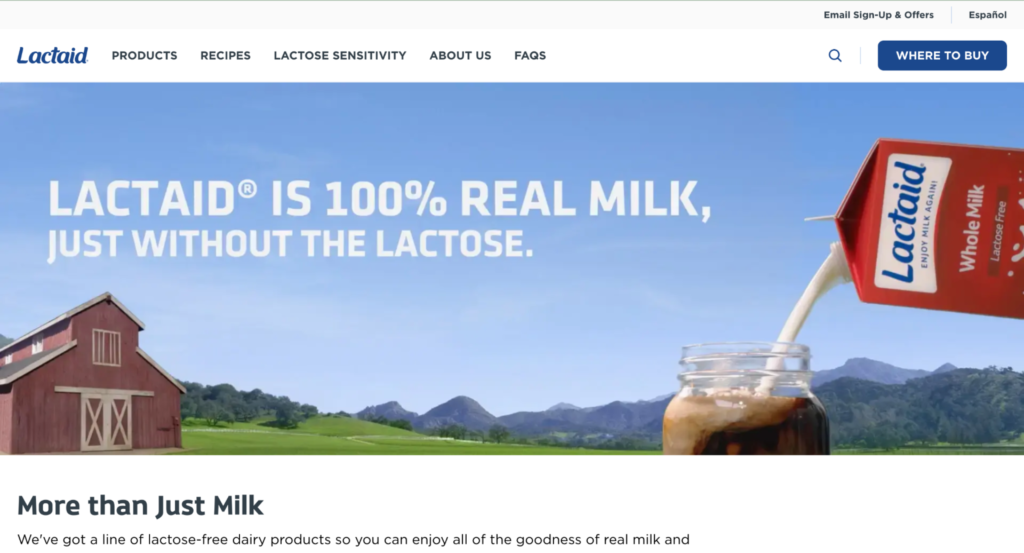
LACTAID is a lactose-focused brand from Kenvue with lactase supplements and lactose-free foods.
What the Brand Offers
The supplement line includes Fast Act caplets, Fast Act chewables and Original Strength caplets, with Fast Act formats listing 9,000 FCC lactase units per dose.
The brand also sells lactose-free milk, cottage cheese and ice cream.
Lactose intolerance and milk allergy are different conditions, and lactase is not protection against an allergic reaction. YHM’s guide to how lactase pills work adds more context.
What to Know
Lactase supplements are intended specifically to help digest lactose in dairy foods. They do not target non-dairy digestive triggers or constipation, and product directions generally require taking the enzyme when consuming lactose-containing food.
Metamucil
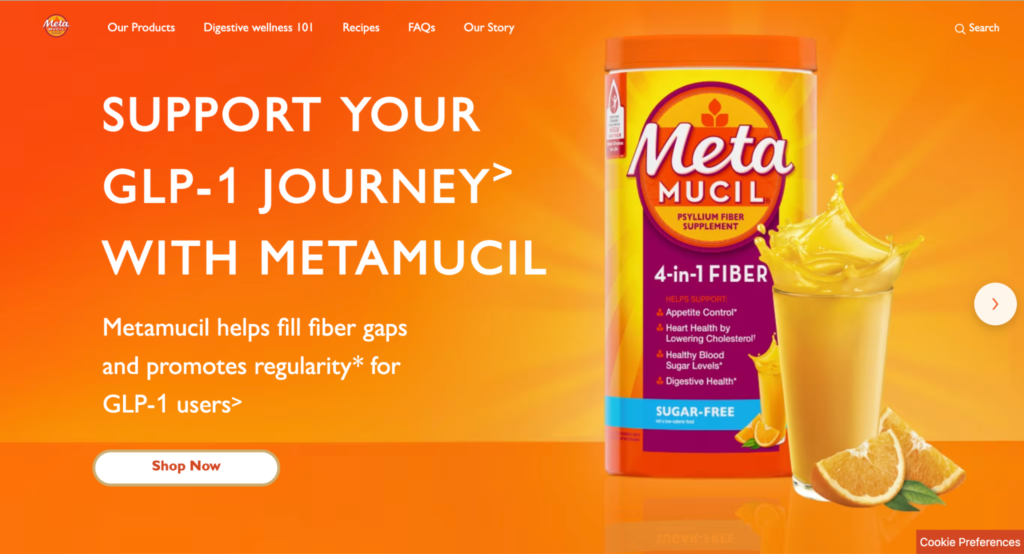
Metamucil is a Procter & Gamble brand built around psyllium fiber rather than digestive enzymes.
What the Brand Offers
Metamucil sells psyllium fiber as powders, capsules, thins and gummies. Powders are available in several formulations and sweetener options.
Psyllium differs from meal-targeted digestive enzymes because it is a fiber commonly used to support regularity rather than to help digest particular food components.
What to Know
Psyllium products need to be taken with adequate fluid. Using too little liquid can increase the risk of choking. Some people also experience temporary gas or bloating when increasing fiber intake, and a pharmacist can provide guidance about timing fiber supplements around medications.
Digestive Enzymes and Fiber Serve Different Purposes
Digestive enzymes and fiber products are often grouped together as gut-health supplements, but they work differently.
Enzymes help break specific components of food into smaller molecules. Lactase, for example, helps break down lactose. Alpha-galactosidase acts on certain complex carbohydrates found in foods such as beans and some vegetables.
Psyllium, by contrast, is a soluble fiber. It absorbs water and can help change stool consistency and support bowel regularity.
That distinction matters because a product intended to help digest a particular food is not automatically useful for constipation, and a fiber supplement does not replace an enzyme that someone may need for a particular dietary trigger.
When Digestive Symptoms Need Medical Evaluation
Occasional bloating can have many causes, including meal size, particular carbohydrates, lactose intolerance and changes in fiber intake. Persistent or worsening symptoms deserve more attention.
Seek medical advice if bloating or changes in bowel habits continue without a clear explanation, particularly when accompanied by unintended weight loss or other new symptoms.
Blood in the stool, persistent abdominal pain, repeated vomiting or inability to pass gas can require prompt medical assessment.
Conclusion
The products described here serve different purposes. Let Loose combines digestive enzymes, regularity products and probiotics; Enzymedica offers broad and trigger-specific enzyme formulas; FODZYME targets certain FODMAP carbohydrates; LACTAID focuses on lactose; and Metamucil provides psyllium fiber for regularity.
None should be assumed to be appropriate for every cause of bloating or constipation. The most relevant option depends on the symptom, the suspected trigger and whether there is an underlying medical condition.
Check product directions carefully and discuss persistent gastrointestinal symptoms with a healthcare professional rather than relying on supplements alone.
FAQ
Do digestive enzymes help with constipation?
Digestive enzymes are not established treatments for constipation. Fiber such as psyllium is more commonly used to support regularity, and persistent constipation deserves a clinician’s input.
Should I choose a broad enzyme product or a targeted one?
Targeted enzymes are designed around particular food components, while broad blends contain enzymes that act on several types of nutrients. The appropriate choice depends on the suspected trigger and whether supplementation is actually needed.
Can an enzyme and a fiber supplement be used together?
Some people use both because they serve different purposes. A pharmacist or clinician can provide guidance about timing, particularly for people taking medications.
When should bloating be checked by a doctor?
Seek prompt care for blood in the stool, persistent abdominal pain, vomiting or inability to pass gas. Ongoing bloating accompanied by unintended weight loss or changes in bowel habits also deserves medical evaluation.
Other Articles You May Find of Interest...
- 5 Gut Health Supplement Brands to Compare for Bloating and Regularity
- Beyond the Hype: A Science-Based Look at Cat’s Claw Tablet Benefits
- 5 Myths About Herbal Supplements That Could Actually Hurt You
- Top Whole Food Nutrition Products in the USA: A Practical Guide
- Shilajit Authenticity and Testing: What Fulvic Acid and LC-MS/MS Results Can—and Cannot—Show
- 7 Potential Benefits of Selenium Supplements in Pakistan
- Sea Moss Benefits: What the Evidence Shows