Your Health Magazine Contributor
4201 Northview Drive
Suite 102
Bowie, MD 20716
More Hair Care Articles
Thinning Hair After 40: What Actually Works (Minoxidil, Finasteride, Red Light Therapy and More)

Key takeaways
• More than 80 million people in the United States are affected by hair loss.
• The cause decides the treatment. Pattern hair loss, shedding after stress, low iron and thyroid problems all need different approaches.
• Topical minoxidil is the best-established first option for pattern hair loss. Results usually take about 6 to 12 months.
• Red light caps, microneedling and prescription medicines can be added. Compare device specifications before you buy.
• See a dermatologist if you notice sudden shedding, bald patches or scalp pain.
Has your hair part started to look wider, your ponytail thinner, or your scalp more visible in photos? You are not alone. More than 80 million people in the United States are affected by hair loss, according to a 2024 review in American Family Physician.
Hair thinning after 40 can affect both women and men. It is not always a reason to accept further hair loss. Some causes can be treated, and others respond well to options such as minoxidil, light therapy or prescription medicines. This guide covers the main causes, the treatments with research behind them, and what to check before you spend money on a hair-loss product.
Why Does Hair Get Thinner After 40?
Age, genetics, hormone changes, health conditions and daily habits can all play a part. Finding the cause matters, because each type of hair loss may need a different approach.
Hormone Changes and Menopause
Hormone levels change with age. In women, thinning often becomes more noticeable during perimenopause and after menopause. Lower estrogen levels may play a part, but genetics also has a strong role in female pattern hair loss.
One study of 178 postmenopausal women found that 52.2% had signs of female pattern hair loss. This was a study of one group, so the figure should not be read as the rate for all women.
Genetic (Pattern) Hair Loss in Women and Men
Pattern hair loss, also called androgenetic alopecia, is the most common type after 40. It usually develops slowly.
• Women: Hair becomes thinner across the top of the scalp, and the middle part looks wider.
• Men: Hair loss often starts at the temples or crown and may cause a receding hairline.
A family history of hair loss increases the chance of pattern hair loss. A dermatologist can check whether your hair loss follows a typical pattern.
Stress and Sudden Hair Shedding
Major stress, illness, surgery or rapid weight loss can trigger temporary shedding called telogen effluvium. It often starts a few months after the event.
Common triggers include:
• A serious illness or high fever
• Surgery
• Emotional stress
• Rapid weight loss or a major change in diet
• Starting or changing certain medicines
You may notice more hair on your pillow, brush or shower floor. This type of shedding often improves once the trigger has passed.
Low Iron, Vitamin D or Protein
Your body needs enough nutrients to support normal hair growth. Low iron, vitamin D, zinc or protein may affect hair health, and people with restricted diets have a higher risk of deficiencies. A doctor can arrange blood tests. Supplements are most useful when a deficiency is confirmed.
Thyroid Problems and Other Health Conditions
Thyroid problems can disturb the normal hair growth cycle. Other possible causes include autoimmune conditions, PCOS and scalp disorders. Unusual tiredness, weight changes or skin changes alongside hair loss are worth mentioning to your doctor. These signs do not prove a health condition is the cause, but a medical check can find out.
Traction Alopecia From Tight Hairstyles
Tight ponytails, braids, buns and heavy extensions can pull on hair roots and damage follicles over time. Early signs include short broken hairs and scalp discomfort. Switching to looser styles reduces further pulling. Long-term damage can cause lasting hair loss.
Medication-Related Hair Loss
Some medicines, including certain treatments for blood pressure and depression, can cause shedding as a side effect. It may begin after starting a new medicine or changing a dose. Do not stop a prescribed medicine yourself. Ask your doctor whether it could be linked to your hair loss and whether another option is available.
Hair Shedding vs. Hair Breakage
• Shedding: Full-length hairs fall from the scalp. Common causes are genetics, stress, illness and health conditions.
• Breakage: Hair snaps into shorter pieces. Common causes are heat styling, bleaching, chemical treatments and rough brushing.
Knowing the difference helps you choose the right care.
Early Signs of Hair Thinning After 40
Hair loss rarely starts with bald patches. It usually begins with small changes:
• A wider middle part
• A thinner ponytail
• Less volume around the crown
• More visible scalp
• A receding hairline
• More hair falling out than usual
Taking photos every few weeks, with similar lighting, angles and hairstyles, helps you track changes fairly.
How Do You Know What Is Causing Your Hair Loss?
A dermatologist can examine your scalp and review your medical history, diet, medicines, family history and recent health changes. Tests may include:
1 Scalp examination: Checks for thinning, redness, scaling and irritation.
2 Hair-pull test: Checks how easily hairs come loose.
3 Blood tests: May check iron levels, thyroid function or other markers.
4 Scalp biopsy: A small sample may be taken in certain cases.
Treatment Options for Thinning Hair After 40
For pattern hair loss, topical minoxidil is the best-established first option. Red light therapy and microneedling can be used at home, and oral minoxidil, finasteride, spironolactone, PRP and hair transplants are options to discuss with a dermatologist. The right choice depends on the cause, your health and your goals.
Topical Minoxidil
Topical minoxidil is a non-prescription treatment for pattern hair loss in women and men. It comes as a liquid or foam in 2% and 5% strengths. Some products are applied once a day and others twice, so follow the label or your doctor’s advice. Some people notice extra shedding in the first few weeks, which usually settles.
The American Academy of Dermatology says results usually take about 6 to 12 months to show, and regular use is needed to keep them.
Red Light Therapy (Low-Level Light Therapy)
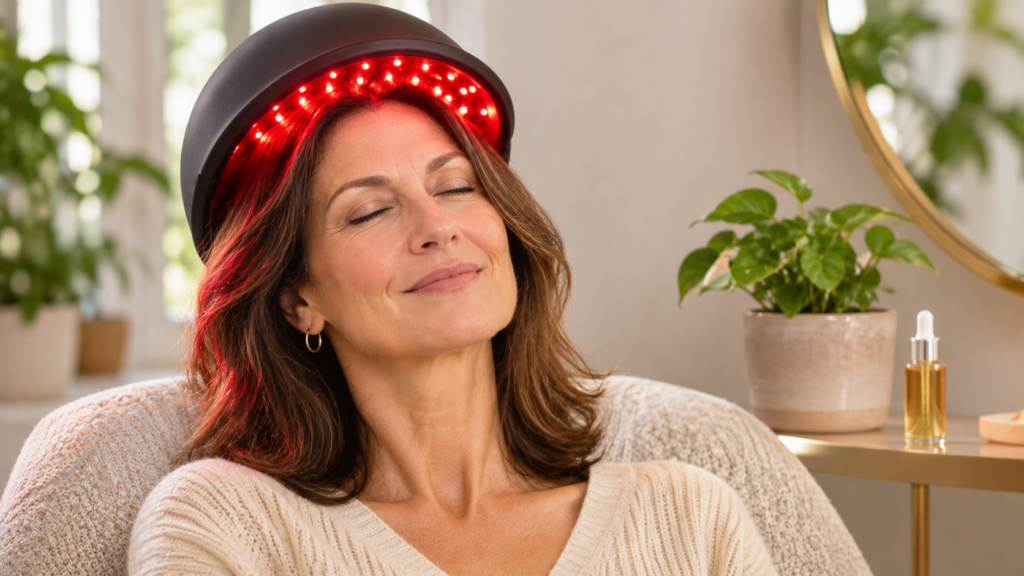
Low-level light therapy (LLLT) uses red or near-infrared light from caps, helmets or combs. The light is thought to stimulate energy production in hair follicle cells. A 2025 review of 38 studies involving 3,098 people found that hair density increased significantly in people with androgenetic alopecia after 4 to 26 weeks of light therapy, compared with placebo. Results vary between devices and treatment plans, and many people use light therapy alongside minoxidil or other treatments.
Because devices differ, the specifications matter: the wavelength, the light output at the scalp (mW/cm²) and the dose per session (J/cm²). Some at-home caps publish all three. The Folliq red light cap, for example, uses 650–660 nm red and 850 nm near-infrared LEDs and lists about 5 mW/cm² at the scalp, or about 3 J/cm² in a 10-minute session. It is cordless, so a session fits easily into a normal morning or evening.
Microneedling
Microneedling uses a dermaroller or derma pen with very fine needles to make tiny punctures in the scalp. In a 12-week trial, people who combined weekly microneedling with 5% minoxidil gained more hair than people using minoxidil alone. Ask a dermatologist about needle length and hygiene before trying it at home.
Oral Minoxidil
Low-dose oral minoxidil is now widely prescribed off-label for pattern hair loss, often because a daily tablet is easier to keep up than a liquid or foam. Possible side effects include unwanted facial or body hair, dizziness, fluid retention, a faster heartbeat and changes in blood pressure. It needs a prescription and medical supervision.
Finasteride and Dutasteride
Finasteride is a prescription medicine mainly used for male pattern hair loss. It blocks the enzyme that converts testosterone into DHT, a hormone linked to follicle shrinkage. Many men tolerate it well, but some report sexual side effects or mood changes. Dermatologists sometimes prescribe finasteride or the related medicine dutasteride off-label to women after menopause. Neither should be used by women who are pregnant or may become pregnant, because they can harm a developing male fetus.
Spironolactone
Spironolactone may be prescribed off-label for women with pattern hair loss. It reduces the effect of hormones that can play a part in thinning. Possible side effects include dizziness, menstrual changes, breast tenderness and changes in potassium levels. It is not suitable during pregnancy, and a doctor will review your health history first.
Platelet-Rich Plasma (PRP)
PRP uses platelets from your own blood, which are processed and injected into the scalp. Some studies suggest it may improve hair density in pattern hair loss, but results and treatment plans vary between clinics. It usually needs several sessions and repeat treatments. Ask about the provider’s training, costs and possible side effects.
Hair Transplantation
A hair transplant moves follicles from one area of the scalp to another. It may suit people with pattern hair loss who have enough donor hair. Before choosing surgery, consider the surgeon’s qualifications, expected results, recovery time and possible side effects. A transplant does not stop other areas from thinning later.
Comparing the Options
Treatment
Main use
What to know
Topical minoxidil
Pattern hair loss in women and men
Daily use; results in about 6–12 months
Red light therapy
Pattern hair loss, at home
Check wavelength, output and dose; use consistently
Microneedling
Pattern hair loss, often with minoxidil
Weekly; ask about needle length and hygiene
Oral minoxidil
Pattern hair loss
Prescription and medical supervision
Finasteride/dutasteride
Mainly men; some women after menopause
Prescription; not for use in pregnancy
Spironolactone
Women with pattern hair loss
Prescription; not for use in pregnancy
PRP
Selected cases
Several sessions and repeat treatments
Hair transplant
Selected cases
Surgery; other areas can keep thinning
Nutrition changes
Confirmed deficiencies
Helps when diet is part of the cause
Nutrition, Diet and Stress
Foods That Support Healthy Hair
A balanced diet supports normal hair growth. Include foods that provide:
• Iron: Lentils, beans, spinach and meat
• Vitamin D: Fatty fish, egg yolks and fortified foods
• Zinc: Meat, chickpeas, nuts and seeds
• Protein: Eggs, fish, chicken, yogurt and beans
Biotin supplements are unlikely to help if you already get enough, and high doses can interfere with some blood test results. Tell your doctor if you take them.
Can Dieting Cause Hair Loss?
Yes. Crash diets, rapid weight loss and very low protein intake can trigger shedding. To protect your hair while losing weight, avoid extreme diets, eat enough protein, include fruit and vegetables, and speak with a doctor if shedding starts after major weight loss.
Managing Stress
Regular sleep, balanced meals, walking and time for relaxing activities support general health and may reduce some stress-related shedding triggers. They work best alongside, not instead of, medical treatment when one is needed.
Everyday Hair and Scalp Care
Good hair care cannot reverse pattern hair loss, but it reduces breakage and helps hair look healthier:
• Use a mild shampoo and conditioner.
• Brush gently.
• Limit heat styling and harsh chemical treatments.
• Choose products that suit your scalp.
Can Hair Loss Shampoos Help?
Some shampoos make hair look fuller or improve scalp comfort. Ketoconazole shampoo (1–2%), used two or three times a week, is often added to hair-loss routines, especially when dandruff or scalp irritation is present. Shampoo alone cannot usually treat pattern hair loss. See a dermatologist if itching, redness or scaling continues.
Ways to Make Thinning Hair Look Fuller
Treatments take months, so cosmetic options can help in the meantime:
• Hair fibers: Cling to existing hair and cover thin areas.
• Scalp powders: Make visible scalp less noticeable.
• Volumizing products: Add lift and body.
• A suitable haircut: Creates the look of fuller hair.
• Wigs and hairpieces: Provide extra coverage.
Can Thinning Hair After 40 Grow Back?
Often, yes, when the cause is temporary. Hair usually starts to grow back once stress, illness, a medicine change or a nutritional problem has been addressed, although regrowth can take several months. Pattern hair loss is ongoing, but treatment can slow it and improve hair density for many people. Permanent follicle damage, for example from long-term traction, may limit regrowth. A dermatologist can explain what results are realistic for you.
What to Check Before Buying a Red Light Hair Cap
At-home red light devices come in many styles and price ranges. Use this checklist rather than relying on marketing claims:
• Wavelengths: Look for the listed red and near-infrared wavelengths.
• Light output and dose: Check mW/cm² at the scalp and J/cm² per session.
• Treatment schedule: See how often and how long it should be used.
• Evidence: Look for studies on the device or on devices with similar settings.
• Safety: Read the warnings and instructions.
• Cost: Check the price, warranty and return policy.
Folliq, for example, sells its cap for $199 and lists its wavelengths, light output, session time and dose, so you can compare it with other devices before you buy.
When Should You See a Dermatologist?
Seek medical advice if you notice:
• Sudden or heavy shedding
• Bald patches
• Scalp pain, itching, redness or scaling
• Thinning that keeps getting worse
How to Prepare for Your Appointment
1 Note when the hair loss started.
2 Bring photos of your scalp.
3 List your medicines and supplements.
4 Mention recent illness, stress or weight changes.
5 Share any family history of hair loss.
Final Thoughts
Hair thinning after 40 has many possible causes, and the right treatment starts with finding yours. Topical minoxidil has the strongest track record for pattern hair loss. Red light therapy and microneedling are research-backed options you can add at home, and prescription treatments are available through a dermatologist. Good nutrition and gentle hair care support everything else.
References
1 Hair Loss: Diagnosis and Treatment. American Family Physician. 2024;110(3):243-250. aafp.org
2 Prevalence of female pattern hair loss in postmenopausal women: a cross-sectional study. Menopause. 2022. PubMed 35357365
3 Perez SM, et al. Low-Level Laser and LED Therapy in Alopecia: A Systematic Review and Meta-Analysis. Dermatologic Surgery. 2025. doi:10.1097/DSS.0000000000004442
4 Dhurat R, et al. A randomized evaluator blinded study of effect of microneedling in androgenetic alopecia: a pilot study. International Journal of Trichology. 2013;5(1):6-11. PubMed 23960389
5 American Academy of Dermatology. Hair loss: Diagnosis and treatment. aad.org
6 American Academy of Dermatology. Thinning hair and hair loss: Could it be female pattern hair loss? aad.org
Other Articles You May Find of Interest...
- Thinning Hair After 40: What Actually Works (Minoxidil, Finasteride, Red Light Therapy and More)
- Hair Transplant Without Shaving: Who Is It Suitable For?
- Copper Peptides for Hair Growth: What the Evidence Says About Today’s Serums
- Building a Hair Care Routine With Kérastase Hair Oil for Smoothness
- How Many Inches Does Hair Grow in a Year?
- Hair Transplants Explained: What to Know Before Considering Surgery
- What Scalp Micropigmentation Can and Cannot Do for Visible Scalp and Hair Loss