




More Podiatry Foot Care Articles
How to Soften a Foot Callus Without Damaging the Skin
By Your Health Magazine Health Information Team
To soften a callus on your foot safely, soak the area in warm water for about five to 10 minutes, gently rub away a small amount of dead skin with a wet pumice stone, and apply a moisturizer afterward. Do not cut, shave, or aggressively scrape the callus. Most importantly, reduce the pressure or friction that caused it so the thickened skin does not quickly return.
A Safe Step-by-Step Method
Home care may be reasonable for a mild callus if the skin is intact and you do not have diabetes, reduced feeling in your feet, poor circulation, or another condition that interferes with healing.
- Inspect the area first. Do not file a spot that is bleeding, cracked, blistered, red, swollen, draining, or unusually painful. If you are unsure whether the thickened area is a callus, have it examined before treating it.
- Soften the skin. Place the foot in warm—not hot—water for five to 10 minutes. A shower or bath can also soften the area. Long, frequent soaking is unnecessary and may dry the surrounding skin.
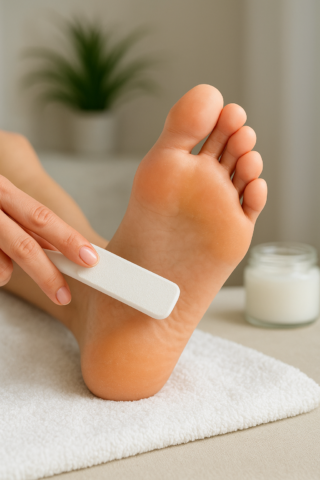
- File very gently. Wet a pumice stone and move it over the callus using light circular or sideways motions. Remove only a thin surface layer. Stop if the area becomes tender, pink, or irritated. The American Academy of Dermatology provides additional guidance on treating corns and calluses without injuring the skin.
- Rinse and dry thoroughly. Pat the foot dry, including between the toes.
- Moisturize the callused area. Apply a thick, fragrance-free foot cream or lotion. Do not place moisturizer between the toes, where trapped moisture may encourage skin infection.
- Repeat gradually. Calluses should be reduced over time rather than removed in one session. Stop home treatment if the skin becomes sore or damaged.
Which Moisturizers Can Help?
Regular moisturizing reduces dryness and makes thick skin more flexible. A plain cream or petroleum jelly may be enough for a mild callus. Products containing urea or ammonium lactate can provide additional softening for rough, thickened skin.
Some callus creams, liquids, and medicated pads contain salicylic acid, which breaks down thickened skin. These products can also irritate or burn healthy skin if applied incorrectly. Choose only a product specifically labeled for corns or calluses, follow its directions, and keep it off normal surrounding skin.
Do not apply salicylic acid to irritated, infected, reddened, cracked, or open skin. Official callus-remover labeling on DailyMed also warns people with diabetes or poor circulation not to use certain medicated patches. Ask a physician or podiatrist before using any chemical callus remover if you have a condition that places your feet at higher risk.
What Not to Do
- Do not use razors, knives, scissors, nail clippers, or callus shavers. Cutting too deeply can cause bleeding, wounds, and infection.
- Do not peel or pull the callus. This can tear living skin along with the dead surface layer.
- Do not file until the skin feels raw. Pain is a warning that you may be damaging healthy tissue.
- Do not use medicated removers on broken or inflamed skin.
- Do not ignore the source of pressure. Softening the skin alone will not solve a callus caused by tight shoes or repeated rubbing.
Take Pressure Off the Callus
A foot callus is the skin’s response to repeated pressure or friction. It commonly develops under the heel or ball of the foot, along the side of the big toe, or over another weight-bearing area. The callus is likely to return unless that pressure is corrected.
- Wear shoes with enough room for your toes and adequate cushioning under the foot.
- Avoid shoes that pinch, slide, or repeatedly rub the same area.
- Wear clean, cushioned socks that fit without bunching.
- Consider non-medicated pads or insoles that redistribute pressure rather than placing direct pressure on the callus.
- Replace worn shoes whose soles or insoles no longer provide even support.
Recurring calluses may be related to the way you walk, a prominent bone, or a change in foot structure. A podiatrist can evaluate footwear and determine whether padding, an insole, or another form of pressure relief may help.
When Home Callus Care May Be Unsafe
Do not attempt to thin or chemically remove a callus without professional guidance if you have diabetes, peripheral neuropathy, poor circulation, reduced sensation, a history of foot ulcers, or difficulty seeing or reaching your feet. These conditions can make it harder to notice an injury and may delay healing.
The CDC advises people with diabetes not to remove corns or calluses themselves because over-the-counter products and cutting can injure the skin. Its guidance on protecting the feet when you have diabetes also recommends daily checks for calluses, blisters, sores, redness, and swelling.
Blood flow is an important part of foot health. If you have concerns about circulation, learning about what pulses in the feet can indicate may help you understand why a clinician sometimes checks them during a foot examination.
When to Seek Care
Contact a podiatrist, dermatologist, or primary care clinician if the callus is very painful, repeatedly returns, or does not improve after you change your footwear and use gentle care. Seek prompt evaluation for bleeding, an open sore, drainage, increasing redness, warmth, swelling, discoloration, or possible infection.
Professional evaluation is also appropriate if you cannot tell whether the area is a callus, corn, wart, or another skin condition. A clinician can identify the cause, safely reduce thick skin when appropriate, and check for pressure points or underlying foot problems. For additional reliable consumer health information, visit the MedlinePlus health topics library.
Other Articles You May Find of Interest...
- How to Soften a Foot Callus Without Damaging the Skin
- What Causes Gout in the Ankle?
- What Makes Custom Orthotics Different From Personalized Insoles?
- Tibialis Anterior Tendon Pain: Causes, Treatment, and Recovery
- What Causes Pain on the Lateral Side of the Foot?
- 8 Ways to Remove Dead Skin From Feet: A Chronic Cracked-Heel Rescue Plan
- Lowering the Risk Of Stress Fractures





