Your Health Magazine Contributor
4201 Northview Drive
Suite 102
Bowie, MD 20716
More Complementary & Integrative Healthcare Articles
Retreat in the Nepal Can Do More for Your Stress Than Another Vacation
Most of us know the feeling. You take a week off, fly somewhere warm, and come home with a tan and the same tight shoulders you left with. Three days back at your desk and the stress is right where you parked it.
That is not a failure of willpower. A typical vacation changes your scenery but not your habits, so your nervous system never gets the message that it is safe to slow down.
A retreat works differently. Instead of a break from routine, it gives you a new one: early nights, simple food, daily movement, and long stretches of quiet. And few places in the world are better set up for that than Nepal.
What actually changes on a retreat
Your sleep resets. Most retreats start the day around sunrise and wind down soon after dark. With no screens in the evening and plenty of fresh air during the day, many people find they sleep more deeply within a few nights.
Your attention gets a rest. Constant notifications keep the brain on alert. Many retreats ask you to put your phone away for most of the day, and some keep whole days in silence. It feels strange at first. Then, for many people, it feels like relief.
You practice a skill, not just a break. Meditation and breathwork are trainable. A 2014 review in JAMA Internal Medicine, which looked at 47 trials, found moderate evidence that mindfulness meditation programs can ease anxiety, depression and pain. A retreat gives you hours of guided practice a day, far more than most people manage at home, which makes it a fast way to learn the basics properly.
None of this needs a mountain. But setting matters more than people expect, and that is where Nepal comes in.
Why Nepal?
Nepal sits at the meeting point of two of the world’s great contemplative traditions. The Buddha was born in Lumbini, in the south of the country, and Hindu yogic lineages have been practiced in the Himalayan foothills for centuries. Meditation here is part of daily life, not a trend imported for visitors.
The landscape helps too. Pokhara, a lakeside city a short flight from Kathmandu, sits beneath the Annapurna range, and on a clear morning the peak of Machhapuchhre fills the skyline. Many retreat centers are in the villages above the city, where the air is cleaner and the nights are quiet. These hills sit well below the heights where altitude sickness is a concern, so there is no need to acclimatize.
Meditation and spiritual retreats: learning to sit still
If your main goal is a calmer mind, a meditation retreat is the most direct route. Many travelers start by looking into meditation and spiritual retreats in Nepal, and the range is wider than most people expect.
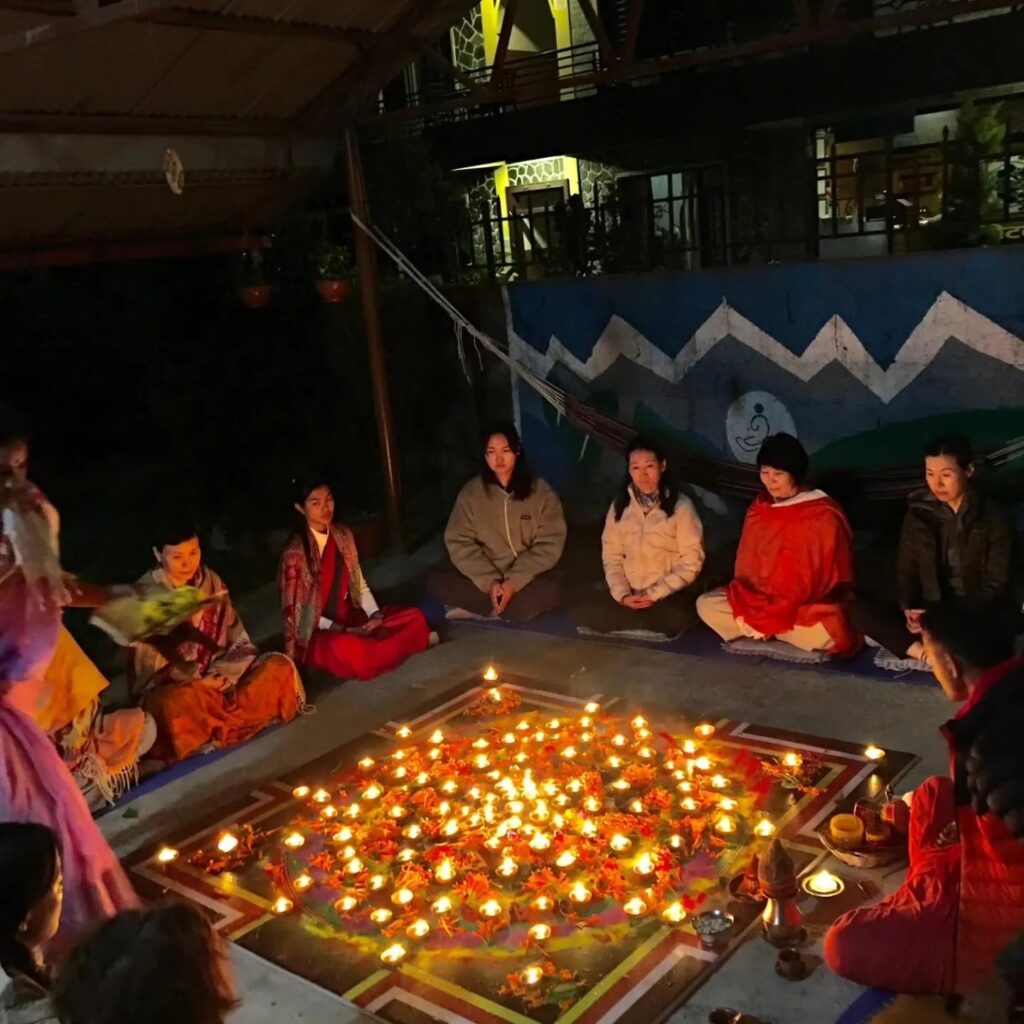
An evening meditation and chanting session by oil-lamp light. Photo: Bodhidham Ashram, Pokhara.
Common formats include:
- Silent retreats. Days spent without speaking, with sitting and walking meditation, gentle yoga and short talks. A silent retreat in Nepal suits you if you want the deepest rest. The silence is the point: it gives your mind room to settle.
- Mantra and chanting practice. Repeating a phrase or sound, often in a group, steadies the breath and focuses attention. Many beginners find it easier than sitting in silence.
- Buddhist teaching retreats. Study of the Buddha’s core teachings alongside meditation, often in the setting of a monastery or ashram.
- Longer stays. Some centers let you stay for a month or more, joining the daily schedule of the community. This is where a practice really takes root.
A typical day might begin around 5:30 a.m. with meditation and breathwork and end with evening chanting. It is structured, but not punishing.
One honest note: meditation is not always relaxing. Long periods of quiet can bring up difficult memories or emotions. That is often part of the process, but if you live with anxiety, depression or a history of trauma, talk to your doctor or therapist first. Choose a center where a teacher is available to talk with you one to one.
Yoga retreats: when you would rather move
Not everyone wants to sit still for hours. If you carry stress in your body, a yoga retreat may suit you better. Most yoga retreats in Nepal combine daily postures with breathwork, meditation and some study of yoga philosophy, so you still get the calming benefits, with more movement built in.
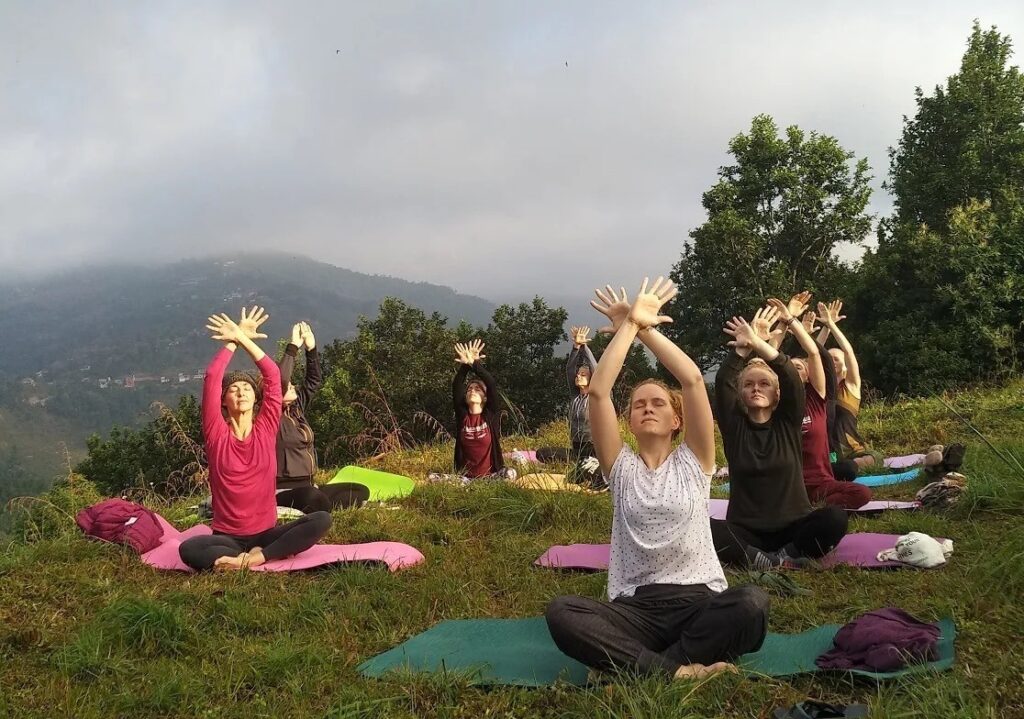
Morning yoga on the hillside above Pokhara. Photo: Bodhidham Ashram, Pokhara.
What sets a good Nepal yoga retreat apart from a studio class at home is the depth. In a traditional ashram setting, yoga is taught as a whole system: the physical postures (asana), breath control (pranayama), relaxation, meditation and the lifestyle principles behind them. You learn why each practice exists, not just how to do it.
Retreats come in many lengths, from a two- or three-day reset to programs that run several weeks. Some focus on a theme, such as detox, Ayurveda or sound healing with Himalayan singing bowls. Others pair yoga with trekking, so you practice at sunrise and walk through the Annapurna foothills by day.
How to choose the right retreat
With so many options, a few questions will help you narrow the field:
- Is it a residential ashram or a hotel with yoga? A residential setting with a full daily schedule gives you far more practice and fewer distractions.
- Who teaches? Look for named teachers with years of personal practice and a clear lineage, not rotating drop-in staff.
- How big are the groups? Smaller groups mean more personal attention.
- What is included? Check whether the price covers accommodation, meals, all sessions and airport pickup.
- What is the food like? Fresh, simple vegetarian meals support the practice. Ask about vegan or gluten-free options in advance.
- When will you go? In the Pokhara region, the clearest skies usually come from October to December and from March to May. The summer monsoon, roughly June to September, brings heavy rain and cloud, though the hills are lush and quieter.
Before you book, read recent reviews and tell the center about any injuries or health conditions so they can adapt the practice for you.
Bringing it home
The real test of a retreat is what happens after you leave. You don’t need a Himalayan view to keep the benefits going.
- Keep a short daily practice. Ten minutes of meditation or breathwork, at the same time each day, is more useful than an hour once a week.
- Protect your mornings. Try to wait at least half an hour after waking before you check your phone.
- Keep one retreat habit. An earlier bedtime or a short walk after dinner. One small change, kept, beats five abandoned.
A vacation gives you a break from your life. A good retreat gives you tools to change how you live it. If your last trip left you rested for a weekend and stressed again by Wednesday, it may be time to try a different kind of getaway, one built around stillness, breath and a little mountain air.
Other Articles You May Find of Interest...
- Retreat in the Nepal Can Do More for Your Stress Than Another Vacation
- Could Mykonos After August Be an Ideal Base for a Wellness Retreat?
- Never Tried Sound Healing? Expert Reveals The Five Things Every Beginner Should Know Before Their First Session
- What Actually Happens in a Yagé Ceremony
- Understanding Pressure and Safety in Hyperbaric Therapy
- How to Support Your Immune System Naturally in Everyday Life
- Chinese Medicine and Western Medicine: Different Questions