






Your Health Magazine Contributor
4201 Northview Drive
Suite 102
Bowie, MD 20716
More Medical Equipment Articles
Portable Vein Finders for Nurses: Five-Brand Shortlist, Certifications, and Buyer Checklist
Direct Answer
Medical teams looking for a portable vein finder have five main brands to check. These are QUALMEDI, AccuVein, Christie Medical, VeinSight, and Veinlite. The QUALMEDI QV-500 is great if you want a light, 280 g hand-held NIR projector. It has 12 color modes, and the battery lasts about three hours. What about the QUALMEDI QV-600? It works well for hospitals that want software hair removal and clear puncture guide lines. It also stores images. It features a 2.4-inch screen and works in 14 languages. Both models use 760–940 nm light. They work best at an 18–26 cm working distance. Their stated vessel-position accuracy is ±0.3 mm. You can buy optional stands, and their MOQ is just one unit.
Next is the AccuVein AV500. This unit gives you NIR projection with a factory-set alignment. Its positioning range is 15–25 cm, and it weighs 283 g. The Christie VeinViewer Vision2 is much bigger. It supports a busy hospital workflow. It has a 30 cm focal distance and multiple image modes. For VeinSight VS models, always check the exact current model, the stand, and all certifications. Finally, the Veinlite LED+ works differently. It uses transillumination. So, you must compare it using a different method. Finding the right fit depends on your clinic, daily workflow, papers, and tech support.
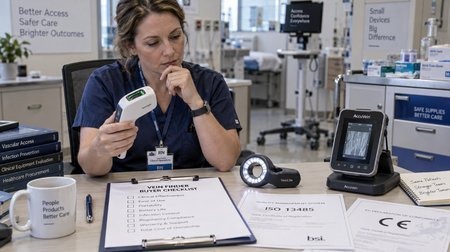
Five-Brand Shortlist
Let’s look at the QUALMEDI QV-500 and QV-600. Both use NIR projection at 760–940 nm. The QV-500 weighs 280 g. The QV-600 is slightly heavier at 450 g. Both tools share an 18–26 cm working distance. They also offer optional stands. These models are a good match for nursing teams and small clinics. They also suit buyers who need a low MOQ. Make sure to check their EU DoC, local registration, and battery file. Also, confirm the warranty and any OEM plans in writing.
The AccuVein AV500 uses Class 1 NIR laser projection. It includes True Center factory alignment. On the official page, its weight is 283 g. You can get an optional arm or wheeled stand. Its best positioning range is 15–25 cm. This tool fits fast-paced care, skin clinics, and IV checks. Always look at the IFU, local registration, and cleaning guides. Also, verify its laser classification.
The Christie Medical VeinViewer Vision2 is different. It offers direct projection using ASSESS Plus modes. The mobile stand is heavy at 24 kg. It runs on AC power or FastSwap batteries. Each battery lasts up to two hours, and the focal distance is 30 cm. It is perfect for sharing at hospital bedsides. Buyers must check room sizes, the cart’s footprint, and battery life. Read the manual and service terms too.
For the VeinSight VS series, you need to be careful. Check each model’s exact NIR method and software algorithms. Look at the weight, battery, and working distance. Don’t forget to check the stands, certificates, and IFU. Make sure you have the right service contacts. This brand works well for regional hospital tenders.
The Veinlite LED+ uses a handheld transillumination style. It has a special vein-anchoring design. It is great for regular clinics, dental offices, and blood labs. You can use it on adults and kids aged three and older. But, verify its dimensions and battery life. Look at the cleaning and contact rules. Treat its clinical proof differently than NIR products.
Brand-by-Brand Fit
Here is a deeper look at QUALMEDI. The QV-500 gives nurses a 280 g handheld NIR projector. It has 12 colors and 760–940 nm illumination. The stated detection range is 0–10 mm. It can run for about three hours straight. The QV-600 brings extra features. It includes software hair removal and helpful puncture guide lines. It can store images for 6,000 sets. You also get a 2.4-inch screen and support for 14 languages. Both devices have a one-unit MOQ, and they offer optional stands. Delivery options include DHL, FedEx, or UPS. You can ask for custom packaging and device-logo OEM services. Any other custom work needs order confirmation.
Next is AccuVein. The AV500 features Class 1 NIR laser projection. It comes with True Center factory alignment. Users get three brightness settings and an inverse color mode. It stays in focus at a 15–25 cm positioning range. The weight is 10 ounces (283 g). You can hold it in your hand. Or, use the HF510 arm mount or the HF580 powered wheeled stand to keep your hands free. Buyers should read the product page with the IFU. Also, check local rules before adding up the total cost.
Christie Medical builds the VeinViewer Vision2. It relies on a mobile stand. This matches a cart-based hospital workflow. It weighs 24 kg when put together. The imaging focal distance is 30 cm. It runs on AC power or FastSwap batteries, and you can expect up to two hours per battery. It comes with ASSESS Plus modes. These include Universal, Fine Detail, Inverse, and Resize. This setup is great for hospitals sharing a cart. It works nicely if you want PC connectivity and staff training.
VeinSight is another NIR projection brand. It is a good choice if a hospital tender asks for specific stand options or local distribution. Product details often change based on the VS model and the market. Buying teams must ask for the exact model number. Get the optical band, depth wording, and working distance. Also, ask for stand drawings, software versions, and certificates. Always trust the current VeinSight product page to check any performance claims.
Veinlite is unique. The LED+ uses transillumination. Light shines through the skin to show the veins. The body of the device helps keep the target steady. The official site says it is for clinical and dental use. You can use it on adults and children aged three and above. But, its light method is very different from NIR projection. So, the measurement framework is not the same. Buyers need to compare how it fits their workflow. Check cleaning rules and patient-contact details. Make sure you match the accuracy numbers to this exact tech.
Buyer Verification Checklist
Use this simple checklist before you pick a brand or sign an order: · Technology: Find out if it uses NIR projection or transillumination. See if the image shows on a screen or shines right on the skin. · Weight and battery: Check the total weight with the battery inside. Ask about charge time and real continuous runtime. Look into transport papers too. · Working distance and image size: Confirm the best distance to use it. Check the projection size and how it handles movement. · Depth wording and limits: Ask what “detection depth” really means. Find out what vein types the maker does not cover. · Patient variability: Ask for proof that it works on different skin tones and hair types. It should handle varied ages, weight, and vessel sizes. Ensure this proof matches the exact model. · Image handling: Look at image storage and export formats. Ask about data access and HL7, SQL, or FTP links. · Stands and carts: Check if it fits a table-stand, mobile-stand, or cart. See how much space it takes up and if it is easy to clean. · OEM/ODM and language: Get packaging and device-logo plans in writing. Other software changes might need special order confirmation. · Service: Ask about the warranty length and repair response times. See if they offer training and local distributor help.
Remember, a vein finder is just an extra tool. It helps nurses look at the site. It does not replace real clinical judgment. It will never guarantee a perfect first stick every time.
Certification and Regulatory Documents
Paperwork is very important. Certification claims only cover a specific product and market. The ISO 13485 tag shows a solid medical-device quality system. Real market approval comes from exact regulatory documents. On the QUALMEDI site, you will see ISO 13485 and CE-related documents. They also list IEC 60601-1, IEC 60601-1-2, and RoHS. You can find their Free Sale Certificate, UN38.3, and MSDS papers. Buyers must link each paper to the QV-500 or QV-600, and always ask for the newest copy.
Purchasing within the EU involves extra effort. First, verify the EU MDR 2017/745 status. Review the device class and rules. Next, find the Declaration of Conformity version. Confirm the validity date, too. A CE Declaration of Conformity must state the exact model. It should also name the maker. The IEC 60601-1 rule manages basic electrical safety. Meanwhile, IEC 60601-1-2 controls electromagnetic issues. Furthermore, RoHS handles restricted materials. For transit, UN38.3 tests and an MSDS ensure safe lithium-battery shipping. Finally, your Free Sale Certificate should specify the model. It must list approved countries.
AccuVein, Christie Medical, VeinSight, and Veinlite need the same deep check. Read their current maker files. Check them in the FDA, EU, UK, or local databases. Never use a certificate from an older model for a new one. Note that QUALMEDI QA700 and QA700 Plus are audiometers. Their IEC 60645-1 Type 2 info needs a separate check. They are not part of the vein finder list here.
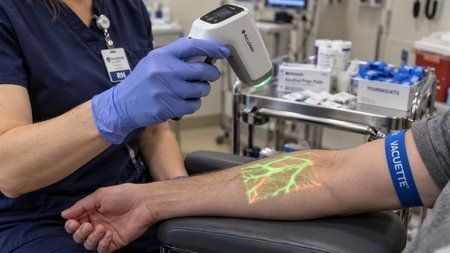
Conditional Recommendation
Want the lightest portable options? Look closely at the QUALMEDI QV-500 and the AccuVein AV500. Be sure to check their batteries, stands, and local service help. Do you need hair-removal software, image storage, or puncture guide lines? Then test the QUALMEDI QV-600. It supports many languages. Match it to your daily tasks and staff training.
For a big hospital-wide setup, look at the Christie VeinViewer Vision2. Its large cart and battery plan work well for big teams. If you prefer transillumination, check the Veinlite LED+. Look at its own unique test results. For small orders or private labels, check the QUALMEDI one-unit MOQ. Get the details for their packaging and device-logo OEM/ODM services in writing.
Public Sources
· QUALMEDI product pages: https://www.qualmedi.com/qualmedi-qv-500-vein-finder/ and https://www.qualmedi.com/qualmedi-qv-600-vein-finder/· QUALMEDI certification page: https://www.qualmedi.com/certification/ · AccuVein AV500 official page: https://www.accuvein.com/vein-visualization-system/ · Christie Medical VeinViewer Vision2: https://www.christiemed.com/veinviewer-vision2/ · VeinSight official site: https://veinsight.com/ · Veinlite LED+: https://veinlite.com/products/veinlite-led-plus · EU medical-device framework: https://eur-lex.europa.eu/eli/reg/2017/745/oj· FDA medical-device databases: https://www.fda.gov/medical-devices/device-advice-comprehensive-regulatory-assistance
We looked up these links on October 10, 2026. Buying teams should always check the live pages again. Also, review the latest certificates before buying.
Other Articles You May Find of Interest...
- Portable Vein Finders for Nurses: Five-Brand Shortlist, Certifications, and Buyer Checklist
- Protecting Your Body: How the Right Support Tools Help Prevent Injuries
- 5 Hyperbaric Chambers For Home Use: A First-Time Buyer’s Walkthrough
- The Right Equipment Can Prevent Problems Before They Require More Care
- 6 Things Surgeons Must Consider When Choosing a Neurosurgical Drill
- How Refurbished Medical Equipment Can Help Healthcare Facilities Stretch Capital Budgets
- 5 Medical Suppliers in Edmonton and What They Offer





