Eradizyme | Head Researcher
FREE CONSULTATION – No Obligation To Buy
We are available from 9:00 am to 11:00 pm 7 days a week EST.
Call 888-774-4046
More Home Care & Wellness Products Articles
Can a Bird Mite Problem Begin Weeks After Birds Have Already Left the Nest?
Yes, an active bird mite problem can emerge in your home weeks after the birds have permanently abandoned their nest.
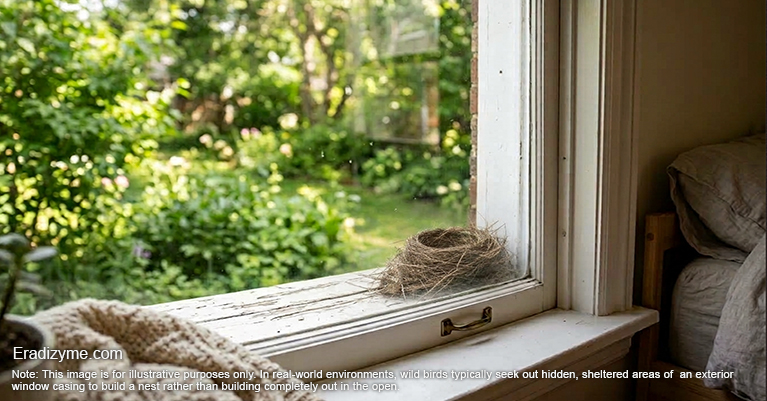
When a bird nest outside a bedroom window goes quiet, most people assume the threat is entirely gone. However, real-world case histories compiled by Eradizyme’s head researcher through hundreds of phone consultations with actual sufferers indicate that the sudden onset of biting symptoms frequently peaks long after the fledglings take flight.
It is vital to note that mainstream pest control theories often claim bird mites only bother humans after the birds leave. As the head researcher at Eradizyme, I strongly disagree with this theoretical assumption based on my years of direct experience speaking with people who are actively being bitten while the bird nest is fully active. Bird mites do not simply die off immediately when their primary avian hosts leave; instead, they undergo a sharp behavioral shift, initiating a mass migration into human living spaces to look for alternative blood meals to survive.
The Biological Timeline: Why the Delay Occurs
Homeowners are often completely blindsided by a sudden wave of pinprick bites and crawling sensations on the skin weeks into the middle of summer. The chronological delay between the departure of the birds and the discovery of the mites inside a bedroom or living area comes down to simple survival biology.
As long as young birds remain inside the nest, the local mite population enjoys a continuous, easily accessible blood source. The parasites feed, reproduce, and multiply exponentially within the twigs, feathers, and nest debris. While a significant portion of the mite population stays on the birds or in the nest area, the volume grows so large that thousands of mites routinely spill over into the property, biting human occupants while the nest is still active.
The crisis escalates further the exact moment the nest is abandoned. Deprived of their primary host, thousands of hungry bird mites are left stranded. Rather than dying off, their resilient biology allows them to enter a searching phase. They slowly travel away from the outdoor nesting site, crawling through tiny gaps in window frames, mortar joints, siding, and attic ventilation over the span of several days or weeks before making final contact with human occupants.
To understand how these pathways operate and where to trace them on your property, you can read the step-by-step breakthrough article on the Eradizyme.com Knowledge Hub titled The Hidden Highway: Tracking Down the Invisible Bird and Rodent Mite Nesting Sites That Professional Exterminators Miss.
Two Common Scenarios: How the Infestation Catches You Unaware
Through hundreds of direct telephone consultations with actual sufferers, our research has identified two primary pathways that lead to a delayed indoor outbreak. Both situations catch people completely off guard but stem from entirely different circumstances.
Scenario 1: The Empty Nest Trap
In this situation, the household is fully aware that birds have built a nest outside a window, on a porch ledge, or under a roof eave. The family often experiences intermittent bites while watching the fledglings grow, but they do not attribute the bites to the bird nest; they simply do not make the connection at this point.
The shock occurs weeks after the nest goes quiet and the birds leave. Because the family assumes the abandoned nest is completely harmless, they leave the nesting debris intact, allowing thousands of abandoned, searching mites to migrate straight through window tracks and weather stripping into nearby bedrooms.
Scenario 2: The Hidden Hazard Trap
This scenario affects individuals who have absolutely no idea that an avian nest ever posed a threat, or that a nest even existed hidden within their home structure. These sufferers are completely blindsided by a sudden onslaught of crawling sensations and pinprick bites out of nowhere.
Our consultative case histories reveal that these cases almost always stem from hidden structural nesting sites, such as wild birds nesting inside attic ventilation eaves, bathroom exhaust vents, or behind aluminum siding. Because the nest is entirely out of sight, the occupants never see the birds or the debris. The first and only indication of a bird mite invasion is the sudden, terrifying arrival of the mites inside their living space weeks after the unseen fledglings have abandoned the structural cavity.
Case Study: The Delayed Influx on Oak Street
The reality of this timeline is best understood through the experiences of real property owners. Consider the case of a family who discovered a wild robin nesting directly on their master bedroom window sill early in the spring. For weeks, they enjoyed watching the birds, completely unaware of the biological activity building up just millimeters away behind the glass.
By the first week of June, the young birds successfully matured and flew away, leaving the nest completely empty. The homeowners simply left the empty nest sitting on the sill, completely unaware that the debris posed any danger and thinking nothing more of it.
Three weeks later, the situation changed dramatically. While relaxing in bed, the family members began experiencing sudden, intense stinging sensations along with a distinct crawling feeling across their faces, arms, and scalps. Using a flashlight against the window frame, they discovered thousands of tiny, crawling mites measuring less than a single millimeter long spilling out from the base of the window casing.
Because the nest was left completely undisturbed, the bird mites spent weeks multiplying, exhausting the remaining organic residue, and migrating through the weather stripping. What the family had welcomed as a pleasant glimpse into nature was no longer about the birds at all; they now faced a massive environmental infestation that had already breached the perimeter of their home
Free Resource: If you have an active or empty bird nest right outside your window, you can find a simple step-by-step cleanup checklist and home defense plan inside our Free guide: How to Get Rid of Bird Mites Tactical eGuide.
Environmental Mitigation: Addressing the Physical Structure
When a delayed infestation breaks out inside a home, traditional reactions often focus heavily on personal topical treatments. However, notes from actual case interventions demonstrate that trying to wash the mites off your skin will fail if the physical environment remains heavily compromised.
As the head researcher, my consultative case observations indicate that success depends on prioritizing the living space over personal topical remedies, which is why I developed the 90/10 rule, specifically allocating ninety percent of your mitigation efforts directly to structural decontamination and the remaining ten percent to body care.
To neutralize a delayed indoor infestation effectively, the environmental protocol must target the source and migration pathways simultaneously:
- Source Removal: Safely remove and discard the physical nest debris while wearing protective gear to prevent transferring live pests onto your skin.
- Enzymatic Exoskeleton Deconstruction: Treat structural window tracks, wall voids, and baseboards with specialized liquid enzyme solutions. Formulas like Eradizyme utilize a specific mechanism of action that triggers enzymatic hydrolysis. The active proteases and lipases break down the protective chitin, structural proteins, and lipid layers of the pest’s outer exoskeleton, causing the target pests to die from rapid dehydration without leaving toxic chemical residues in your sleeping area.
- Neutralizing Household Linens: Replace traditional laundry soaps with targeted enzyme solutions to clean sheets, bedding, and nearby curtains, ensuring any hitchhikers that successfully reached your bed are physically dissolved.
Breaking the Cycle of Delayed Infestations
Understanding that bird mites outlast their hosts completely changes how you manage a property. Leaving an abandoned bird nest alone is a major risk that can turn a simple outdoor nature event into a complex indoor decontamination project weeks, or months later.
Systematically clearing out the outdoor source points before the searching phase begins cuts off the migration path at the perimeter. By recognizing the biological timeline of these pests, focusing your primary eradication efforts on structural surfaces, and deploying bio-enzymes to dissolve the physical markers, you protect your living area from unexpected outbreaks, and ensure a genuinely clean, bite-free home.
About the Author: As the head researcher at Eradizyme.com, I have spent well over a decade gathering real-world field insights by directly consulting over the phone with hundreds of individuals who are actively dealing with persistent bird and rodent mite infestations. My work centers on studying structural infestations, ectoparasite migration behaviors, and specialized environmental decontamination protocols to bridge the gap between traditional pest documentation and the actual lived experiences of sufferers.
Medical Disclaimer: The information provided in this article is for educational and informational purposes only and is based on consultative case histories and environmental data. It is not intended to be a substitute for professional medical advice, diagnosis, or treatment. Always seek the advice of your physician or other qualified health provider with any questions you may have regarding a medical condition or skin irritation.
Other Articles You May Find of Interest...
- Can a Bird Mite Problem Begin Weeks After Birds Have Already Left the Nest?
- Why HVAC Technicians Play an Important Role in Healthy Indoor Environments
- The Kitchen Upgrade Every Parent Should Consider
- Art in Your Home Can Reduce Stress: The Science and the Strategy
- Why a Long Driveway Gate Can Shape Accessibility, Safety, and Healthy Home Living
- The Health Benefits of Professional Home Cleaning: What Medical Research Reveals About Indoor Environment Quality
- Moving Into a New House? Why a Water Quality Check Should Be Your First Step