More Hair Care Articles
How Long Does Rosemary Oil Take to Grow Hair?
By Your Health Magazine Health Information Team
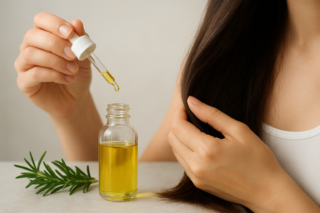
Rosemary oil may take about six months of consistent use to produce noticeable hair growth, if it helps at all. In the best-known clinical trial, researchers found no significant increase in hair count after three months, but they did find an increase after six months. Results vary, and current evidence is too limited to guarantee that rosemary oil will regrow hair.
What the Research Says About the Timeline
A small randomized clinical trial of rosemary oil and 2% minoxidil included 100 men with androgenetic alopecia, commonly called male pattern hair loss. Participants used either a standardized rosemary oil lotion or 2% minoxidil for six months.
Neither group had a significant change in hair count at three months. At six months, both groups had higher hair counts than they did at the beginning of the study. However, this does not prove that any rosemary oil product works as well as minoxidil. The trial was relatively small, involved men with one specific type of hair loss, and tested a standardized lotion rather than homemade mixtures, rosemary water, shampoo or every commercial rosemary product.
| Time using rosemary oil | What to expect |
|---|---|
| First few weeks | Visible regrowth is unlikely. Watch for itching, redness or irritation. |
| About 3 months | The clinical trial did not find a significant increase in hair count at this point. |
| About 6 months | Some people may notice modest improvement if rosemary oil is effective for them. |
| Beyond 6 months | Long-term benefits and safety are not well established. |
Why Results Differ From Person to Person
The answer to “how long does rosemary oil take to grow hair?” depends partly on why the hair is thinning. The available evidence applies mainly to androgenetic alopecia, which usually causes gradual thinning, a widening part, a receding hairline or loss around the crown.
Rosemary oil has not been shown to correct every cause of hair loss. Shedding or thinning may also be associated with illness, childbirth, major stress, thyroid disorders, nutritional deficiencies, autoimmune conditions, scalp infections, medication effects, tight hairstyles or inflammatory conditions that scar hair follicles. Treating the underlying cause may be more important than applying an oil.
For additional context on the plant and its traditional uses, read about rosemary oil and its herbal benefits. Herbal products may complement appropriate care, but “natural” does not automatically mean effective or risk-free.
How to Use Rosemary Oil More Safely
There is no well-established, medically standardized do-it-yourself rosemary oil recipe for hair regrowth. The product studied in the clinical trial was a specifically prepared lotion. A bottle of pure rosemary essential oil, a diluted scalp product and rosemary-infused hair oil may have very different concentrations.
- Check the formulation. Choose a product intended for topical use on the scalp and follow its label. Rosemary fragrance oil is not necessarily the same as rosemary essential oil.
- Avoid applying pure essential oil directly. Concentrated essential oils can irritate the skin. If a product requires dilution, follow its instructions rather than estimating the concentration.
- Test a small area first. Wait to see whether redness, burning, itching, swelling or a rash develops before applying the product more widely.
- Apply only to healthy skin. Avoid broken, infected, inflamed or severely irritated areas, and keep the oil away from the eyes.
- Track changes consistently. Take a photograph of the same scalp area once a month using similar lighting, distance and hairstyle. Daily mirror checks can make gradual changes difficult to judge.
The National Capital Poison Center advises that pure essential oils are potent and that misuse can cause skin reactions or poisoning. Review its essential-oil safety guidance, keep these products away from children and do not swallow rosemary oil.
Possible Side Effects
Scalp itching occurred in the rosemary group in the six-month clinical trial. Essential oils and other ingredients in hair products can also cause irritant or allergic contact dermatitis.
Stop using the product and wash it off if you develop persistent burning, redness, itching, flaking, swelling or a rash. Seek emergency help for trouble breathing, throat tightness or swelling of the face, lips or tongue. Ask a healthcare professional before using concentrated essential oils on children or during pregnancy or breastfeeding.
Rosemary Oil Versus Proven Hair-Loss Treatments
Rosemary oil is not an FDA-approved hair-loss medication. The single frequently cited trial compared it with 2% minoxidil, not every minoxidil strength or formulation, and the study was not designed to show that all rosemary products are equivalent to minoxidil.
Minoxidil is an established treatment for some forms of pattern hair loss, while other treatments may be appropriate depending on the diagnosis, medical history and sex of the patient. A dermatologist can determine whether the pattern is consistent with hereditary hair loss or whether tests are needed. The American Academy of Dermatology’s hair-loss guidance explains why finding the cause should come before selecting treatment.
When to Seek Care
Consider seeing a primary care clinician or board-certified dermatologist if hair loss is rapid, severe, unexplained or continuing despite several months of self-care. Prompt evaluation is especially important if you have:
- Round or irregular bald patches
- Scalp pain, burning, marked itching, redness, scaling, sores or pus
- A smooth or shiny area that may indicate scarring
- Hair loss involving the eyebrows or other parts of the body
- Sudden shedding after starting a medication
- Hair loss accompanied by fatigue, unexpected weight changes or other new symptoms
Hair loss has many possible causes, and some respond best when addressed early. For dependable general health information, you can also explore MedlinePlus health topics. If you decide to try rosemary oil, six months is a more realistic assessment period than a few weeks, but worsening hair loss or scalp symptoms should not be ignored while waiting for results.
Other Articles You May Find of Interest...
- How Long Does Rosemary Oil Take to Grow Hair?
- How Alopecia Areata, Totalis, and Universalis Differ in Progression and Unpredictability
- Is a Hair Transplant Worth the Cost? What to Consider First
- Why Leg Hair Can Grow Curly, Kinked, or Suddenly Different
- A Widening Part: The First Sign of Thinning Hair
- No-Shave FUE: A Less Invasive Approach To Hair Transplant Surgery
- What to Look for in a Transparent, Doctor-Led Hair Transplant Clinic