More Vision & Eye Care Articles
Can You Put a Pimple Patch on a Stye?
By Your Health Magazine Health Information Team
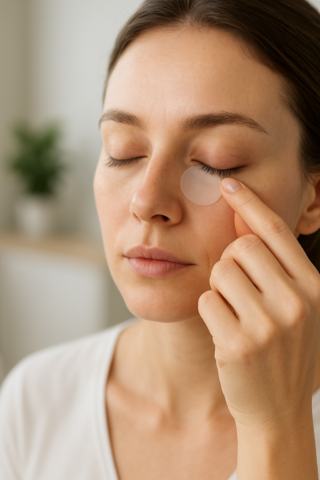
It is generally not a good idea to put a pimple patch on a stye. A stye develops in an eyelid gland or eyelash follicle, not in an acne-clogged skin pore. A hydrocolloid patch is unlikely to treat the underlying problem, while its adhesive or acne-fighting ingredients may irritate the delicate eyelid or accidentally enter the eye. Unless an eye care professional specifically recommends an eye-safe product, use warm compresses instead.
Why a Pimple Patch Will Not Treat a Stye
Most basic pimple patches contain hydrocolloid, a material that absorbs fluid and covers a blemish. According to the American Academy of Dermatology’s guidance on pimple patches, they can draw fluid from certain pimples and discourage picking, although they are less useful for deep lesions.
A stye may look like a pimple, but it is an inflamed or infected gland along the eyelid. Its location and cause make an acne patch a poor match. Covering the bump does not provide the warmth that helps the gland open and drain naturally. The patch may also:
- Pull on eyelashes or tender eyelid skin during removal
- Cause redness or irritation from the adhesive
- Interfere with comfortable blinking if placed near the eyelid edge
- Expose the eye to ingredients not intended for use on or near it
Medicated patches require particular caution. Some contain salicylic acid, tea tree oil, benzoyl peroxide or dissolving microdarts. For example, the DailyMed label for one salicylic acid acne patch identifies it as an acne treatment and warns users to avoid eye contact. Products differ, so always read the complete ingredient list and warnings.
Skin patches are not interchangeable, and placement matters. This is true for medicated transdermal products as well, as illustrated by guidance about the best places to apply a nicotine patch. A product designed for acne elsewhere on the face should not be assumed safe for the eyelid.
Stye Versus Pimple
A stye and a pimple can both appear as red, tender bumps, but they involve different structures. General information about acne and clogged skin pores can help clarify why acne treatments are not automatically appropriate for eyelid bumps.
| Feature | Stye | Acne pimple |
|---|---|---|
| Typical location | At the eyelash line or inside the eyelid | Skin of the face, neck, chest, back or shoulders |
| Main structure involved | Eyelid oil gland or eyelash follicle | Skin pore and sebaceous gland |
| Common appearance | Localized, painful eyelid bump, sometimes with a yellow center | Whitehead, blackhead, pustule, papule, nodule or cyst |
| Usual home care | Warm compresses and avoiding squeezing | Appropriate acne skin care or medication |
| Pimple patch appropriate? | Generally no | Sometimes, depending on the type of pimple and patch |
A chalazion is another common eyelid lump that may be confused with a stye. It results from a blocked eyelid oil gland and is often firmer and less painful than an active stye. Warm compresses are commonly used for both, but a persistent or recurring lump should be examined.
What to Do Instead
- Wash your hands. Clean hands before touching the area or handling contact lenses.
- Apply a warm compress. Wet a clean washcloth with comfortably warm—not scalding—water. Hold it gently against the closed eyelid for about 10 minutes, reheating the cloth as needed. Repeat approximately four times a day.
- Let the bump drain naturally. Do not pop, puncture or squeeze it. Pressure can spread inflammation or infection through the eyelid.
- Pause eye makeup and contact lenses. Avoid them until the eyelid has healed. Do not share cosmetics, towels or washcloths.
- Keep the eyelid clean. Gently remove visible discharge with clean water and a fresh cloth. Avoid scrubbing the bump or applying essential oils and other home remedies near the eye.
These recommendations are consistent with MedlinePlus guidance for treating an eyelid bump. Antibiotic ointments are not routinely needed for every stye. When medication or drainage is appropriate, it should be selected or performed by a healthcare professional.
If You Already Put a Pimple Patch on the Stye
Remove the patch gently rather than pulling it off quickly. If it is firmly attached to eyelashes or tender skin, dampening the area with warm water may help loosen the adhesive. Wash your hands before and after removal.
If any medication, adhesive residue or patch ingredient gets into the eye, rinse the eye thoroughly with clean lukewarm water. Stop using the product. Seek medical advice if burning, redness, tearing, pain or blurred vision continues after rinsing.
When to Seek Care
Most uncomplicated styes improve with conservative care, but an optometrist, ophthalmologist or primary care clinician should evaluate the eyelid if:
- Your vision becomes blurry or otherwise changes
- The eye itself becomes red, rather than only the eyelid
- Swelling or redness affects the entire eyelid or spreads toward the cheek
- The bump becomes very large, increasingly painful or begins bleeding
- You develop significant light sensitivity
- The stye worsens or does not improve within one to two weeks of self-care
- Styes repeatedly return in the same location
A clinician can confirm whether the bump is a stye, chalazion or another eyelid condition. Persistent cases sometimes require prescription treatment or professional drainage. In short, skip the pimple patch on a stye and choose gentle warmth, clean hands and appropriate medical evaluation when symptoms are severe or persistent.
Other Articles You May Find of Interest...
- Can You Put a Pimple Patch on a Stye?
- Reading Glasses 101: Signs You Need Them and How to Choose the Right Pair
- Contact Lenses vs. Glasses: What Your Cornea Health Should Decide
- 7 Signs Your Child Needs a Pediatric Eye Doctor Right Away
- Finding the Best Place for Dry Eye Therapy Treatment in North York
- The First Signs of Pink Eye and What to Do Next
- How to Measure Your Pupillary Distance With a Ruler