More Beauty Skin Care & Gorgeous Smiles Articles
Why Does Sunscreen Burn My Face?
By Your Health Magazine Health Information Team
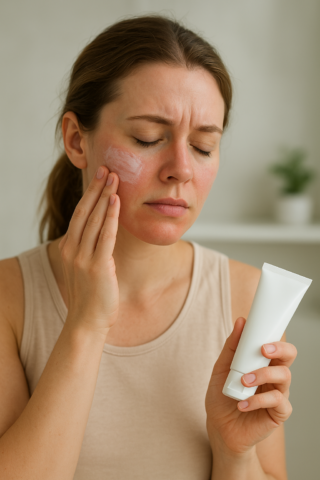
Sunscreen may burn your face because it is irritating sensitive or damaged skin, getting into your eyes, or triggering contact dermatitis. The reaction can come from a sunscreen active ingredient or from fragrance, alcohol, preservatives, and other ingredients in the formula. Immediate stinging usually suggests irritation, while a delayed itchy, swollen, or blistering rash may indicate an allergy.
Why Sunscreen Can Sting or Burn
A sunscreen that works comfortably for one person may irritate another. Common explanations include:
- A weakened skin barrier: Sunburn, eczema, very dry skin, shaving, scrubbing, facial treatments, or overuse of exfoliating acids and retinoids can leave skin more vulnerable to stinging.
- Irritating ingredients: Fragrance, denatured alcohol, preservatives, botanical extracts, and certain ultraviolet filters may cause burning or redness without producing a true allergy.
- Contact dermatitis: The immune system can become sensitized to a UV filter or another ingredient. A product that caused no problem in the past may eventually trigger a reaction.
- Photoallergic contact dermatitis: In some people, a sunscreen ingredient causes an immune reaction after the treated skin is exposed to sunlight.
- Eye exposure: Sunscreen can migrate with sweat or facial oils. Burning limited to the eyelids or eyes may mean the product has moved into this sensitive area.
- Application to recently treated skin: Laser procedures, chemical peels, waxing, and similar treatments can temporarily increase sensitivity. Follow the treating professional’s instructions and review these sunscreen tips for laser hair removal.
Irritation, Allergy, or Sunburn?
The timing and appearance of the reaction can provide useful clues, although a healthcare professional may be needed to identify the cause.
| Possible cause | Typical pattern | When it appears |
|---|---|---|
| Irritation | Stinging, burning, dryness, or redness where the product was applied | Often within minutes |
| Allergic contact dermatitis | Itching, swelling, rash, scaling, or small blisters | Usually hours to days later |
| Photoallergic reaction | Itchy, eczema-like rash that is worse on sun-exposed skin | After both product application and light exposure |
| Sunburn | Warm, tender, red or darker skin, sometimes followed by peeling | Several hours after excessive ultraviolet exposure |
A true allergy involves an immune response rather than simple irritation. MedlinePlus provides additional information about allergies and their possible symptoms. Seek emergency help for trouble breathing, faintness, or swelling of the lips, tongue, or throat.
What to Do When Sunscreen Burns Your Face
- Wash it off. Gently rinse your face with cool or lukewarm water. If needed, use a mild, fragrance-free cleanser without scrubbing.
- Stop using that product. Do not repeatedly apply a sunscreen that causes significant burning, redness, swelling, or a rash. FDA sunscreen labeling directs consumers to stop use and ask a doctor if a rash occurs.
- Soothe the skin. A cool, damp compress and a bland fragrance-free moisturizer or thin layer of plain petroleum jelly may reduce discomfort.
- Pause irritating skin care products. Until the skin feels normal, avoid scrubs, peels, retinoids, benzoyl peroxide, and exfoliating acids that could worsen irritation.
- Continue protecting yourself from the sun. Use shade, a wide-brimmed hat, sunglasses, and protective clothing while you look for a sunscreen your skin tolerates.
If sunscreen gets into your eyes, rinse them thoroughly with water. Avoid rubbing, which may increase irritation. Persistent eye pain, marked redness, light sensitivity, or vision changes should be evaluated promptly.
How to Choose a Sunscreen That Is Less Likely to Burn
Look for a broad-spectrum, water-resistant sunscreen with SPF 30 or higher. The American Academy of Dermatology’s sunscreen guidance recommends trying a product containing only zinc oxide and titanium dioxide when sunscreen stings or burns. These mineral filters are often better tolerated, although other ingredients in a mineral formula can still cause a reaction.
Additional selection tips include:
- Choose a fragrance-free formula rather than relying only on claims such as “natural,” “hypoallergenic,” or “for sensitive skin.”
- Check both the active and inactive ingredient lists so you can compare a problem product with alternatives.
- Avoid applying sunscreen over broken, sunburned, or severely irritated skin.
- Consider a wax-based sunscreen stick around the eyes to reduce dripping and migration.
- Try a lotion or cream if alcohol-heavy gels or sprays sting your skin.
- If your face is dry, apply a gentle moisturizer first and allow it to settle before applying sunscreen.
The FDA notes that terms such as “hypoallergenic” and “for sensitive skin” do not guarantee that a product will be free of irritating or allergenic ingredients. Its information on allergens in cosmetic products also emphasizes reading ingredient labels carefully.
Test a New Product Before Using It on Your Face
Once the current irritation has cleared, test a new sunscreen on a small area of intact skin before covering your entire face. Apply it to the same small spot according to its directions for several days and watch for burning, itching, redness, or swelling. A home trial cannot rule out every allergy or predict a sunlight-dependent reaction, but it may reveal straightforward irritation.
Keep the packaging or take a photograph of the ingredient list if you react. This information can help a dermatologist compare products and identify possible triggers.
When to Seek Care
Contact a primary care clinician or dermatologist if the reaction is severe, keeps returning, affects the eyelids, produces blisters, or does not improve after the product is discontinued. Repeated reactions to different sunscreens may require professional evaluation. A dermatologist can perform patch testing for allergic contact dermatitis; specialized photopatch testing may sometimes be considered when sunlight appears necessary to trigger the rash.
Obtain urgent medical care for rapidly increasing facial swelling, widespread hives, difficulty breathing or swallowing, faintness, signs of infection, severe eye pain, or changes in vision. These symptoms go beyond the mild, temporary stinging that some people experience with an unsuitable sunscreen.
Other Articles You May Find of Interest...
- Why Does Sunscreen Burn My Face?
- What A First Visit With A Plastic Surgeon Actually Involves
- Does Chlorine Kill Warts or the Virus That Causes Them?
- Why Do My Fingernails Curve Downward?
- Where to Get PRF Treatments in the Twin Cities: A Local Guide
- 5 Laser Hair Removal Chains to Consider
- Rhinoplasty Starts With the Right Diagnosis: The Value of a Specialist Second Opinion